Sourcing Halal Probiotic Gummies for the Malaysian Market (JAKIM)

An ambitious Australian supplement brand identified Southeast Asia as their next major growth vector. They possessed a highly effective, clinical-grade probiotic gummy formulation that was a massive success domestically. Seeing the booming demand in Kuala Lumpur, they partnered with a local distributor to launch the product in Malaysia.
The brand assumed that because the gummy was 100% vegan, pectin-based, and alcohol-free, it would automatically pass the Halal requirements for the Malaysian market. They shipped their first 50,000 units. The container was immediately blocked at the port.
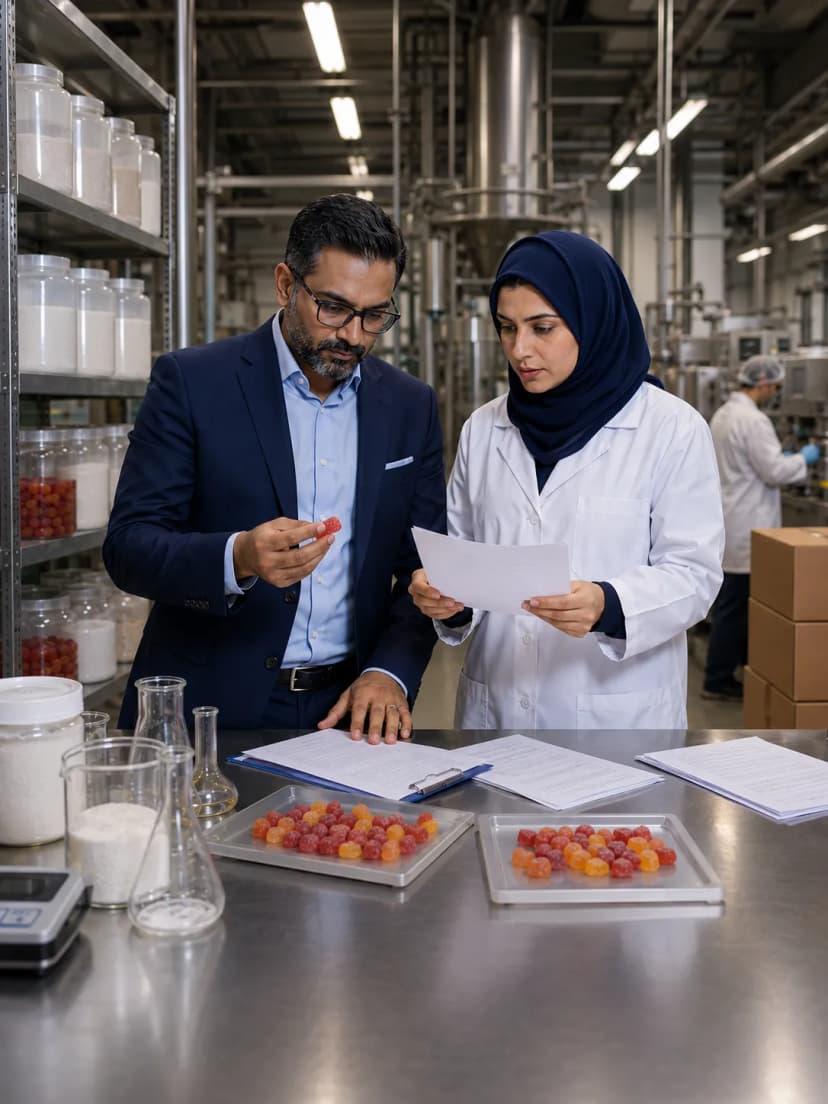
The Malaysian Department of Islamic Development (JAKIM) requires formal, documented Halal certification for nutraceutical imports targeting the Muslim demographic. The Australian manufacturer was not certified by a Halal authority recognized by JAKIM, and the specific probiotic strains lacked individual Halal documentation. The brand was forced to redirect the shipment to a non-Muslim market at a massive financial loss.
Exporting functional gummies to Malaysia is an incredibly lucrative opportunity, but it requires an uncompromising approach to religious compliance. Sourcing Halal probiotic gummies for the Malaysian market demands a manufacturing partner who understands that "Halal" is not just an ingredient checklist - it is a rigorous, audited supply chain standard.
The Malaysian Market and the Power of JAKIM
Malaysia is one of the most sophisticated and strictly regulated Halal markets in the world. The Department of Islamic Development Malaysia (JAKIM) sets the gold standard for global Halal certification.
For a supplement brand, securing the JAKIM Halal logo on your packaging is not just a regulatory hurdle; it is the ultimate marketing asset. Malaysian consumers implicitly trust the JAKIM logo. Products bearing it achieve significantly higher sales velocity, wider retail distribution (in major pharmacy chains like Watsons and Guardian), and command premium price points.
If you are sourcing gummies from a foreign contract manufacturer (such as an Indian CMO) for export to Malaysia, you must navigate a complex mutual recognition system.
The Foreign Halal Certification Body (FHCB) Framework
JAKIM does not fly auditors to every factory in the world. Instead, they maintain a strict list of Recognized Foreign Halal Certification Bodies (FHCBs).
If an Indian manufacturer claims to be "Halal Certified," your very first question must be: "Is your certifying body officially recognized by JAKIM in Malaysia?"
If the Indian CMO is certified by a local Indian Halal agency that is not on the JAKIM recognized list, the certificate is worthless for the Malaysian market. The product will not be permitted to carry the Halal logo in Malaysia, destroying its commercial viability in that demographic.
The Probiotic Challenge in Halal Manufacturing
Formulating a standard vitamin gummy for Halal compliance is relatively straightforward. Formulating a probiotic gummy for Halal compliance is a severe technical challenge.
Probiotics are living microorganisms. To manufacture them commercially, they must be grown in massive fermentation vats. The material used to feed and grow the bacteria is called the "growth medium."
The Growth Medium Trap
This is where many "vegan" probiotics fail Halal audits. If the growth medium used to culture the probiotic bacteria contains any non-Halal animal derivatives (such as specific meat peptones) or any alcohol, the resulting probiotic strain is classified as non-Halal (Haram).
Even if the bacteria are heavily washed and the final gummy is 100% vegan pectin, the fundamental origin of the probiotic violates strict Halal standards.
To pass a JAKIM-aligned audit, the contract manufacturer must source specific probiotic strains where the original fermentation process is documented and certified Halal. This requires the CMO to possess deep supply chain transparency and the ability to procure premium, certified active ingredients, rather than buying cheap strains off the spot market.
Learn about Probiotic Gummies Manufacturing
Formulating for the Malaysian Climate
Beyond religious compliance, a gummy targeting Malaysia must survive the physical reality of Southeast Asia.
Malaysia experiences intense, year-round heat and extreme humidity. The physical formulation of the gummy must be engineered to withstand this environment, otherwise the product will fail on the shelf long before it expires.
1. Pectin vs Gelatin
Gelatin gummies begin to melt at roughly 35°C (95°F). In the Malaysian logistics network, a non-refrigerated truck or warehouse can easily exceed this temperature, causing the gummies to melt into a solid, sticky block.
Pectin, however, is exceptionally heat stable. A well-formulated pectin gummy will not melt until temperatures exceed 60°C (140°F). For the Malaysian market, a pectin base is non-negotiable for both Halal compliance (bypassing the intense scrutiny of animal-derived gelatin) and thermal stability.
2. Moisture Migration and Packaging
The intense ambient humidity in Malaysia is the enemy of the gummy format. If moisture penetrates the bottle, the gummies will pull that moisture in, becoming a sticky, weeping mess that rapidly kills the live probiotics.
Your CMO must:
- Engineer the gummy formulation to an exact, low water activity (aw) level.
- Package the gummies in high-barrier HDPE plastic bottles (PET is often too porous for extreme humidity).
- Use hermetic, heat-welded induction seals on every bottle.
- Include a properly sized desiccant packet to control the micro-climate inside the bottle after the consumer opens it.
Learn about Vegan & Pectin Gummies
The Complete Halal Audit Checklist for Your CMO
Before signing a Master Manufacturing Agreement (MMA) with a contract manufacturer for the Malaysian market, demand proof of the following:
- JAKIM Recognition: "Please provide a copy of your current Halal Certificate and confirm that the issuing body is currently listed on JAKIM’s Recognized Foreign Halal Certification Bodies list."
- Dedicated Vegan/Halal Lines: "Do you process any porcine (pork) gelatin in your facility?" (If yes, the risk of cross-contamination is massive, and achieving a robust Halal certification on that shared equipment is extremely difficult).
- Alcohol-Free Flavourings: "Can you guarantee and provide documentation that all natural flavours and botanical extracts used in the formulation are processed using 100% alcohol-free solvent systems?"
- Strain-Specific Certification: "Can you provide the specific Halal certificates from the raw material supplier for the exact probiotic strains you intend to use in the gummy?"
- Accelerated Stability Data: "Can you provide 3-month accelerated stability data (40°C/75% RH) proving the pectin matrix will not weep and the probiotics will survive in high-heat/high-humidity environments?"
FAQ
Can I just use a Kosher certificate instead of a Halal certificate for Malaysia? No. While there is significant overlap between Kosher and Halal dietary laws (both forbid pork, for example), they are not interchangeable. JAKIM will not accept a Kosher certificate in lieu of a recognized Halal certificate. Furthermore, Muslim consumers actively look for the specific Halal logo, not a Kosher symbol.
Does the Indian manufacturer apply for the JAKIM logo on my behalf? No. The Indian CMO provides the recognized foreign Halal certificate for the manufactured product. The brand (or their official Malaysian importer/distributor) must then apply to JAKIM locally to secure permission to print the specific JAKIM logo on the retail packaging, using the CMO's documentation as proof of compliance.
Is it more expensive to manufacture a Halal-certified probiotic gummy? Yes, marginally. Sourcing premium, Halal-certified probiotic strains and alcohol-free natural flavourings costs slightly more than generic raw materials. However, the premium price point you can command in the Malaysian retail sector by bearing the Halal logo heavily outweighs the increased unit cost.
Source Export-Ready Gummies for Southeast Asia
Successfully penetrating the Malaysian market requires a manufacturing partner who treats Halal compliance as a rigorous scientific and supply chain discipline, not a marketing afterthought.
Probiota Innovations operates a state-of-the-art, export-ready facility in India, strictly audited and certified by internationally recognized Halal authorities. We specialize in engineering heat-stable, pectin-based probiotic gummies designed to survive Southeast Asian logistics while meeting the highest standards of religious compliance.
Request a Project Brief Explore Export-Ready Manufacturing
For an in-depth understanding of the core concepts, read our comprehensive guides on Is Pectin Halal? and Halal Certification for Pectin Gummies.
Looking for a manufacturing partner? Learn More About Our Halal Gummy Manufacturing Capabilities.
Recommended Manufacturing Solution
Want to discuss your formulation?
Our experts help brands launch technically complex probiotic and functional gummies.