Why B2B Brands are Shifting from Tablets to Gummies: A Bioavailability Comparison
Why B2B Brands are Shifting from Tablets to Gummies: A Bioavailability Comparison
For decades, the compressed tablet was the undisputed king of the dietary supplement industry. It was cheap to manufacture, highly stable, and could pack massive doses of active ingredients into a dense format.
However, a tectonic shift has occurred. Major B2B nutraceutical brands, pharmaceutical spin-offs, and innovative startups are aggressively shifting to gummy supplements. The gummy format has transcended its "children's vitamin" origins and is now the preferred delivery mechanism for complex botanicals, nootropics, and high-dose vitamins.
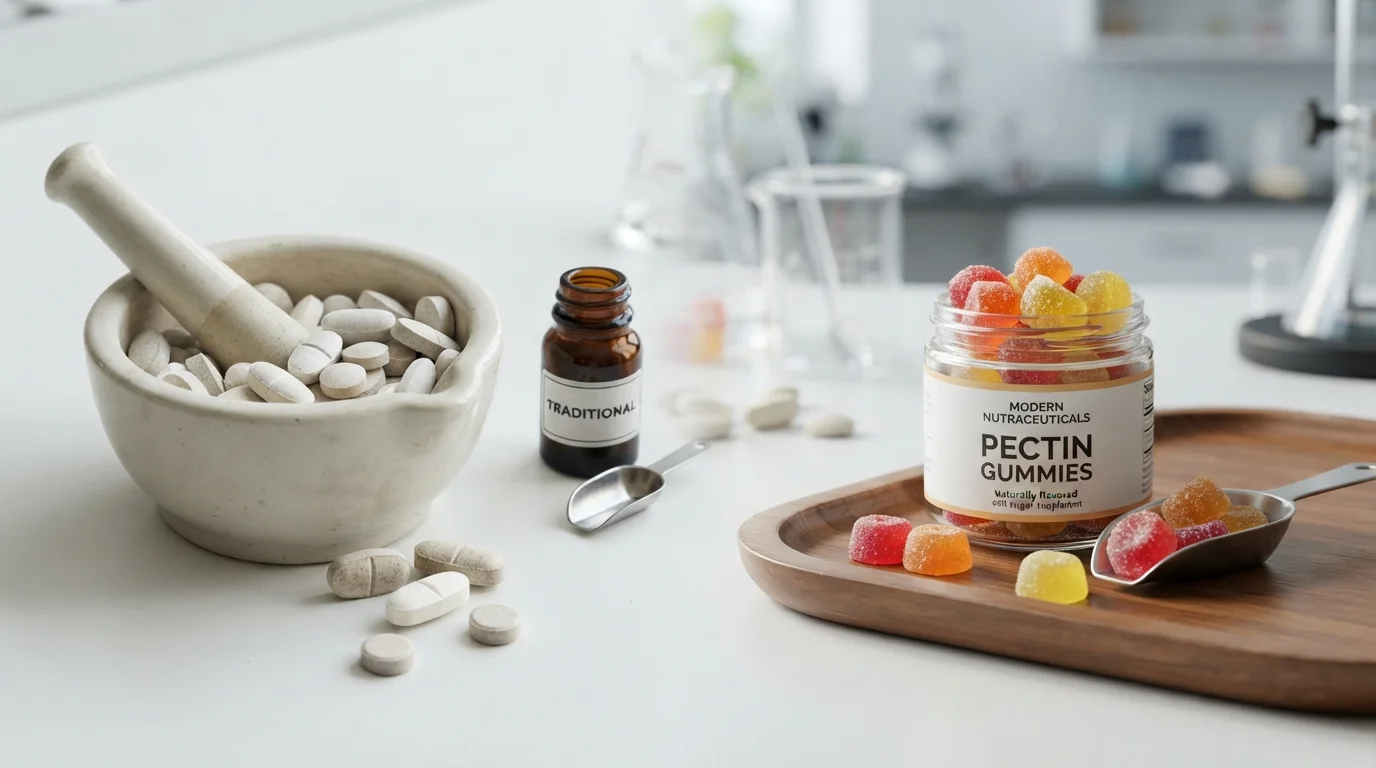
This migration is not merely a marketing trend driven by aesthetics. It is driven by the very real phenomenon of "pill fatigue" and, crucially, superior physiological performance. This guide provides a clinical comparison of tablets vs gummies bioavailability and why the gummy format dominates modern consumer compliance.
The Crisis of Pill Fatigue
Before discussing pharmacokinetics, we must address the primary driver of the gummy revolution: consumer compliance.
- Pill Fatigue Nutraceuticals: Modern health-conscious consumers take multiple supplements daily. Swallowing five large, chalky, dry tablets every morning is an unpleasant, clinical experience. It feels like taking medicine. As a result, consumers routinely forget or intentionally skip doses.
- The Gummy Solution: Gummies transform supplementation from a chore into a treat. The sensory experience—the soft chew, the vibrant flavor, the lack of a need for water—creates positive reinforcement.
From a B2B brand perspective, consumer compliance is the most important metric. If a consumer enjoys taking the product, they take it daily. They finish the bottle in 30 days and subscribe for a refill. The gummy format drastically increases Customer Lifetime Value (LTV) compared to traditional tablets.
Pharmacokinetics: The Bioavailability Argument
Beyond taste, the gummy format offers significant physiological advantages regarding how the body absorbs the active ingredients.
1. The Disintegration Bottleneck (Tablets)
To manufacture a compressed tablet, raw powders are mixed with heavy chemical binders (like magnesium stearate) and subjected to immense mechanical pressure to form a rock-hard pill.
- The Problem: When swallowed, that hard tablet must sit in the stomach and wait for gastric acid to slowly break down the binders and disintegrate the pill before the active ingredients can be released and absorbed. In many cases (especially with older adults with lower stomach acid), the tablet does not fully disintegrate, and a significant portion of the active ingredients passes completely through the digestive tract unabsorbed.
2. Pre-Mastication and Rapid Release (Gummies)
Gummies bypass the disintegration bottleneck entirely.
- The Mechanism: The consumer physically chews the gummy, grinding it into a fine paste mixed with saliva before it even reaches the stomach. The active ingredients (vitamins, botanicals) are already dissolved within the highly soluble pectin/sugar matrix.
- The Gummy Absorption Rate: Because the matrix is already physically broken down and the ingredients are in solution, they are immediately available for absorption the moment they enter the stomach and upper intestine.
- Buccal Absorption: Furthermore, as the consumer chews the gummy, a small percentage of certain active ingredients (like sublingual B-vitamins) can begin absorbing directly through the mucosal lining of the mouth (buccal absorption), bypassing the liver's first-pass metabolism for faster systemic delivery.
Formulation Advantages of the Gummy Matrix
While tablets can hold a higher absolute payload of raw powder, the gummy matrix offers unique advantages for specific, sensitive ingredients.
Protecting Liquid Lipids
Many of the most powerful functional ingredients are oils (e.g., Omega-3 fish oils, Vitamin D3, Vitamin E, or liquid botanical liposomes).
- It is incredibly difficult and expensive to convert these oils into a dry powder for a compressed tablet.
- The gummy matrix, however, is a high-solids emulsion. Formulators can easily suspend and emulsify large doses of liquid oils directly into the gummy slurry. The pectin gel network encapsulates the oil, protecting it from oxidation and delivering a highly bioavailable lipid dose that a tablet cannot match.
The Rise of the "Pill-Free" Generation
Millennials and Gen Z are now the dominant purchasing demographics for functional health. They grew up expecting convenience and holistic experiences. They actively reject the clinical nature of traditional pharma formats. For a B2B brand looking to capture this massive demographic, offering a highly efficacious, clean-label pectin gummy is no longer optional; it is the absolute barrier to entry.
Engineer Your Transition with Probiota Innovations
If your brand is looking to transition a legacy tablet formulation into a high-performing gummy, you need a partner who understands the pharmacokinetics of the shift.
At Probiota Innovations, our R&D team specializes in format conversion. We utilize advanced flavor masking, microencapsulation, and emulsion technologies to ensure that the clinical efficacy of your tablet is not only matched but enhanced within our premium, plant-based pectin gummy matrices.
Explore our Advanced Formulation and Format Conversion Capabilities
Frequently Asked Questions (FAQ)
1. Can a gummy hold as much active ingredient as a large tablet? Generally, no. A massive "horse pill" tablet might hold 1,000mg to 1,500mg of raw powder. A standard 3-gram gummy can typically hold 200mg to 400mg of active ingredients before the texture is compromised. This is why gummy supplements often require a serving size of 2 or 3 gummies to achieve the clinical dose.
2. Does the sugar in the gummy ruin the health benefits? A standard gummy contains roughly 1.5 to 2 grams of sugar. In the context of an adult's daily diet, this is an insignificant amount of sugar (less than a quarter of an apple). However, for consumers hyper-focused on sugar intake, brands can utilize advanced sugar-free matrices (like Allulose or Erythritol) to provide the gummy experience without the glycemic impact.
3. Are gummies absorbed faster than liquid supplements? No. Liquid supplements (shots or tinctures) offer the absolute fastest absorption rate because they require zero physical breakdown. Gummies are the middle ground—they absorb faster than tablets and capsules but slightly slower than pure liquids.
4. Why don't pharmaceutical companies make gummy prescription drugs? It is incredibly difficult to achieve perfect "dose uniformity" in a gummy. While a supplement gummy might have a 5% variance in vitamin levels (which is acceptable to the FDA), a prescription heart medication requires 0.01% precision. The fluid dynamics of gummy depositing make achieving that level of pharmaceutical precision difficult at scale, though the technology is rapidly advancing.
Recommended Manufacturing Solution
Want to discuss your formulation?
Our experts help brands launch technically complex probiotic and functional gummies.