Clean Label Manufacturing: Sourcing Non-GMO and Organic Certified Ingredients
Clean Label Manufacturing: Sourcing Non-GMO and Organic Certified Ingredients
The dietary supplement consumer has fundamentally evolved. They no longer blindly trust the front label; they meticulously scrutinize the "Other Ingredients" list.
The era of loading gummies with artificial colors (Red 40), synthetic flavors, high-fructose corn syrup, and genetically modified starches is over. Premium brands must adopt a clean label manufacturing gummies strategy to survive.
However, transitioning to a clean label—specifically achieving verified Non-GMO and Certified Organic status—is an arduous supply chain challenge. It requires dismantling and rebuilding the gummy matrix from the ground up. This guide details the complexities of clean label supplement sourcing and how elite Contract Manufacturing Organizations (CMOs) execute natural gummy formulation.
The Definition of a "Clean Label"
While "Clean Label" is not a strict regulatory term defined by the FDA, it is a universally understood consumer standard. In the gummy sector, it dictates:
- No Artificial Colors: Using fruit/vegetable juices instead of synthetic dyes.
- No Artificial Flavors: Using natural extracts and essences.
- No Artificial Preservatives: Utilizing low water activity (aw) instead of Potassium Sorbate.
- No High Fructose Corn Syrup (HFCS): Utilizing standard glucose/sucrose, tapioca syrup, or clean sugar-free alternatives.
- Verified Non-GMO / Organic: The highest tier of clean label validation.
The Challenge of Non-GMO Gummy Ingredients
Sourcing Non-GMO gummy ingredients requires immense supply chain vigilance, primarily because the foundational ingredients of a gummy are heavily derived from crops that are widely genetically modified in North America.
The Corn Problem (Glucose Syrup & Citric Acid)
- The Trap: The standard glucose syrup used to build the gummy matrix, and the citric acid used to set the pectin, are almost universally derived from commodity field corn. In the US, over 90% of field corn is Genetically Modified (GMO).
- The Solution: To achieve Non-GMO Project Verification, the CMO must source glucose syrup and citric acid derived from strictly non-GMO sources. This often means sourcing Organic Tapioca Syrup (derived from cassava root, which is naturally non-GMO) or importing certified Non-GMO corn derivatives from Europe, significantly increasing the raw material cost.
The Sugar Problem
- The Trap: Much of the standard white granulated sugar used in North America is derived from GMO sugar beets.
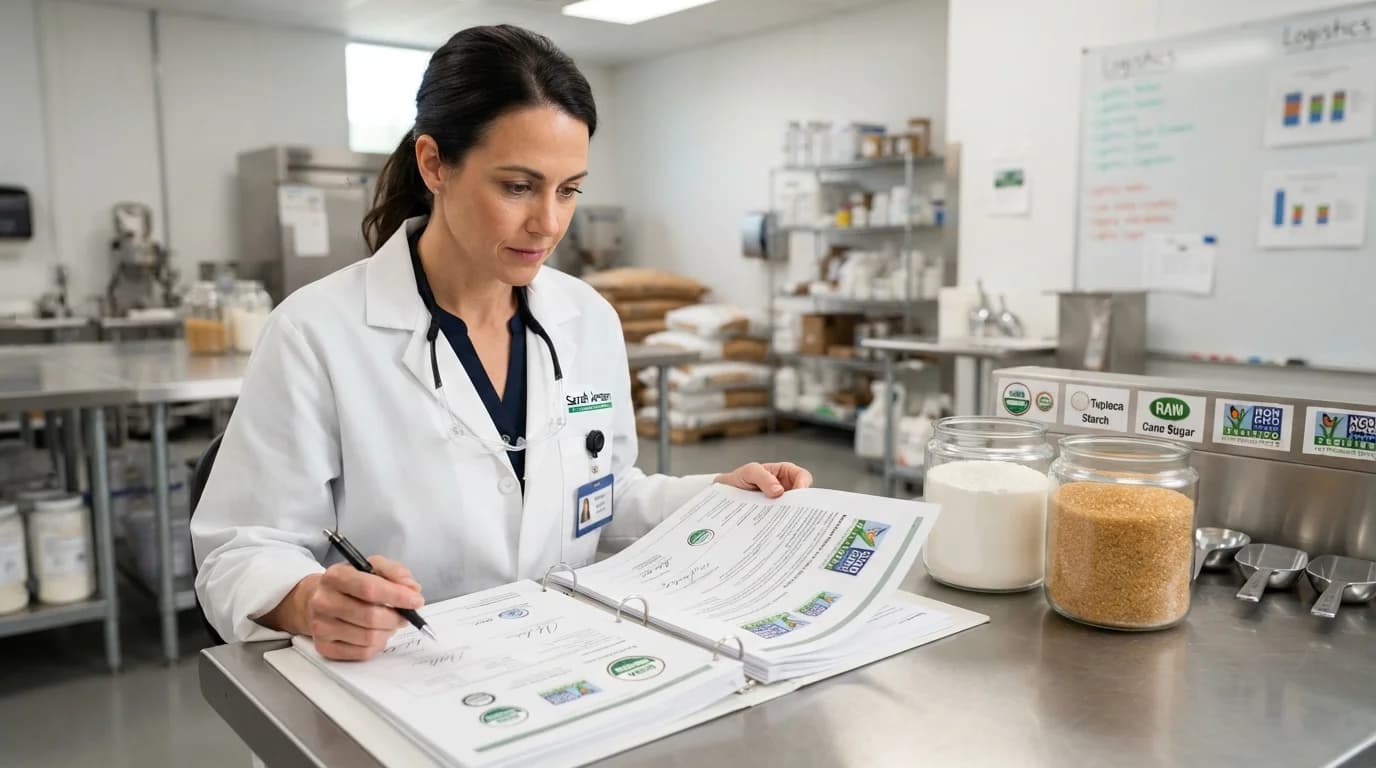
- The Solution: The CMO must source certified Non-GMO Cane Sugar, requiring distinct supply chain tracking and Certificates of Analysis (CoAs) verifying the absence of transgenic DNA.
The Apex of Clean: Certified Organic Gummies
Achieving the USDA Organic seal (or equivalent international standards like Canada Organic) is exponentially more difficult than Non-GMO.
The 95% Rule
To claim "Organic" on the primary display panel, 95% of the gummy's ingredients (by weight, excluding water) must be certified organic. This means the brand must procure Organic Cane Sugar, Organic Tapioca Syrup, Organic natural flavors, and Organic botanical extracts.
The Pectin Exception
Pectin (the gelling agent) is currently on the USDA's National List of Allowed and Prohibited Substances. This means non-organic pectin can be used in an organic gummy (falling into the allowable 5% non-organic portion), provided it is not commercially available in organic form. However, the pectin itself must still be Non-GMO.
Facility Certification
You cannot manufacture an organic gummy in a standard facility. The CMO itself must be a Certified Organic Facility. This requires rigorous, audited protocols to prevent the commingling of organic and conventional ingredients, highly specific organic-approved cleaning chemicals (CIP protocols), and exhaustive batch traceability from the raw material supplier to the finished bottle.
The Indian CMO Advantage in Clean Sourcing
For brands looking to scale clean label products globally, elite Indian CMOs offer a massive strategic advantage.
India has a deeply entrenched, historically non-GMO agricultural sector, particularly regarding sugar cane and botanicals (like Ashwagandha and Curcumin). Premium Indian facilities have vertical integration with local organic farming cooperatives. They can source certified Organic Cane Sugar, Organic Tapioca, and Organic functional botanicals domestically, avoiding the massive markups associated with importing these ingredients into the US.
By leveraging this supply chain, a brand can produce a fully certified Organic, Non-GMO pectin gummy at a Total Landed Cost that aggressively outcompetes US domestic manufacturing.
Probiota Innovations: Your Clean Label Partner
At Probiota Innovations, clean label is not a premium add-on; it is our standard operating procedure.
We formulate exclusively with natural colors and flavors. Our supply chain is rigidly vetted to provide verified Non-GMO Tapioca syrups, Cane Sugars, and functional botanical extracts. Our facility holds the rigorous international certifications required to guarantee traceability, allowing your brand to confidently command the premium clean label market.
Discover our Advanced Clean Label Formulation Capabilities
Frequently Asked Questions (FAQ)
1. What is the difference between "Natural" and "Organic"? "Natural" generally means the ingredients are derived from natural sources (plants, animals, minerals) and contain no artificial additives. However, "Natural" crops can still be grown using synthetic pesticides or GMO seeds. "Organic" is a strict, government-regulated certification proving the crops were grown without synthetic pesticides, fertilizers, or GMOs.
2. Are natural colors as stable as artificial colors? No. Artificial colors (like Red 40 or Blue 1) are incredibly stable and vibrant under intense heat and UV light. Natural colors (like beet juice, annatto, or spirulina) are sensitive to heat and will fade over time if exposed to UV light. This is why clean label gummies are often packaged in opaque (HDPE) or tinted bottles to protect the natural colors.
3. Is it possible to make a Sugar-Free AND Organic gummy? It is extremely difficult. The most common sugar-free bulking agents (Maltitol, Erythritol, Allulose) are highly processed derivatives and are very rarely available in certified organic formats. Generally, a brand must choose between being "Sugar-Free" or being "Certified Organic."
4. How do I prove my product is Non-GMO? You must partner with a third-party organization (like the Non-GMO Project in North America). They will audit your entire supply chain, reviewing the Certificates of Analysis (CoAs) from your manufacturer for every single ingredient, ensuring no transgenic DNA is present, before granting the right to use their verification seal.
Recommended Manufacturing Solution
Explore our private label probiotic gummy manufacturing capabilities
Want to discuss your formulation?
Our experts help brands launch technically complex probiotic and functional gummies.