Exporting Gummies from India to Australia: TGA Clearance and Freight Logistics

Exporting Gummies from India to Australia: TGA Clearance and Freight Logistics
The Australian nutraceutical market is incredibly lucrative, characterized by consumers willing to pay a premium for high-quality, efficacious products. However, domestic manufacturing in Australia is expensive, and capacity for advanced formats like sugar-free pectin gummies is constrained.
This dynamic has created a massive opportunity for brands to leverage elite Indian Contract Manufacturing Organizations (CMOs). But exporting gummies India to Australia is not a simple transaction. It requires navigating one of the strictest regulatory environments on the planet (the TGA) and mastering complex ocean freight logistics.
This guide provides a roadmap for securing TGA clearance Indian gummies and optimizing the supply chain to ensure your products land in Australia safely and profitably.
Part 1: Navigating TGA Clearance for Indian CMOs
The Therapeutic Goods Administration (TGA) regulates most functional and probiotic gummies as Complementary Medicines. Before a single gummy can be imported, the foreign manufacturing facility must be granted TGA GMP (Good Manufacturing Practice) clearance.
The Regulatory Challenge
The TGA's GMP standard is heavily based on PIC/S (Pharmaceutical Inspection Co-operation Scheme). The TGA does not automatically recognize Indian GMP certificates (like WHO-GMP) or US FDA registration as equivalent.
The Clearance Pathways
To legally import, the Australian brand (the Sponsor) must obtain GMP clearance for their Indian CMO via one of two methods:
- Direct TGA Inspection: The Sponsor pays for TGA auditors to travel to the Indian facility and conduct a rigorous, multi-day inspection against PIC/S standards. This is expensive and time-consuming.
- Compliance Verification (CV) / Desk Assessment: This is the preferred route. If the Indian facility has been recently audited by a regulatory authority that holds a Mutual Recognition Agreement (MRA) or working arrangement with the TGA (such as Health Canada or certain European agencies), the TGA may grant clearance based on a review of those audit reports.
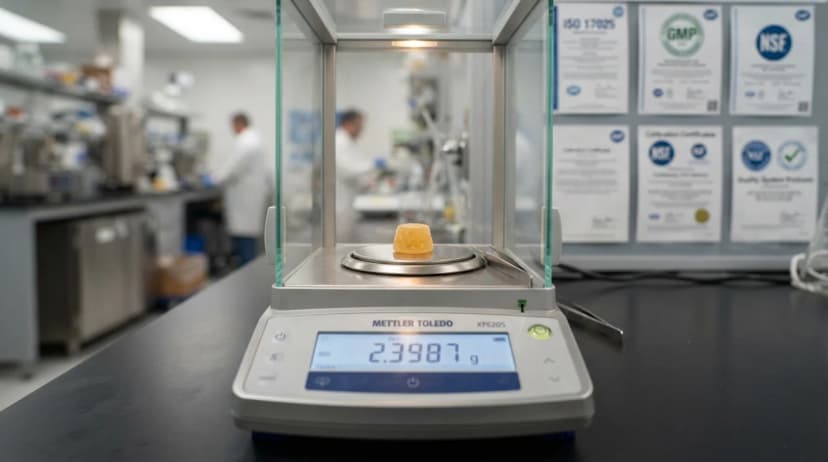
The CMO Prerequisite: To succeed, the Indian CMO must operate at a pharmaceutical level. Facilities holding FSSC 22000 and NSF/ANSI 455-2 possess the rigorous Quality Management Systems (QMS), electronic batch records, and active ingredient assay data required to satisfy TGA auditors.
Part 2: Formulating for the Australian Climate
Securing TGA clearance is meaningless if the product degrades during transit or storage. Australia is classified as ICH Climatic Zone IVa (Hot and Humid).
- The Gelatin Ban: Traditional gelatin gummies melt between 30°C and 35°C. Attempting to export gelatin gummies to Australia requires highly expensive refrigerated (reefer) shipping containers and temperature-controlled warehousing. Even then, the product risks melting in the consumer's car or mailbox.
- The Pectin Imperative: To successfully manage Australia supplement import logistics, the gummy must be formulated with high-methoxyl pectin. Pectin forms a thermo-irreversible gel that does not melt until temperatures exceed 60°C. Pectin gummies can be shipped in standard dry containers and stored in ambient warehouses, drastically reducing logistical costs.
Furthermore, the formula must pass rigorous 6-month accelerated stability testing (at 40°C / 75% RH) to prove to the TGA that the active ingredients (like probiotics or vitamins) will survive a 24-month shelf life in the harsh Australian climate.
Part 3: Freight Logistics and Supply Chain Optimization
Once the gummies are manufactured and packaged, the physical movement of the goods from an Indian port (e.g., Nhava Sheva) to an Australian port (e.g., Sydney or Melbourne) must be optimized.
Sea Freight vs. Air Freight
- Air Freight: While extremely fast (2-4 days), air freight for dense, heavy products like gummies destroys profit margins. It should only be used for emergency out-of-stock situations or small initial trial runs.
- Sea Freight (FCL): Full Container Load (FCL) sea freight is the only viable option for scaling a brand. The transit time from India to Australia typically ranges from 18 to 28 days depending on the routing. Because pectin gummies are heat-stable, standard dry containers can be used, significantly lowering the gummy freight logistics Australia cost.
Customs and Import Duties
When the container arrives in Australia, it must clear Australian Border Force (ABF).
- Documentation: The shipment must be accompanied by pristine paperwork, including a Commercial Invoice, Packing List, Bill of Lading, Certificate of Origin, and crucially, the TGA AUST L listing number to prove the goods are legally permitted to enter.
- Free Trade Agreements: The Australia-India Economic Cooperation and Trade Agreement (ECTA) significantly reduces or eliminates import tariffs on many manufactured goods, providing an additional economic advantage for Indian CMO export Australia strategies compared to importing from the US or Europe.
The Probiota Innovations Advantage
At Probiota Innovations, we do not just manufacture gummies; we engineer export solutions. Our world-class facility in India operates under stringent global quality standards (FSSC 22000, NSF-ready QMS) designed to facilitate TGA GMP clearance.
We formulate high-brix, thermo-irreversible pectin gummies capable of withstanding the Australian climate, and our logistics team provides the flawless documentation required to ensure your shipments clear Australian customs rapidly and reliably.
Explore our Export-Ready Turnkey Manufacturing Solutions
Frequently Asked Questions (FAQ)
1. Who is responsible for getting TGA GMP clearance—the manufacturer or the brand? The Australian brand (the Sponsor) is legally responsible for applying for and obtaining GMP clearance from the TGA. However, the Indian manufacturer must provide the Sponsor with the exhaustive documentation, audit reports, and Site Master File (SMF) required to support the application.
2. Can I ship pectin gummies to Australia in summer without refrigerated containers? Generally, yes. High-quality pectin gummies have a melting point above 60°C. Standard dry ocean containers rarely exceed 50°C internally, even in the height of summer. This is a massive logistical advantage over gelatin, which absolutely requires costly refrigerated (reefer) freight.
3. What is an AUST L number? It is a unique registration number issued by the TGA when a product is entered into the Australian Register of Therapeutic Goods (ARTG) as a Listed Medicine. This number must be printed on the front label of the product, and customs will check for it during importation.
4. How long does the TGA GMP clearance process take? If utilizing the Compliance Verification (CV) desk-assessment pathway, it can take 3 to 6 months depending on the TGA's backlog. If a direct on-site TGA inspection is required in India, the process can take 9 to 18 months to schedule, execute, and finalize.
Recommended Manufacturing Solution
Partner with us for globally compliant supplement production
Want to discuss your formulation?
Our experts help brands launch technically complex probiotic and functional gummies.