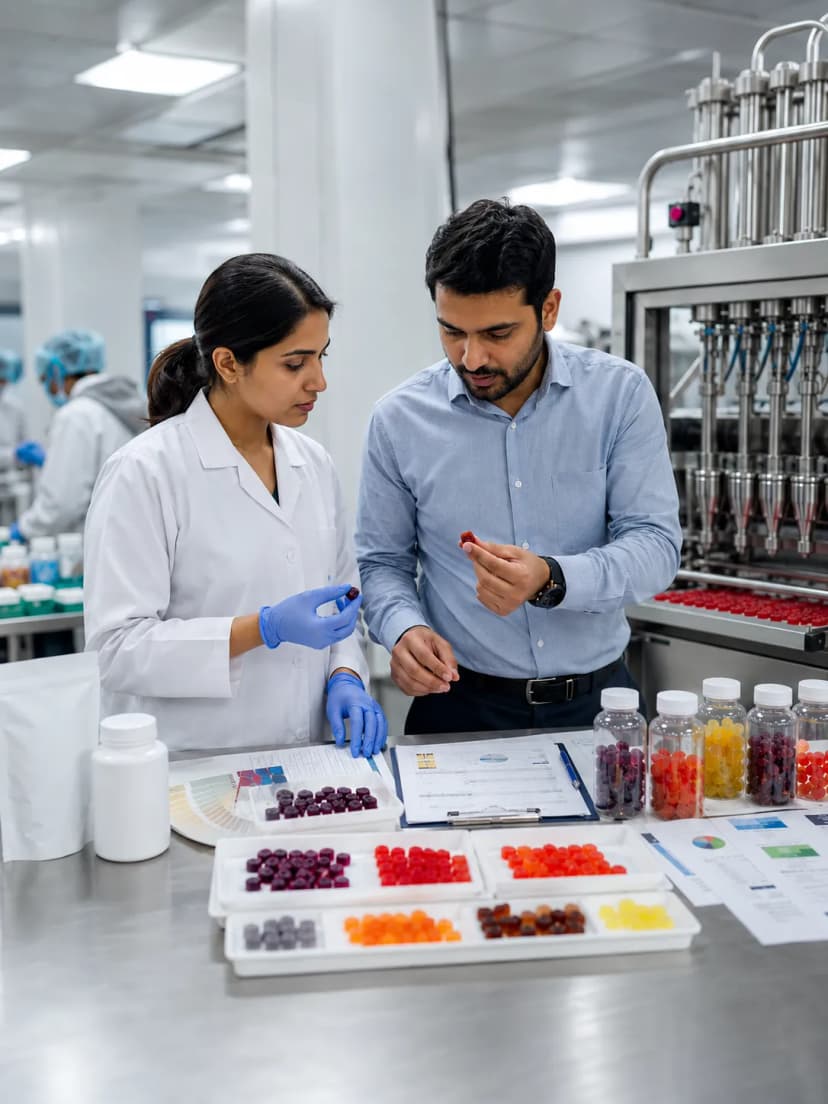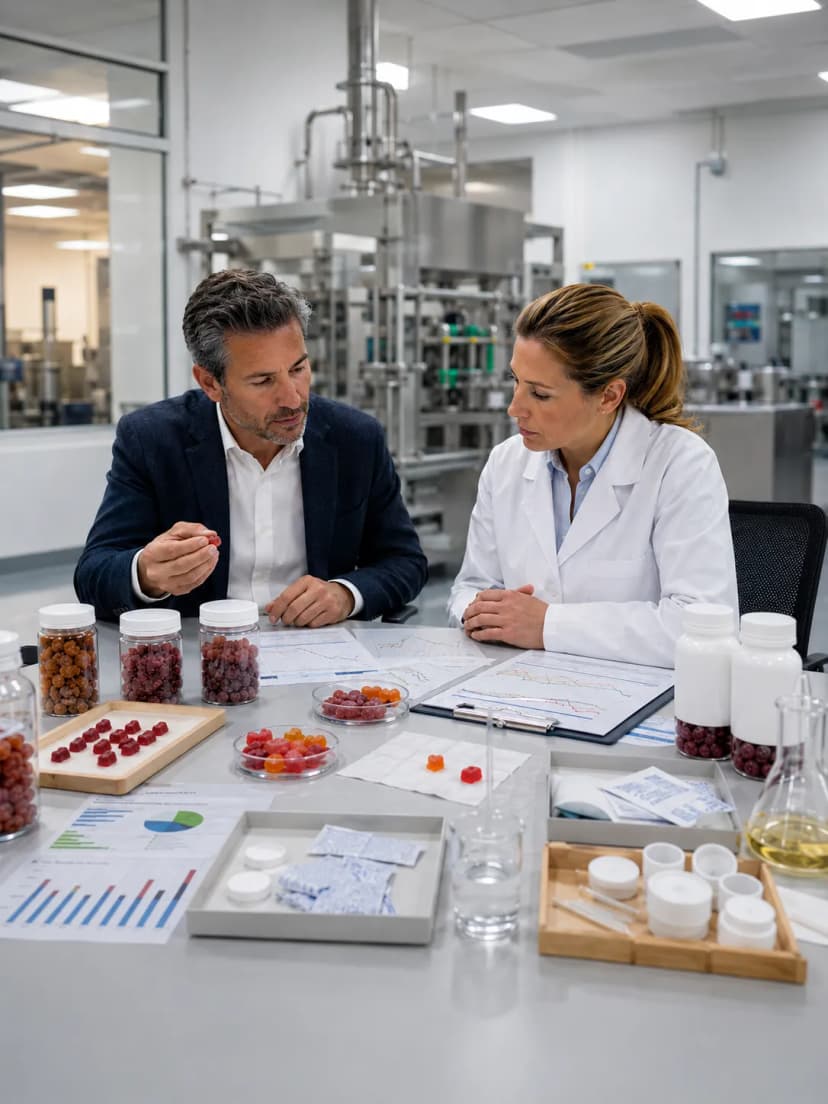
Scaling from Pilot to 50,000 Units: A Gummy Manufacturing Roadmap
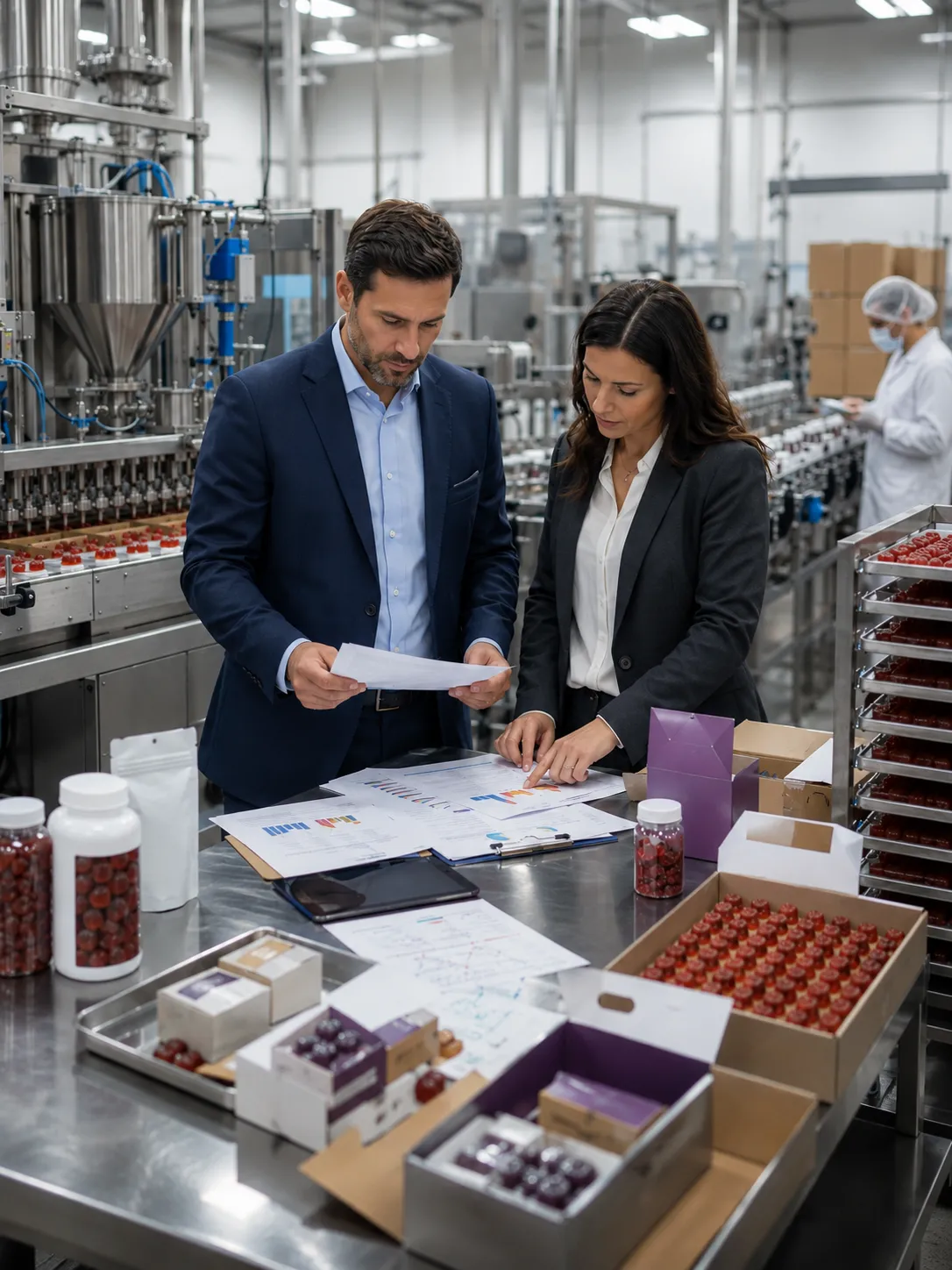
Your pilot batch sold out in six weeks. Reorders are coming in. A mid-size e-commerce retailer wants to stock you. And now you need 50,000 units - but you've never produced at that volume before, and you're not entirely sure what changes between a 5,000-unit pilot and a commercial-scale gummy run.
This transition is where many young supplement brands stumble. Not because the product isn't good, but because the operational complexity of scaling gummy manufacturing catches them off guard. Lead times stretch. Unit costs don't drop as fast as expected. Packaging that worked for a pilot run doesn't hold up at commercial volumes. Quality consistency across larger batches becomes a real variable.
Scaling from pilot to 50,000 units in gummy manufacturing isn't just "ordering more." It's a distinct operational phase with its own decisions, risks, and timelines. Here's the roadmap.
What Actually Changes Between Pilot and Commercial Scale
At pilot scale - 5,000 to 15,000 units - your manufacturer is effectively running a controlled test. The batch is small enough that formulation adjustments, QC oversight, and even manual packaging interventions are manageable.
At 50,000 units, several things shift:
- Batch sizes increase. You may move from a single batch to multiple sequential batches, which introduces batch-to-batch consistency as a quality variable.
- Raw material procurement changes. Your manufacturer needs to source larger quantities of active ingredients, pectin or gelling base, flavours, and colours. Lead times for specialty ingredients can add 2–4 weeks.
- Curing and drying capacity becomes a constraint. Gummies require 24–72 hours of curing time in climate-controlled rooms. At commercial volumes, curing room capacity can bottleneck the production schedule.
- Packaging runs on automated lines. Manual or semi-manual packaging that worked for 5,000 units becomes impractical. Your packaging specs need to be finalised, tested, and compatible with the manufacturer's filling and sealing equipment.
- Documentation and QC protocols scale. Every batch needs its own Certificate of Analysis, microbiological testing, active assay, and stability data tracking.
Understanding these changes before you place your first commercial order prevents the most common scaling surprises.
The Scale-Up Timeline: What to Expect
A realistic gummy manufacturing lead time for scaling from pilot to 50,000 units looks something like this:
Weeks 1–2: Commercial order confirmation and raw material procurement
Once you confirm the order, your manufacturer initiates procurement for bulk raw materials. Specialty actives - probiotics, NAC, omega-3 oils, botanical extracts - may have longer supplier lead times than commodity ingredients.
Weeks 3–4: Packaging finalisation
If you're upgrading packaging from your pilot run (which you probably should be), this is when final artwork, bottle specifications, label proofs, and cap/seal specifications are confirmed. Packaging suppliers typically need 2–3 weeks for production runs at commercial quantities.
Weeks 5–8: Manufacturing
The actual gummy production - cooking, depositing, curing, coating, and QC - takes 3–4 weeks for a 50,000-unit run, depending on formulation complexity, curing times, and the manufacturer's production schedule. Multi-batch runs require additional time for changeover and inter-batch QC.
Weeks 8–10: QC, packaging, and dispatch
Final quality checks, packaging, shrink-wrapping, and carton packing. For export orders, documentation preparation (CoA, stability reports, regulatory dossier) runs in parallel.
Total: 10–14 weeks from order confirmation to dispatch
This is a realistic gummy manufacturing lead time for a 50,000-unit commercial run with a custom formulation. Catalog products with existing formulations and stability data can sometimes be faster, but don't count on less than 8 weeks even in the best case.
Unit Economics: How Costs Change at Scale
One of the most important questions at this stage: how much cheaper does each unit get?
The honest answer: it depends on what's driving your cost.
Components that scale well (cost decreases significantly)
- Manufacturing labour and setup - fixed setup costs are now spread across 50,000 units instead of 5,000
- Packaging materials - bottles, caps, labels, and cartons drop meaningfully in per-unit cost at commercial volumes
- Formulation development - this was a one-time cost during your pilot phase; at commercial scale, it's already paid for
Components that scale moderately
- Raw materials - bulk pricing is better than pilot-scale pricing, but premium actives (patented probiotic strains, branded botanical extracts, high-purity NAC) don't discount as steeply as commodity ingredients
- QC and testing - per-batch costs are fixed, but you're running fewer batches per unit at higher volumes
Components that don't scale much
- Active ingredients at clinical doses - if you're using a high-load formulation (e.g., 800 mg NAC, 2 billion CFU probiotics), the active ingredient is a significant portion of your cost, and bulk pricing has limits
- Regulatory and documentation - stability testing, export dossier preparation, and compliance support are project costs, not volume-dependent
A reasonable expectation: per-unit cost at 50,000 units is typically 20–35% lower than at pilot scale. The exact improvement depends on your formulation and packaging choices.
Quality Consistency Across Larger Batches
At pilot scale, your manufacturer probably produced your entire order in a single batch. At 50,000 units, you may be looking at 3–5 batches produced sequentially.
This introduces batch-to-batch consistency as a quality variable. What can vary:
- Colour and appearance - slight variations in cooking temperature or timing can affect gummy colour
- Texture and chew - pectin gummies are sensitive to curing conditions; inconsistent curing can produce harder or softer gummies across batches
- Active ingredient content - proper mixing and depositing protocols should minimise variation, but verify through per-batch assay results
- Weight uniformity - each gummy should fall within a defined weight tolerance
What to confirm with your manufacturer
- Do you test each batch independently, or composite-test across the run?
- What are your batch-to-batch tolerance limits for weight, active content, and appearance?
- How do you handle a batch that falls outside specification - rework, reject, or blend?
- Can I review the CoA for each batch before packaging and shipment?
A contract manufacturer with a clear rework policy and transparent batch testing is significantly safer to scale with than one that only tests the final composite.
Packaging Decisions That Matter at Commercial Scale
Pilot batch packaging is often basic - functional bottles, simple labels, minimal secondary packaging. At 50,000 units, your packaging becomes a brand asset and a functional requirement.
Key decisions at this stage
Bottle format: HDPE bottles are the industry standard - lightweight, cost-effective, and suitable for most gummy products. Glass jars position premium but add shipping weight and breakage risk, particularly for export.
Child-resistant closures: Required in some markets (US, UK) for products marketed as dietary supplements. Confirm your manufacturer's packaging line can handle CR caps at speed.
Labels vs. direct print: Pressure-sensitive labels are standard at this scale. Direct bottle printing (screen or digital) is premium but typically requires much higher MOQs.
Induction sealing: A tamper-evident seal under the cap. Expected by most retailers and consumers for supplement products. Confirm your manufacturer's packaging line includes induction sealing capability.
Desiccants: Silica gel packets inside the bottle protect gummies from moisture - critical for probiotic products and in humid storage/shipping environments.
Secondary packaging: Carton boxes, shrink wrap, and case packing. For export shipments, confirm that secondary packaging meets your importer's requirements.
Explore Export-Ready Manufacturing
Turnkey vs. Modular Manufacturing Support
At scale, you'll find manufacturers operate on a spectrum:
Turnkey gummy production
The manufacturer handles everything - formulation, raw material procurement, manufacturing, QC, packaging, labelling, and sometimes even logistics coordination. You provide the brief and the brand assets; they deliver finished, labelled, shelf-ready product.
Best for: First-time brands, lean teams, founders without supply chain experience. Turnkey production for startup support removes the operational complexity so you can focus on marketing and sales.
Modular support
You manage certain parts of the supply chain - perhaps you source your own packaging, or you have an external regulatory consultant handling your dossier. The manufacturer handles manufacturing and QC only.
Best for: Experienced operators who want more control over specific supply chain elements, or brands working with multiple suppliers for different components.
Most startup-stage brands benefit from turnkey support at the first commercial scale. As you grow and build internal capability, you can gradually take on more supply chain management.
Export Considerations at Commercial Scale
If your 50,000-unit run is destined for an international market, there are additional scaling considerations:
- Regulatory compliance: Your product formulation must meet the permitted ingredient levels and labelling requirements of your destination market before you produce at commercial scale - not after.
- Export documentation: CoA, stability data, allergen declarations, facility certificates, and any market-specific certifications (halal, kosher, TGA listing) need to be prepared in parallel with production.
- Shipping and logistics: Sea freight vs. air freight decisions affect your cost and timeline. Gummies have temperature sensitivity during transit - confirm your manufacturer's shipping protocols for your destination climate.
- Import regulations: Understand your destination country's import requirements before shipment. A 50,000-unit container held at customs is a very expensive problem.
Explore Export-Ready Manufacturing
The Scale-Up Checklist
Before confirming your first commercial-scale gummy order, verify:
- Formulation is finalised and approved based on pilot batch performance
- Accelerated stability data supports your target shelf-life claim
- Packaging specifications are confirmed and compatible with the manufacturer's filling line
- Raw material lead times are factored into the production schedule
- Per-batch QC protocol is agreed, including batch-release criteria
- Pricing is confirmed with a line-item breakdown at the commercial volume
- Export documentation requirements are identified and assigned
- Shipping logistics and temperature management are planned
- Contract terms cover batch rejection, rework, and IP protection
FAQ
How long does it take to scale from a 5,000-unit pilot to a 50,000-unit commercial run? If the formulation is validated and packaging is ready, expect 10–14 weeks from order confirmation to dispatch. The main variables are raw material procurement lead times and the manufacturer's production schedule. Planning the commercial run while your pilot batch is still selling is the best way to avoid a stock gap.
Will my per-unit cost drop significantly at 50,000 units? Typically 20–35% lower than pilot-scale pricing, depending on your formulation and packaging. The biggest savings come from amortising manufacturing setup costs and packaging material pricing. High-cost active ingredients don't discount as dramatically at this volume.
What if I need to change the formulation between pilot and commercial scale? Minor adjustments (flavour tweaks, colour changes) can usually be accommodated without a full re-development cycle. Significant formulation changes - different actives, different gelling system, different dosage - will require a new development batch and potentially new stability data. Make changes before committing to the commercial run, not during it.
Can I split a 50,000-unit order across multiple SKUs? Yes, but each SKU requires its own setup, formulation, and QC - so per-SKU volumes will be lower and per-unit costs higher. Discuss multi-SKU runs with your manufacturer upfront to understand the cost and timeline implications.
What happens if a commercial batch fails QC? This should be covered in your manufacturing agreement. A responsible manufacturer will have a documented rework policy - and will flag potential issues before packaging, not after. Ask about batch rejection rates and what triggers a hold before you scale.
Planning Your First Commercial Run?
If you've validated a gummy product at pilot scale and need to scale to commercial volumes with a manufacturer who handles the full production lifecycle - from formulation refinement through to export-ready packaging - share your brief with our team.
We support brands through the pilot-to-scale transition with transparent pricing, per-batch QC, and a facility built for both development and commercial production.
Request a Project Brief Learn about Probiotic Gummies Manufacturing
Recommended Manufacturing Solution
Explore our private label probiotic gummy manufacturing capabilities
Want to discuss your formulation?
Our experts help brands launch technically complex probiotic and functional gummies.