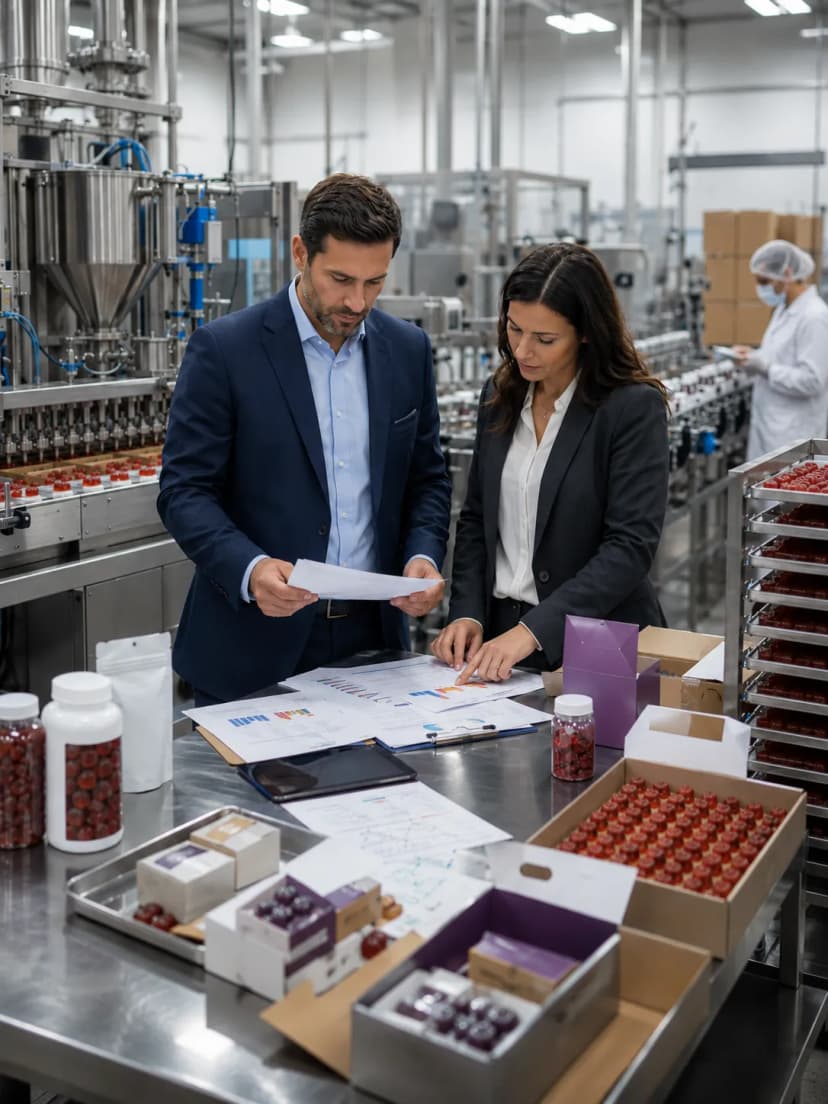
Why Gummy Product Launches Fail: A Post-Mortem for Brand Founders

The brand spent eleven months on formulation, packaging design, and a go-to-market plan. The Shopify store was built. The influencer campaign was booked. The first production run shipped - and within ninety days, it was clear the product was going to fail. The gummies were too soft and stuck together in the bottle. Customer complaints about taste arrived faster than reorders. The shelf-life claim turned out to be aspirational, not validated. The retailer listing fell through after a failed audit.
This isn't one brand's story. It's a composite of patterns that repeat across dozens of gummy launches every year - in India, the UK, the US, and the GCC. The gummy supplement category is growing fast, which means more brands are entering it, and more are making the same preventable mistakes.
If you're planning a gummy launch in the next twelve months, this post-mortem analysis of common failure modes is the most valuable reading you can do before you commit budget.
Failure Mode 1: Formulation Wasn't Validated Before Commercial Production
This is the most common and most expensive failure. A brand signs off on a formulation based on a small lab sample, skips or abbreviates the pilot batch stage, and goes straight to a 50,000-unit commercial run. The product that comes off the production line doesn't match the lab sample - because manufacturing scale introduces variables that a lab bench doesn't.
What goes wrong
- Texture changes at scale - gummies are too hard, too soft, or inconsistent across the batch
- Flavour profile shifts when the formulation is cooked in larger volumes
- Active ingredients degrade at different rates under full production conditions
- Colour or appearance isn't consistent across all units
How to prevent it
- Always run a pilot batch (5,000–15,000 units) before committing to commercial scale
- Evaluate pilot batch samples for taste, texture, appearance, and consumer acceptability
- Don't approve commercial production until you've physically handled and tasted the pilot output
The pilot batch is your insurance policy. Skipping it saves a few weeks - and can cost you the entire launch.
Failure Mode 2: Stability Testing Was Skipped or Incomplete
"We'll start stability testing in parallel with the launch." This is one of the most dangerous sentences in supplement product development.
What goes wrong
- The product launches with an assumed shelf life (typically 18–24 months) that hasn't been validated
- At month 3 or 6, stability data comes back showing that actives have degraded below label claim
- Probiotic CFU counts drop faster than expected - the product that's already on shelves or in customers' hands isn't delivering what the label says
- Texture degrades over time - gummies harden, become sticky, or develop a white bloom from sugar crystallisation
How to prevent it
- Initiate accelerated stability testing (40°C/75% RH) with the development batch - not the commercial run
- Don't launch until you have at least 3 months of accelerated data supporting your shelf-life claim
- For probiotic gummies specifically, demand CFU data at each stability time point, not just at manufacture
- Budget for real-time stability studies (25°C/60% RH, 12–24 months) to run in parallel with your early commercial sales
A shelf-life claim without stability data is a liability, not a marketing decision.
Learn about Probiotic Gummies Manufacturing
Failure Mode 3: The Manufacturer Couldn't Actually Deliver the Formulation
Not all manufacturers can execute what they quote. A manufacturer who is comfortable with a 3-ingredient vitamin gummy may not have the capability to produce a 7-ingredient multi-active formulation with live probiotics, oil-based actives, and a sugar-free base.
What goes wrong
- The manufacturer accepts the brief, produces a batch, and the product doesn't match specification
- Probiotic counts don't survive the manufacturing process
- Oil-based actives (omega-3, vitamin E) don't emulsify properly in the gummy matrix - resulting in visible phase separation
- Flavour masking is inadequate for bitter actives (NAC, zinc, herbal extracts)
- The manufacturer blames the formulation complexity rather than their own capability gap
How to prevent it
- Ask for documented examples of comparable formulations the manufacturer has produced - not just a willingness to try
- Verify the manufacturer's R&D capability: who leads formulation, what is their background, do they hold any IP?
- Request a reference from a brand that has launched a similarly complex product through this manufacturer
- Consider switching gummy manufacturers if your current partner can't demonstrate formulation depth
A good manufacturer will tell you upfront if your brief exceeds their capability. A mediocre one will attempt it and deliver a substandard product.
Failure Mode 4: Regulatory and Compliance Gaps
A product that's technically excellent but can't legally be sold in the target market is still a failed launch.
What goes wrong
- The formulation contains an ingredient that exceeds the permitted maximum in the target market (e.g., exceeding EU vitamin limits)
- A probiotic strain isn't authorised under the EU Novel Food Regulation
- The product label doesn't comply with the target market's labelling requirements
- The facility doesn't hold the certifications required by the importer or retailer (US-FDA registration, GMP, halal)
- Missing export documentation delays or blocks customs clearance
How to prevent it
- Define your target market(s) before finalising the formulation - not after
- Confirm ingredient levels against the regulatory limits for each market
- Verify your manufacturer's facility certifications match your target market requirements
- Engage a regulatory consultant in the target market early in the process
- Build the export dossier checklist into your project timeline from day one
Regulatory failures are entirely preventable. They happen because brands treat compliance as the last step rather than the first filter.
Explore Export-Ready Manufacturing
Failure Mode 5: Packaging Wasn't Fit for Purpose
Packaging failures in gummy products are more common than most brands expect, because gummies have specific environmental sensitivities that other supplement formats don't.
What goes wrong
- Inadequate moisture barrier: Gummies absorb moisture from the environment, becoming sticky, soft, and eventually microbially compromised. Packaging that doesn't control moisture exchange will degrade the product during storage and shipping.
- Missing desiccant: Silica gel or other desiccant packets inside the bottle protect against moisture - critical for probiotic gummies. Many first-time brands don't include them.
- Poor induction seal: Without a proper tamper-evident induction seal, the bottle isn't airtight. This accelerates moisture absorption and oxidation of sensitive actives.
- Temperature exposure during transit: Gummies in warm climates (GCC, India, Southeast Asia) can melt or deform during shipping if packaging and logistics don't account for temperature.
- Label compliance issues: Labels that don't meet the regulatory requirements of the destination market trigger customs delays and retailer rejection.
How to prevent it
- Specify packaging requirements during the formulation stage, not after production
- Include desiccant, induction seal, and moisture-barrier packaging as non-negotiable specifications
- Test packaging performance under the temperature and humidity conditions of your shipping routes and storage environments
- Review label compliance with a regulatory specialist before printing
Failure Mode 6: Pricing and Margin Miscalculation
A technically successful product can still fail commercially if the unit economics don't work.
What goes wrong
- Per-unit manufacturing cost is higher than projected, squeezing margins below viability
- The brand prices the product too low to compete, then can't cover the true cost of goods (including stability testing, documentation, packaging, and shipping)
- "Hidden costs" in low MOQ orders - formulation fees, QC costs, packaging minimums - weren't budgeted
- Currency fluctuation between order placement and payment erodes margins on export orders
- Returns and reworks from quality issues eat into already-thin margins
How to prevent it
- Get a detailed, line-item cost breakdown from your manufacturer - not just a per-unit price
- Model your unit economics at both pilot and commercial scale
- Include QC, stability testing, documentation, packaging, and shipping in your cost of goods - not just manufacturing
- Build a realistic pricing model that covers true COGS at your launch volume, not at an aspirational future volume
- Negotiate payment terms and currency hedging for export orders
A cost per unit probiotic gummy breakdown that accounts for all real costs - not just the manufacturing line - is the foundation of a viable business model.
Failure Mode 7: Going to Market Without a Real Differentiator
The gummy supplement shelf - online and offline - is getting crowded. A product that tastes fine, has a reasonable formulation, and looks professional is no longer enough to generate meaningful sales velocity.
What goes wrong
- The product is a private label catalog formulation that twenty other brands are also selling
- There's no compelling story, no proprietary technology, no unique formulation angle
- The brand competes on price in a category where price competition is a race to the bottom
- Retail buyers can't articulate why this product is different from the twelve gummy brands they already carry
How to prevent it
- Build differentiation into the formulation: proprietary blends, patented stability technology, unique active combinations, clinical-dose positioning
- Work with a manufacturer who has R&D capability and IP - not just production capacity
- Define your brand positioning before you brief the manufacturer, not after
- Invest in formulation innovation, not just packaging design
A premium positioning gummy contract strategy starts with a genuinely differentiated product. Marketing can amplify differentiation - it can't create it from nothing.
The Pre-Launch Checklist: Avoiding All Seven Failure Modes
Before committing to a commercial gummy launch, verify:
- Formulation validated through pilot batch with consumer-acceptable taste, texture, and appearance
- Accelerated stability data (minimum 3 months) supports the shelf-life claim for all actives
- Manufacturer has documented capability for your formulation complexity level
- Target market regulatory requirements confirmed and formulation compliant
- Packaging specifications include moisture barrier, desiccant, induction seal, and compliant labelling
- Full cost breakdown completed with realistic margin model at launch volume
- Product has a clear, defensible differentiator beyond "it's a gummy"
FAQ
What is the most common reason gummy launches fail? Formulation issues - specifically, launching a product at commercial scale without adequate pilot testing and stability validation. The gummy format is more technically demanding than capsules or tablets, and the gap between a lab sample and a production batch is larger than most first-time brands expect.
How much should I budget for formulation development before launch? For a custom gummy formulation, budget for 3–5 development iterations, a pilot batch, and 3–6 months of stability testing before commercial production. The time investment is typically 4–7 months; the financial investment varies by formulation complexity but should be treated as a non-negotiable line item, not an optional expense.
What should I do if my gummy manufacturer can't solve a formulation problem? Switch manufacturers. Seriously. If your manufacturer can't deliver a stable, consumer-acceptable product after 2–3 formulation attempts, the capability gap is structural, not iterational. Look for a manufacturer with documented R&D depth, relevant IP, and experience with comparable formulations. Use a switching gummy manufacturers checklist to manage the transition.
Can a failed gummy product be reformulated and relaunched? Yes, but it's expensive - both financially and in terms of brand credibility. The reformulated product needs new stability data, new packaging (if the formulation changes the product's physical characteristics), and potentially a revised label. If the original product had negative reviews, you may also need to relaunch under modified branding.
How do I know if my manufacturer is the right partner for a complex gummy? Ask to see stability data for their most complex formulation - not their simplest. Ask who leads R&D and what their scientific background is. Ask whether they hold any patents. And ask for a reference from a brand that has launched a comparable product through them. The answers will tell you whether they're an operator or an innovator.
Planning a Gummy Launch?
If you're preparing a gummy product launch and want to work with a manufacturer who has the formulation depth, stability testing capability, and compliance infrastructure to help you avoid these failure modes - share your product brief with our team.
We'll review your brief, flag potential risks, and outline a development plan that prioritises getting the product right before you commit to commercial scale.
Request a Project Brief Learn about Probiotic Gummies Manufacturing
Recommended Manufacturing Solution
Want to discuss your formulation?
Our experts help brands launch technically complex probiotic and functional gummies.