Mushroom Gummies: Sourcing Lion's Mane and Reishi for Global Export

The "functional mushroom" category has moved from the fringes of the biohacking community to the mainstream of global wellness. Driven by popular media, scientific research into neurogenesis, and a general shift toward adaptogenic health, mushrooms like Lion's Mane, Reishi, Cordyceps, and Chaga are seeing unprecedented demand. For many consumers, however, the earthy taste and grit of mushroom powders are a barrier. This has made the functional gummy the preferred delivery format for the mushroom category.
But for a brand owner, the "mushroom gummy" is deceptively simple. The gap between a low-quality mushroom candy and a high-efficacy functional gummy is determined by one thing: The Sourcing Strategy.
If you are a brand looking to export mushroom gummies to the US, UK, or EU, you are entering a market where regulatory bodies and educated consumers are increasingly scrutinizing the origin, extraction method, and active compound levels of your ingredients. Here is the definitive guide to sourcing functional mushrooms for gummy manufacturing and ensuring your product stands up to global scrutiny.
1. Fruiting Body vs. Mycelium: The Transparency Battle
When you look at a mushroom gummy label, you will often see "Lion's Mane Extract." What the label frequently hides is which part of the mushroom was actually used.
Fruiting Body (The Premium Standard)
The fruiting body is the "cap" or the visible part of the mushroom. This is where the highest concentration of functional compounds (like beta-glucans and hericenones) is found. For premium export-ready products, sourcing extracts derived exclusively from the fruiting body is the gold standard. It is more expensive but ensures the product delivers on its functional promise.
Mycelium on Grain (The Filler Problem)
Mycelium is the "root system" of the mushroom. In industrial-scale production, mycelium is often grown on a substrate of grain (like rice or oats). When this is harvested, the resulting powder is a mix of mycelium and a significant amount of residual grain starch. Products made from "Mycelium on Grain" are much cheaper to manufacture, but they are effectively diluted with filler. In many markets, particularly the US (under AHPA guidelines), brands are under increasing pressure to disclose if their product contains grain-based mycelium.
The Sourcing Rule: If you want to build a premium, export-ready brand, demand 100% Fruiting Body extracts from your contract manufacturer.
2. Extraction Methods: Dual-Extraction is Key
Mushrooms are made of chitin - the same tough material found in the shells of lobsters and crabs. Humans cannot digest chitin, which means if you simply put raw mushroom powder into a gummy, the consumer will not absorb the functional compounds.
To make the mushrooms bioavailable, they must be extracted.
Hot Water Extraction
This method is used to extract water-soluble compounds like Beta-Glucans, which are primarily responsible for the immune-boosting properties of mushrooms like Reishi and Chaga.
Alcohol (Ethanol) Extraction
Many of the most important cognitive and neuro-protective compounds (like the hericenones and erinacines in Lion's Mane) are fat-soluble. They cannot be extracted with water alone.
Dual-Extraction (The Best of Both Worlds)
Premium mushroom gummies utilize a dual-extraction process. The mushroom is subjected to both hot water and alcohol extraction, then the liquids are combined and spray-dried into a concentrated powder. This ensures the final gummy contains the full spectrum of the mushroom's functional benefits.
The Sourcing Rule: Verify that your manufacturer is using dual-extracts with a standardized percentage of active compounds (e.g., "Lion's Mane Extract standardized to 30% Beta-Glucans").
Explore Functional Gummy Manufacturing
3. The Sensory Challenge: Masking the Earth
Mushrooms are inherently earthy, umami, and often bitter. When you put a high-dose mushroom extract (e.g., 500mg) into a 3-gram gummy, you are essentially trying to make a "mushroom candy" that doesn't taste like mushrooms.
Flavour Engineering for Mushrooms
- Avoid Mild Flavours: Delicate flavours like vanilla or light melon will be overwhelmed by the mushroom's earthiness.
- Lean Into the Umami: Robust, "dark" flavour profiles work best. Blackberry, Dark Cherry, and Plum have natural tannic notes that complement the earthy mushroom base.
- Citrus and Spice: Ginger, Lemon, and Blood Orange provide a sharp, acidic top note that distracts the palate and masks the bitterness.
Texture and Solvency
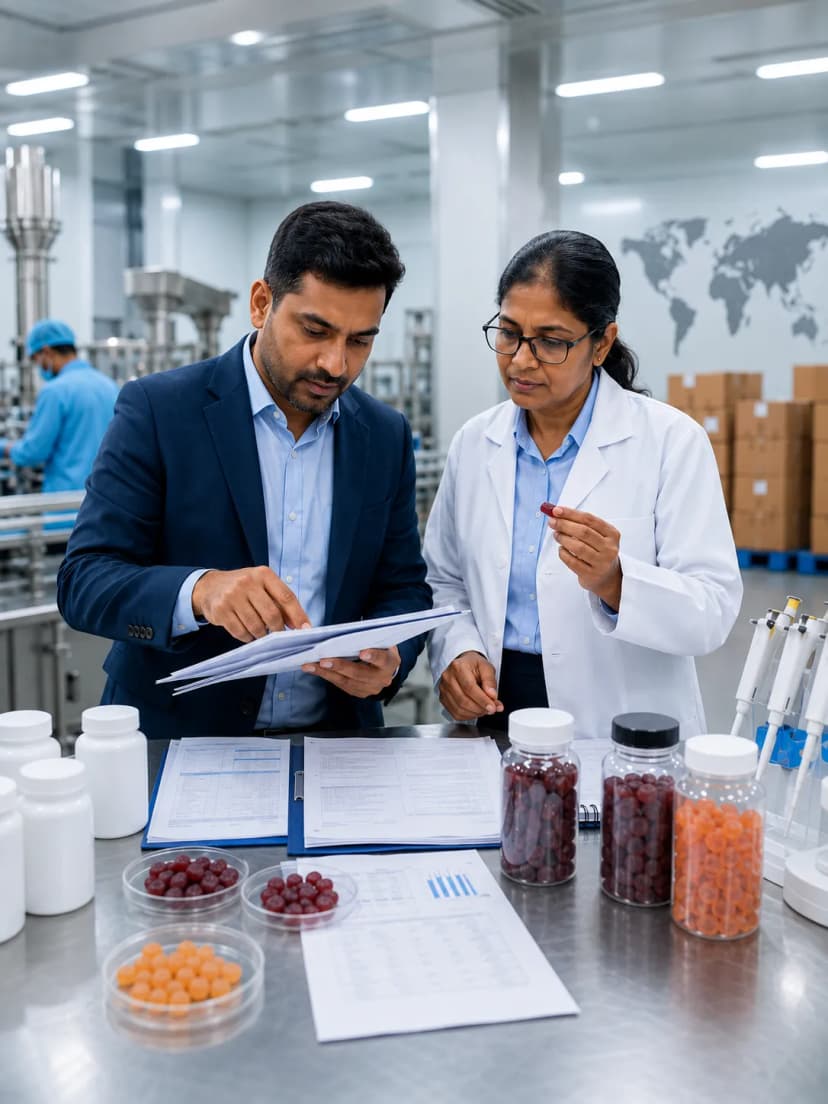
High-quality mushroom extracts can be difficult to dissolve in a pectin base. If not handled correctly, they can create a "gritty" mouthfeel. A premium manufacturer uses high-shear mixing and specific temperature controls to ensure the extract is perfectly emulsified into the gummy syrup before depositing.
4. Regulatory and Export Compliance
Exporting mushroom gummies requires a rigorous documentation trail to pass through customs in major markets.
The Novel Food Hurdle (UK/EU)
In Europe and the UK, several mushrooms have a long history of consumption and are easily permitted. However, certain "exotic" mushrooms or specific concentrated extracts may be flagged as Novel Foods. Your CMO must verify that the specific species and extraction method you are using have a recognized history of consumption in the destination market.
Heavy Metal Screening
Mushrooms are "bio-accumulators" - they naturally pull minerals and metals from the soil they grow in. If the mushrooms are grown in an area with industrial pollution, the extract will contain high levels of Lead, Arsenic, and Cadmium. US (specifically California Prop 65) and EU regulators have extremely low thresholds for heavy metals in supplements.
The Compliance Rule: Your manufacturer must provide a Certificate of Analysis (CoA) for every batch, from an ISO 17025 accredited lab, specifically testing for heavy metals and pesticide residues.
Explore Export-Ready Manufacturing
FAQ
Are mushroom gummies as effective as capsules or tinctures? Yes, provided they are made with high-quality dual-extracts. In fact, the chewing process can aid in the initial breakdown of the gummy, potentially improving the absorption of certain water-soluble compounds.
Can I mix multiple mushrooms in one gummy? Absolutely. "Complex" mushroom gummies (e.g., Lion's Mane for focus + Reishi for stress) are very popular. However, keep in mind the "active load" limit - trying to put 500mg each of four different mushrooms into one gummy will destroy the texture. Consider a serving size of 2 or 3 gummies for multi-mushroom stacks.
Is it possible to make a 100% sugar-free mushroom gummy? Yes. Mushroom extracts can be successfully integrated into sugar-free pectin bases (using maltitol or stevia). However, because sugar alcohols don't mask bitterness as well as sugar, the flavour engineering becomes even more critical.
Build a World-Class Mushroom Gummy
Functional mushrooms are a premium category. You cannot afford to cut corners on sourcing or formulation if you want to compete globally.
Probiota Innovations specializes in high-load, complex botanical gummies. We source only 100% fruiting body, dual-extracted mushroom powders and use advanced flavour science to create gummies that deliver clinical benefits with a premium taste experience.
Request a Project Brief Learn about Vegan & Pectin Gummies
Recommended Manufacturing Solution
Learn how our Indian manufacturing facility supports global export
Want to discuss your formulation?
Our experts help brands launch technically complex probiotic and functional gummies.