The Role of Desiccants and Induction Sealing in Gummy Supplement Packaging
The Role of Desiccants and Induction Sealing in Gummy Supplement Packaging
You have engineered a flawless pectin gummy. It contains a precise clinical dose of heat-stable postbiotics, its Water Activity (aw) is perfectly balanced at 0.60 to prevent microbial growth, and it passed every heavy metal and identity test in the lab.
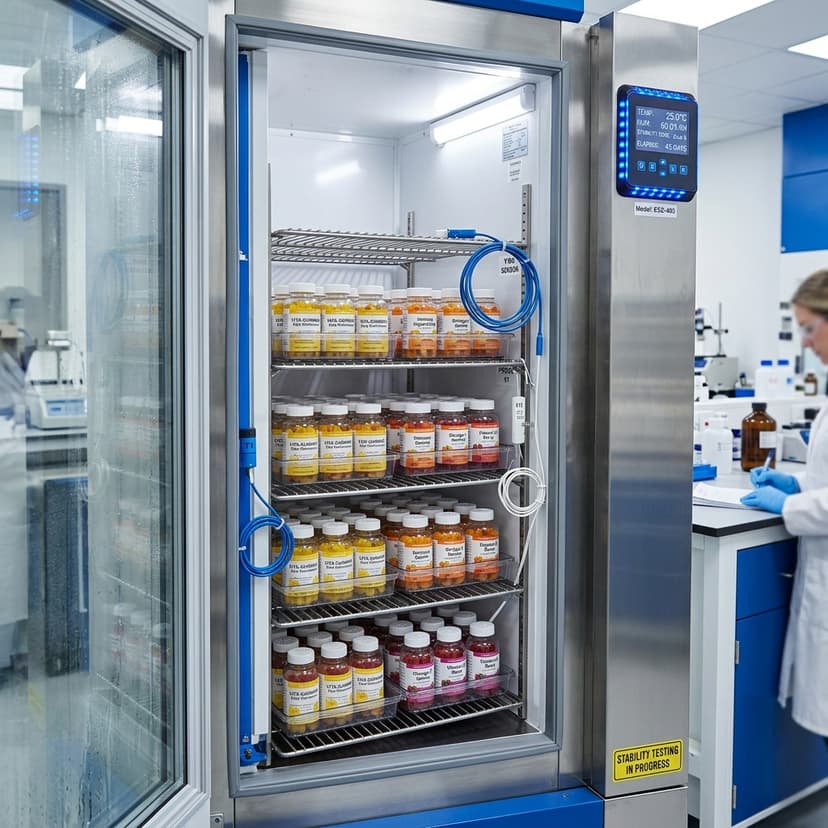
However, the moment that gummy leaves the pristine, climate-controlled manufacturing facility and enters the brutal reality of global logistics—sitting in uninsulated semi-trucks in Texas or humid shipping containers en route to Dubai—its chemical stability is under relentless attack.
The final line of defense is not the formulation; it is the Packaging Engineering. Here is how elite brands utilize desiccants and induction sealing to guarantee a 24-month shelf life.
The Enemy: Moisture Vapor Transmission Rate (MVTR)
The primary threat to a packaged gummy is ambient humidity. If moisture from the air permeates the bottle, the gummy absorbs it. The internal Water Activity (aw) spikes, leading to syneresis (weeping/melting), degradation of active ingredients (like Vitamin C oxidizing), and rapid microbial growth.
The goal of packaging is to achieve the lowest possible Moisture Vapor Transmission Rate (MVTR)—the measure of how much water vapor can pass through the plastic barrier over time.
- PET (Polyethylene Terephthalate): The most common clear plastic for gummies. It has a moderate MVTR.
- HDPE (High-Density Polyethylene): Opaque, harder plastic. It has a significantly lower MVTR than PET, providing a superior moisture barrier for highly sensitive functional gummies.
The Seal: Induction Technology
A thick plastic bottle is useless if the cap leaks air.
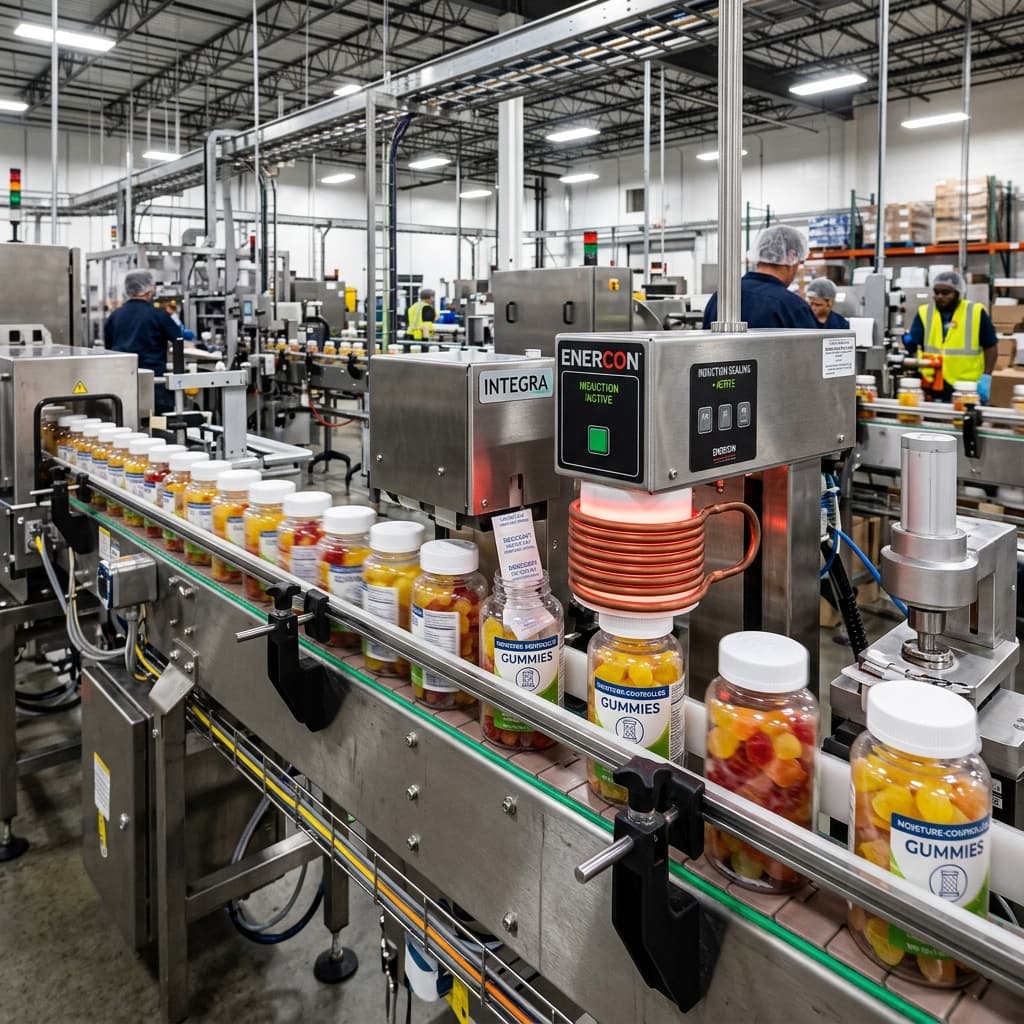
To create an absolute hermetic seal, CMOs utilize Induction Sealing.
- A foil liner is inserted into the plastic cap.
- After the bottle is filled and capped, it passes under an electromagnetic induction coil on the high-speed packaging line.
- The electromagnetic field rapidly heats the foil, melting a thin layer of polymer on the underside of the liner, permanently welding it to the lip of the plastic bottle.
This weld creates an absolute barrier against oxygen and moisture, locking the internal environment of the bottle until the consumer opens it.
The Internal Guardian: Desiccants
Even with a perfect induction seal, a small amount of ambient, humid air is trapped inside the "headspace" of the bottle when the cap is applied. Furthermore, once the consumer breaks the seal, they will open and close the bottle every day, introducing fresh humidity.
To combat this, brands must include a Desiccant.
Desiccants are highly hygroscopic materials (usually Silica Gel or Molecular Sieve) designed to aggressively pull moisture out of the air.
- Silica Gel Canisters: The standard in the industry. These small, hard plastic cylinders are dropped into the bottle before capping. They rapidly absorb the moisture trapped in the headspace, dropping the relative humidity inside the sealed bottle to near zero.
- Protecting Active Ingredients: Certain active ingredients (like highly concentrated botanical extracts or certain vitamins) are intensely hygroscopic; they will pull water out of the gummy matrix itself, causing the gummy to harden while the active ingredient degrades. A desiccant canister out-competes the active ingredients for the available moisture, preserving the chemical integrity of the entire formula.
The Strategy for Global Export
If a brand is exporting premium pectin gummies to regions with extreme humidity (like Southeast Asia or the GCC), packaging engineering must be escalated.
A standard clear PET bottle without a desiccant will likely fail stability testing in these zones. A globally compliant export SKU will often specify an opaque HDPE bottle (for superior UV and moisture blocking), a robust induction seal, and a high-capacity silica gel canister to ensure the product survives the journey and the consumer's bathroom cabinet.
Frequently Asked Questions (FAQ)
1. Can consumers eat the desiccant canister? While silica gel is non-toxic, it is a choking hazard. This is why modern packaging lines use rigid plastic desiccant "canisters" rather than the small, flexible paper packets often found in shoe boxes or electronics. The rigid canister is too large to accidentally swallow with a gummy.
2. Does opaque packaging protect against heat? No. Opaque packaging (like amber PET or white HDPE) blocks UV light, which prevents the fading of natural colors and the degradation of light-sensitive vitamins (like Riboflavin). It does not insulate the product from extreme heat. Only thermo-irreversible High-Methoxyl (HM) Pectin can protect the gummy structure from heat.
3. What is a "Neck Band" or "Shrink Band"? A plastic sleeve shrunk over the outside of the cap using heat. It serves primarily as a visual tamper-evident seal for retail shelves. It does not provide an airtight moisture barrier; only the internal foil induction seal can do that.
Recommended Manufacturing Solution
Discover our turnkey white label probiotic supplement solutions
Want to discuss your formulation?
Our experts help brands launch technically complex probiotic and functional gummies.