ICP-MS Testing for Gummies: How CMOs Guarantee Heavy Metal Compliance

ICP-MS Testing for Gummies: How CMOs Guarantee Heavy Metal Compliance
The fastest way to destroy a dietary supplement brand is a failed heavy metals test.
Whether it is an FDA audit, an Amazon compliance sweep, or a predatory "bounty hunter" lawsuit enforcing California’s Proposition 65, the detection of toxic heavy metals in your gummy product results in immediate, catastrophic financial and reputational damage.
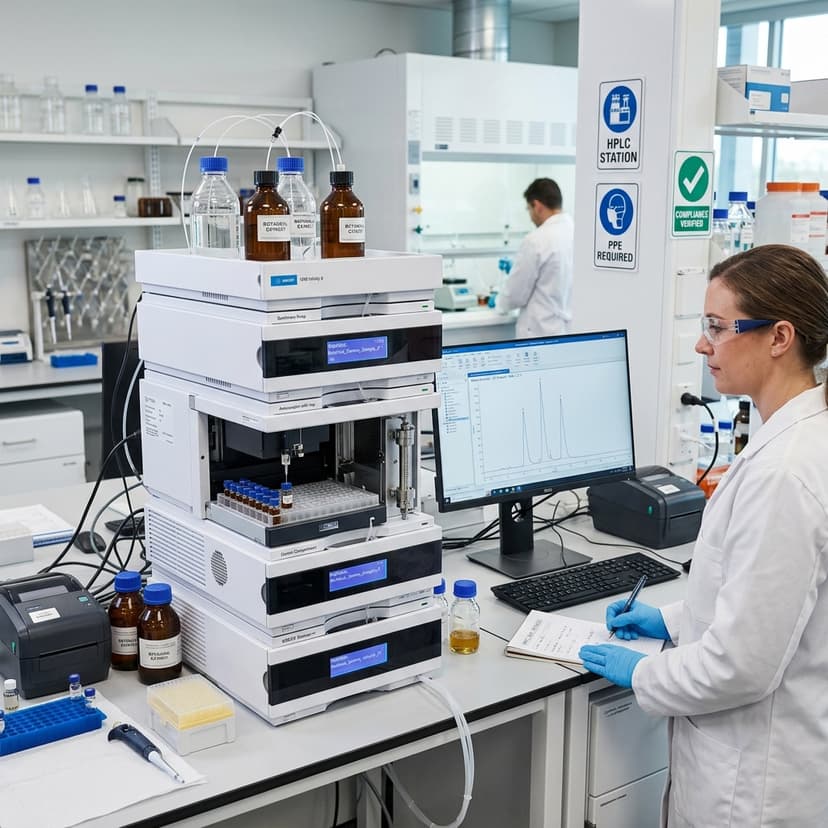
To prevent this, elite Contract Manufacturing Organizations (CMOs) do not rely on guesswork or cheap testing methods. They utilize the apex of analytical chemistry: Inductively Coupled Plasma Mass Spectrometry (ICP-MS).
Here is why ICP-MS is the gold standard for guaranteeing heavy metal compliance in the gummy industry.
The Heavy Metal Threat in Supplement Formulations
Heavy metals—specifically Lead (Pb), Arsenic (As), Cadmium (Cd), and Mercury (Hg)—are naturally occurring elements in the earth's crust.
As consumers demand more "natural" and "functional" gummies, brands are loading formulations with heavy botanical extracts (like Maca, Ashwagandha, and Turmeric) and earth-mined minerals (like Zinc and Magnesium). Because these ingredients grow in the soil or are mined from rock, they act as sponges, absorbing trace amounts of these toxic metals.
When you concentrate a botanical into a 10:1 extract, you also concentrate the heavy metals.
What is ICP-MS?
Traditional heavy metal testing (like atomic absorption spectroscopy) is slow, susceptible to interference, and often cannot detect incredibly low concentrations.
ICP-MS solves these problems with brute force and extreme precision.
- The Plasma Torch: The gummy sample is completely dissolved in strong acids (usually nitric acid) using a microwave digestion system. This liquid is then sprayed into a plasma torch that burns at roughly 10,000°C (hotter than the surface of the sun).
- Atomization: This extreme heat completely vaporizes the sample, breaking it down into individual atoms and stripping off electrons to create charged ions.
- The Mass Spectrometer: These ions are fired through a magnetic field. Because every element has a unique atomic mass, the magnetic field separates the Lead ions from the Zinc ions, much like a prism separates light. A detector then counts the exact number of heavy metal ions present.
The Prop 65 Mandate: Parts Per Billion (ppb)
Why is this extreme technology necessary? Because of California's Proposition 65.
Prop 65 sets the Safe Harbor limit for Lead at an astonishingly low 0.5 micrograms (mcg) per day.
To guarantee a product is compliant, the CMO’s lab cannot just test in "Parts Per Million" (ppm). They must detect heavy metals down to Parts Per Billion (ppb), and sometimes Parts Per Trillion (ppt).
ICP-MS is the only technology capable of providing this level of hyper-accurate, ultra-trace quantification. If a brand attempts to use a cheaper lab utilizing outdated equipment, they risk receiving a "Pass" on their Certificate of Analysis (COA), only to fail a more rigorous Prop 65 audit later.
Protecting the Private Label Brand
When sourcing a CMO, brand owners must demand rigorous heavy metal transparency.
A compliant CMO will utilize ICP-MS to test the incoming raw botanical materials before they are mixed into the gummy slurry, quarantine the ingredient if it tests too high, and then test the finished gummies to verify the entire manufacturing process (including the stainless steel pipes) didn't introduce contamination.
At Probiota Innovations, we enforce the strictest heavy metal thresholds in the industry, utilizing advanced ICP-MS protocols to ensure our premium pectin gummies are unassailably compliant, protecting our brand partners from regulatory liability.
Frequently Asked Questions (FAQ)
1. Does the FDA set specific heavy metal limits for supplements? The FDA does not have a single, universal limit for all heavy metals in all supplements. They state that levels must be "safe" and rely on limits set for specific food categories or reference international standards (like USP or WHO). This is why California's explicit Prop 65 limits usually become the default national standard for brands.
2. Are organic botanicals free from heavy metals? No. "Organic" certification dictates pesticide and fertilizer use; it does not control the natural heavy metal content of the soil the plant grows in. An organic carrot can still pull naturally occurring lead from the earth.
3. Does pectin contain heavy metals? High-quality, highly purified High-Methoxyl (HM) Pectin typically has exceptionally low to non-detectable heavy metal levels, making it the perfect, clean "canvas" for formulating heavy botanical payloads.
Recommended Manufacturing Solution
Scale internationally with our export-focused gummy production
Want to discuss your formulation?
Our experts help brands launch technically complex probiotic and functional gummies.