Microbial Threat Vectors in Starch Moguls vs. Starchless Gummy Manufacturing
Microbial Threat Vectors in Starch Moguls vs. Starchless Gummy Manufacturing
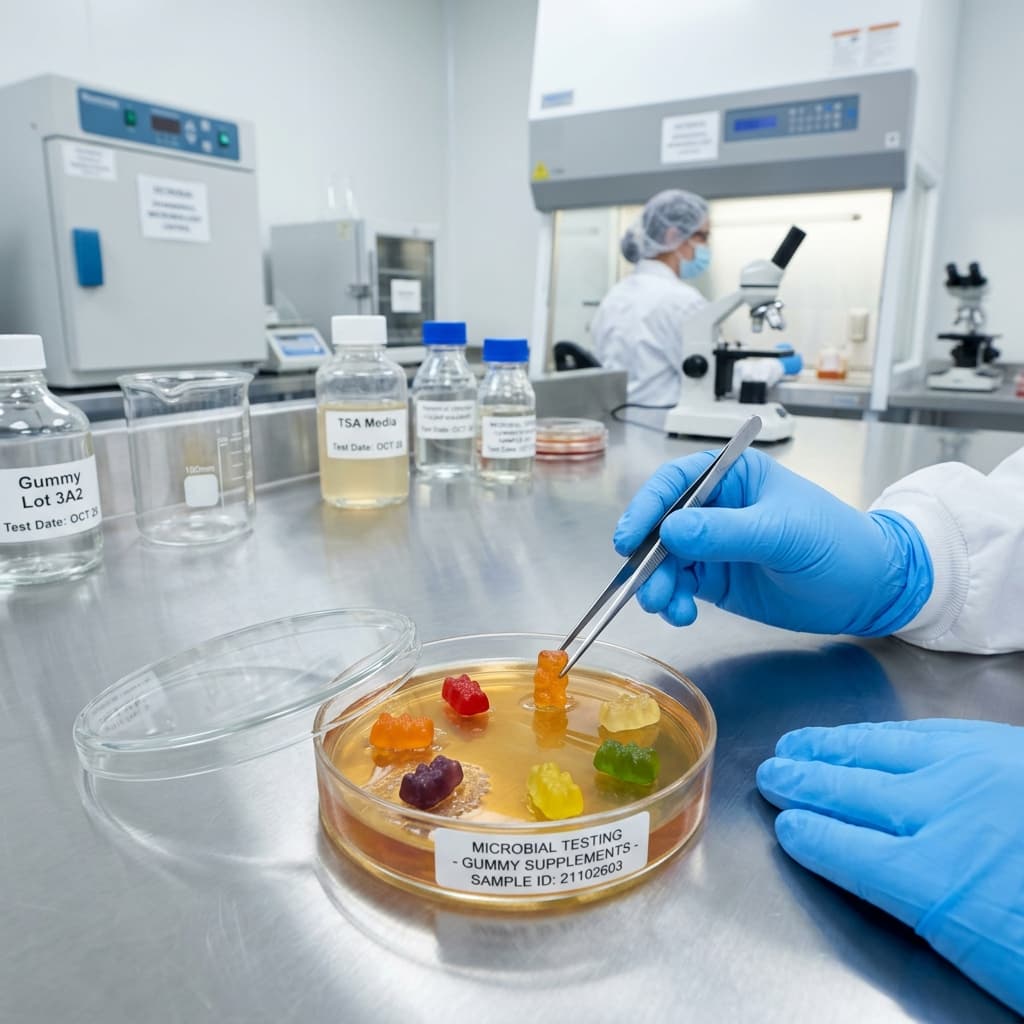
In dietary supplement manufacturing, the battle against microbial contamination is constant. If a batch of gummies fails a microbiological test (testing positive for E. coli, Salmonella, or unacceptably high total plate counts of yeast/mold), the entire multi-million unit run must be destroyed.
The physical machinery used to deposit the gummies dictates the baseline risk of contamination. For decades, the industry relied on starch moguls. Today, the transition to starchless depositing is driven largely by the need to eliminate the massive microbial threat vectors inherent in legacy starch systems.
Here is the microbiological comparison between the two technologies.
The Starch Mogul (The Legacy Threat)
A traditional starch mogul creates the shape of the gummy by pressing a stamp into a massive tray of cornstarch, leaving a negative impression. The hot gummy slurry is deposited into this starch cavity.
This process introduces severe, inherent microbial risks.
1. The Moisture Trap
Cornstarch is highly hygroscopic (it absorbs water). The hot gummy slurry has a high water content. As the gummy cures in the starch tray over 24 to 48 hours, the starch absorbs massive amounts of water from the gummy.
- The Threat: Warm, wet cornstarch is the perfect biological incubator for yeast, mold, and bacteria.
2. The Recycling Loop
After the gummies are cured, they are sifted out, and the wet starch is sent through a heated drying system to be recycled and used again for the next batch.
- The Threat: If a single tray becomes contaminated with mold spores, those spores are mixed back into the communal starch silo and dispersed throughout the entire facility, potentially contaminating millions of subsequent gummies. Validating the cleanliness of recycled starch to FDA GMP standards is a logistical nightmare.
3. Dust Dispersion
Starch moguls create massive amounts of airborne dust.
- The Threat: Airborne starch particles act as vehicles for microbes, allowing bacteria to travel through the HVAC system and settle on exposed equipment, risking widespread cross-contamination.
Starchless Mogul Technology (The Hygienic Solution)
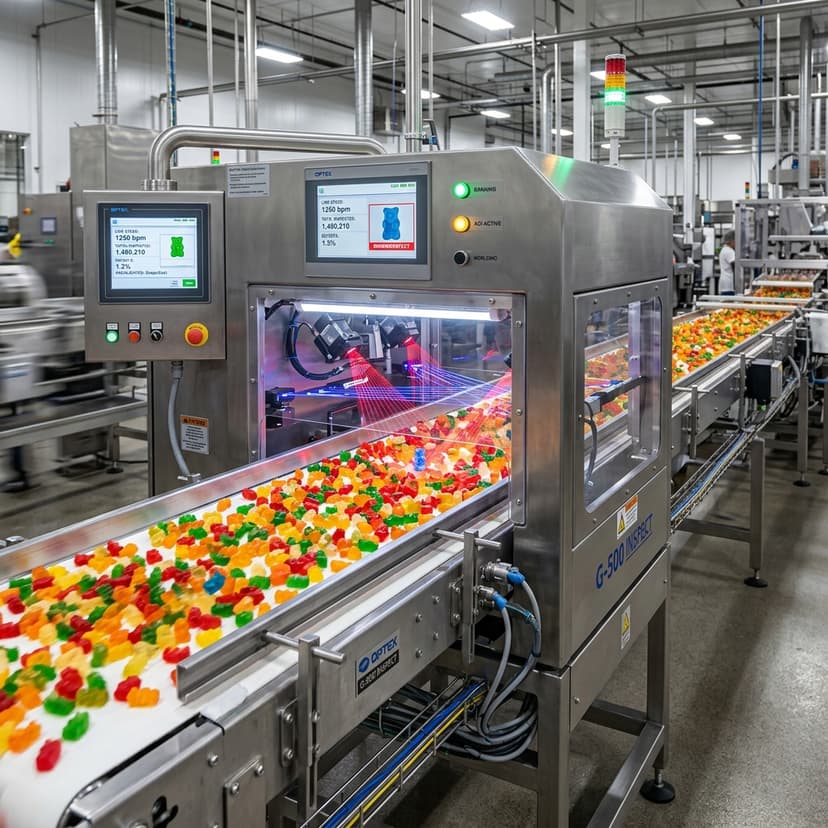
Starchless lines eliminate the powder entirely. The liquid slurry is injected directly into permanent molds made of food-grade silicone or Teflon-coated aluminum.
1. Absolute Segregation
Because there is no communal powder bed, the cross-contamination risk drops to near zero. A batch of gummies only touches the sterile stainless steel piping and the specific silicone mold cavity it is deposited into.
2. Clean-In-Place (CIP) Validation
The primary microbial defense of a starchless line is its ability to be aggressively sanitized. Between production runs, the entire system (the cookers, the pipes, the depositing nozzles, and the molds) undergoes an automated Clean-In-Place (CIP) cycle.
- The system is flushed with high-temperature water (often exceeding 85°C/185°F) and FDA-approved chemical sanitizers.
- This process is mathematically verifiable. QA technicians can swab the silicone molds after a CIP cycle and prove to an auditor that the microbial load is absolute zero before the next batch begins.
3. Rapid Cooling (Closing the Danger Zone)
In a starchless system, the molds pass immediately through an enclosed, highly controlled cooling tunnel. The gummy temperature drops rapidly, quickly crossing through the "Danger Zone" (the temperature range where bacteria multiply fastest), further retarding any potential microbial growth before the gummy is polished and bottled.
The Verdict for Brand Owners
For a private label brand, partnering with a CMO utilizing legacy starch moguls means accepting a constant, underlying risk of a catastrophic microbial failure.
By demanding Starchless Mogul Technology, you isolate your brand from these archaic threat vectors, ensuring your product is manufactured in a hyper-hygienic environment that effortlessly passes the strictest QA and regulatory audits.
Frequently Asked Questions (FAQ)
1. Do starchless gummies need to be cured in drying rooms? Generally, no. Starchless pectin gummies are fully set when they exit the cooling tunnel. While some highly specific gelatin formulations on starchless lines might require minor ambient conditioning, they do not require days of curing in vulnerable, open-air drying rooms like legacy starch gummies.
2. Are starchless gummies tested for microbes differently? The finished product testing protocols (USP <2021> and <2022>) are identical. However, the failure rate for starchless gummies is exponentially lower because the manufacturing environment is fundamentally cleaner.
3. Does starchless technology prevent mold if the bottle is opened? Once the consumer opens the bottle and introduces ambient air and moisture, the defense against mold relies entirely on the formulation's Water Activity (aw) and the preservatives (like citric acid), not the manufacturing equipment.
Recommended Manufacturing Solution
Want to discuss your formulation?
Our experts help brands launch technically complex probiotic and functional gummies.