Accelerated Stability Testing: Proving 24-Month Shelf Life for Pectin Gummies
Accelerated Stability Testing: Proving 24-Month Shelf Life for Pectin Gummies
In the highly regulated dietary supplement industry, a brand cannot simply invent an expiration date. If your bottle claims "Best By 24 Months," you must possess hard, scientific data proving that on the very last day of that 24th month, the gummy still meets 100% of its label claims and remains microbiologically safe.
However, waiting two full years to launch a new product is commercially impossible. Competitors will capture the market while you wait for your lab results.
To solve this, elite brands and Contract Manufacturing Organizations (CMOs) utilize Accelerated Stability Testing. Here is the technical breakdown of how to compress time and legally launch a premium pectin gummy.
The Core Concept: The Arrhenius Equation
Accelerated testing relies on the Arrhenius equation, a chemical principle stating that the rate of a chemical reaction increases exponentially with an increase in temperature.
By subjecting the gummy to intense heat and humidity in a controlled environmental chamber, scientists can artificially age the product. A common industry standard (often guided by ICH guidelines) states that 3 months of accelerated testing is roughly equivalent to 12 months of real-time shelf life at standard ambient conditions.
The Testing Protocols
When a brand finalizes a new private label formulation (e.g., a Nootropic Pectin Gummy), the CMO places samples of the finished product—packaged in the exact commercial bottle it will be sold in—into environmental chambers.
1. Accelerated Conditions (Zone IVb)
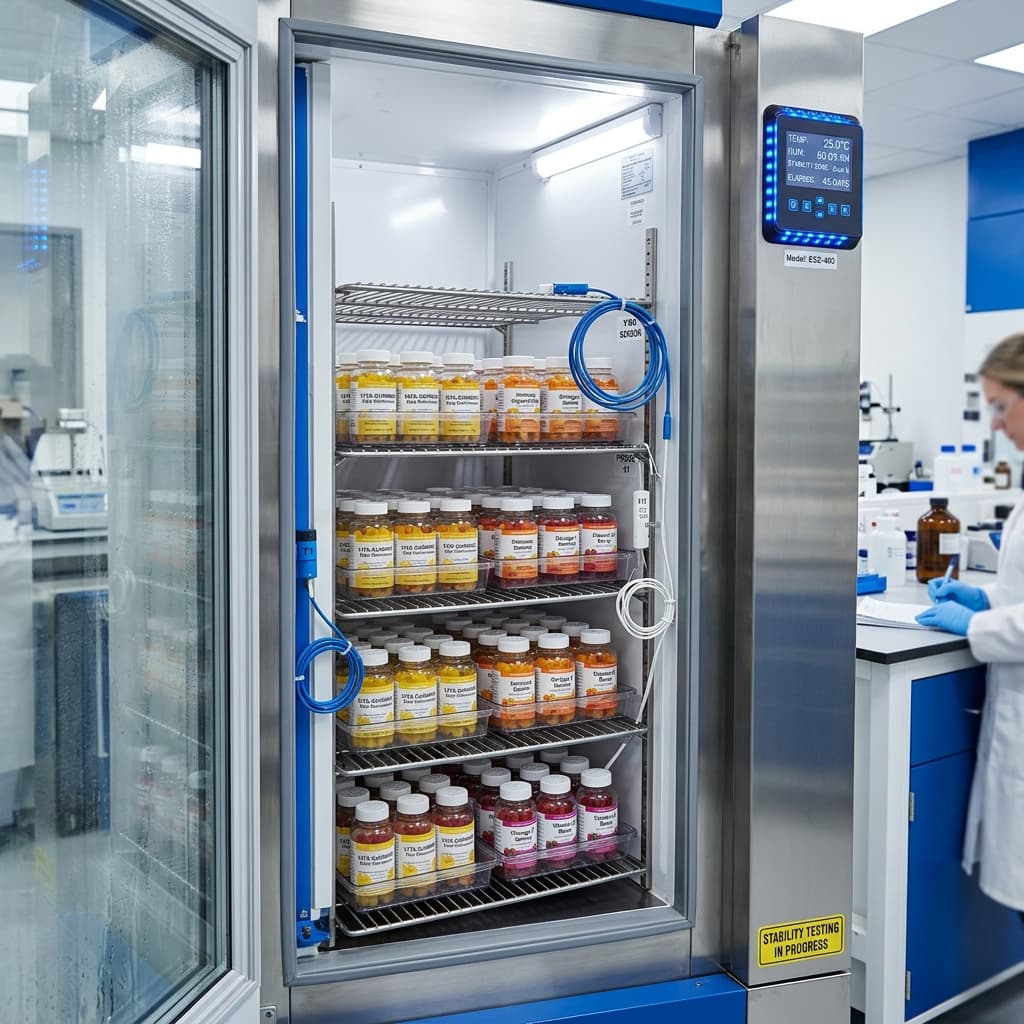
The standard accelerated chamber for gummies operates at 40°C (104°F) and 75% Relative Humidity (RH). The product is tested at specific intervals (typically 1 month, 3 months, and 6 months).
- If the gummy survives 3 months in this brutal environment without degrading, it is granted a 12-month tentative shelf life.
- If it survives 6 months, it is granted the highly coveted 24-month shelf life, allowing the brand to launch immediately.
2. Real-Time Conditions (The GMP Requirement)
While the accelerated data allows you to go to market quickly, FDA cGMPs require that you also run concurrent Real-Time stability testing. Samples are kept in a chamber at 25°C (77°F) and 60% RH for the full 24 months to verify the accelerated predictions.
What is Monitored During Stability Testing?
Stability testing is not just about looking at the gummy to see if it melted. The lab conducts a rigorous battery of tests at every interval:
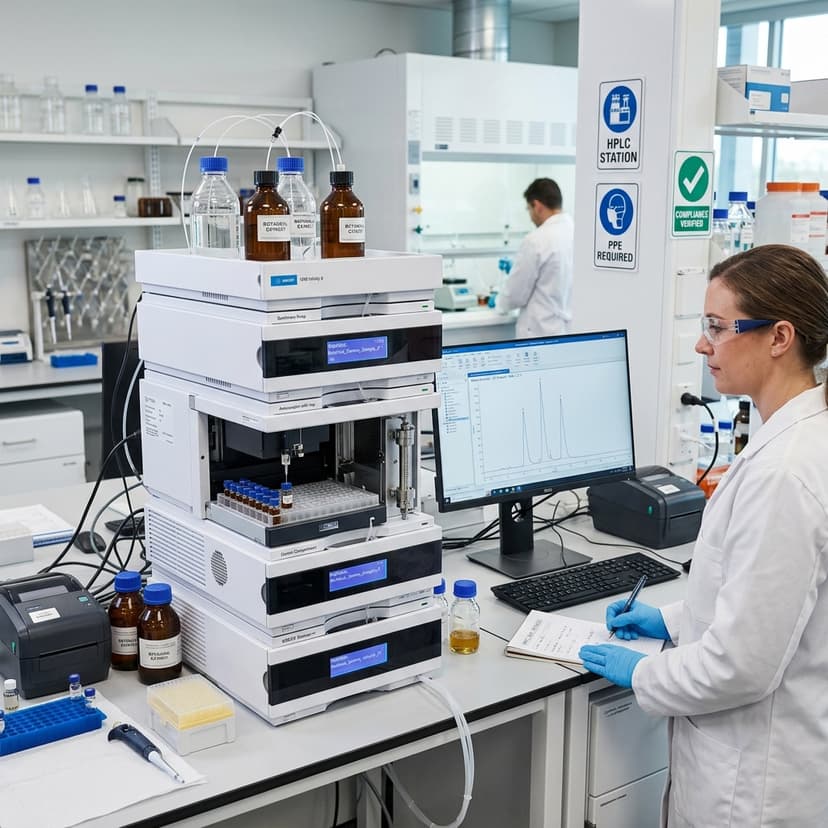
- Active Ingredient Assay (HPLC): Did the Vitamin C or Ashwagandha degrade due to oxidation? The lab checks to ensure the active payload remains at or above 100% of the label claim.
- Water Activity (aw): Did the gummy absorb moisture from the humid chamber? The aw must remain below 0.65 to prevent microbial growth.
- Microbiological Limits: The lab tests for total plate counts, yeast, mold, and pathogens to ensure the product remains hygienic.
- Organoleptic Properties: Did the natural red color fade? Did the gummy harden or "weep" (syneresis)?
The Pectin Advantage in Accelerated Testing
This is where formulation strategy dictates commercial success.
If you attempt to run a traditional Gelatin gummy through an accelerated stability test at 40°C (104°F), it will fail on day one. Gelatin melts at 35°C. The product will turn into a useless puddle in the chamber, making it impossible to generate accelerated data for hot climate zones (like the Middle East or southern US).
High-Methoxyl (HM) Pectin is thermo-irreversible. It will not melt at 40°C. Pectin gummies effortlessly survive the intense heat of the accelerated chambers, allowing brands to rapidly generate the data needed for a 24-month shelf life and dominate global export markets.
Frequently Asked Questions (FAQ)
1. What happens if a gummy fails stability testing at month 3? If the active ingredients degrade below the label claim, the CMO must reformulate. This usually involves increasing the "overage" (adding more of the active ingredient initially so it can degrade and still hit the target) or changing the packaging to block more moisture and UV light.
2. Does the packaging matter during stability testing? Absolutely. The stability test is evaluating the entire system (the gummy + the bottle + the induction seal). If you change from an HDPE bottle to a glass bottle, your old stability data is invalidated, and you must start the test over.
3. Are live probiotics tested differently? Yes. Live probiotics are extremely sensitive to heat and moisture. Getting a 24-month shelf life on a live probiotic gummy often requires massive overages (sometimes 300%) and highly specialized desiccant packaging. This is why many brands are switching to highly stable Postbiotics.
Recommended Manufacturing Solution
Want to discuss your formulation?
Our experts help brands launch technically complex probiotic and functional gummies.