Procurement Guide: Evaluating Contract Manufacturers for Premium Pectin Gummies

Procurement Guide: Evaluating Contract Manufacturers for Premium Pectin Gummies
For a Director of Procurement or a brand founder, selecting a Contract Manufacturing Organization (CMO) is the highest-stakes decision in the business. A great CMO is a growth engine; a poor CMO is an existential threat, capable of destroying your brand via regulatory failures, constant stockouts, or product degradation.
When sourcing a partner specifically for Premium Pectin Gummies, the standard audit checklist is insufficient. Pectin requires highly specialized engineering. Here is the advanced procurement guide for evaluating elite gummy CMOs.
1. The Technology Audit (The Starchless Mandate)
If you are building a premium brand, the very first question in your RFP (Request for Proposal) must be: "Do you manufacture on starch moguls or starchless lines?"
If they use starch moguls: You must assume heavy cross-contamination risks, inconsistent dosing (due to degrading powder molds), and a high likelihood of failing Halal/Kosher audits. The Requirement: You must mandate Starchless Mogul Technology. The CMO must deposit directly into silicone or Teflon molds. This is non-negotiable for achieving precise dosing (crucial for functional ingredients), perfect hygiene, and rapid lead times.
2. The Chemistry Competency (Pectin Rheology)
Many legacy gelatin manufacturers will claim they can "also do pectin." This is a massive red flag. Pectin is not a drop-in replacement for gelatin; it requires an entirely different thermodynamic setup.
Questions to ask the Formulation Team:
- How do you prevent pre-gelation? (The correct answer involves inline, high-speed acid dosing immediately before the depositing nozzles, not mixing acid in the main holding tanks).
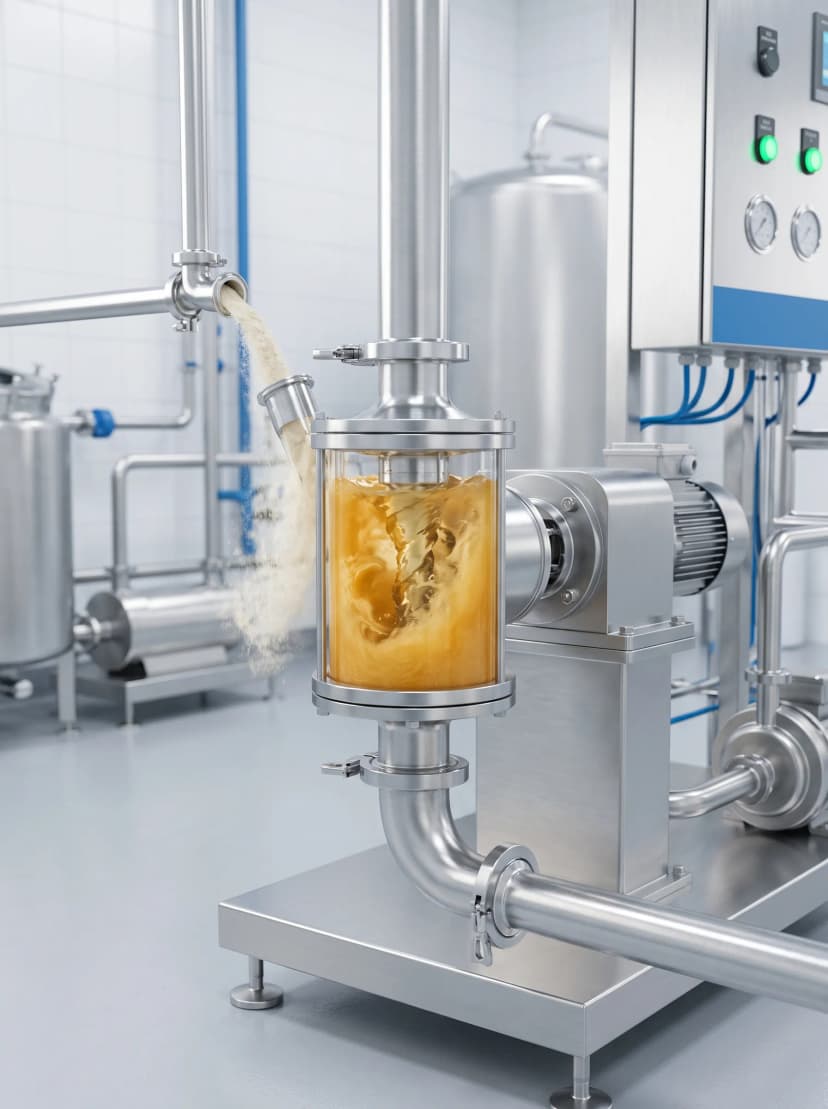
- How do you handle heavy botanical loads? (The correct answer involves high-shear inline mixers to ensure suspension, not standard paddle mixers).
- What is your strategy for Water Activity (aw)? (The CMO must demonstrate strict, real-time control over brix and aw to guarantee a 24-month shelf life without the gummy weeping or drying out).
3. The Quality and Compliance Audit
Do not accept a simple "We are FDA Registered" statement. FDA registration just means they filled out a form. You need proof of active, aggressive compliance.
- Third-Party Audits: Request their most recent NSF, UL, or SQF audit scores.
- Identity Testing: Ask to see their SOP (Standard Operating Procedure) for incoming raw materials. Do they rely on supplier COAs, or do they own an FTIR/HPLC machine to test identity in-house? (Under 21 CFR Part 111, relying solely on a supplier's paper COA for identity is illegal).
- Prop 65 Strategy: If you sell in California, ask how they manage heavy metals, specifically Lead, in their botanical supply chains.
4. Commercial Alignment
Finally, ensure their financial and operational scale aligns with your trajectory.
- MOQ Transparency: Do their Minimum Order Quantities make sense for your cash flow?
- Lead Times: A standard industry lead time for a repeat PO is 8 to 12 weeks. If a CMO quotes 20+ weeks, they lack operational capacity and will cause you to stock out at retail.
- Turnkey Capabilities: Can they handle the secondary packaging (bottling, induction sealing, labeling, cartoning), or do they just ship naked gummies in bulk boxes, forcing you to find a secondary co-packer?
At Probiota Innovations, we welcome aggressive procurement audits. Our facility was engineered from the ground up around starchless technology, continuous continuous cooking, and unyielding QA compliance, designed specifically to satisfy the world's most demanding procurement teams.
Frequently Asked Questions (FAQ)
1. Should I visit the CMO facility before signing a contract? Absolutely. A physical facility tour is the best way to cut through marketing claims. Look for cleanliness (is there starch dust everywhere?), automation (are there people manually touching the gummies?), and the size of the QA laboratory.
2. What is a Quality Agreement? A Quality Agreement is a legally binding document separate from the manufacturing contract. It explicitly details who is responsible for specific regulatory tasks (e.g., who handles FDA adverse event reporting, who approves the final label, etc.). It is mandatory for mature brands.
3. Do CMOs own the custom formulation IP? This is a critical negotiation point. In a white-label scenario, the CMO owns the IP. In a custom private-label scenario, you must explicitly negotiate IP ownership (or a buyout clause) in your Manufacturing Supply Agreement so that you own the formula.
Recommended Manufacturing Solution
Want to discuss your formulation?
Our experts help brands launch technically complex probiotic and functional gummies.