Private Label Gummies MOQ Guide: Finding the Right Partner for Your Scale
Private Label Gummies MOQ Guide: Finding the Right Partner for Your Scale
For a dietary supplement brand launching a new gummy product, the most critical number in the initial Contract Manufacturing Organization (CMO) negotiation is not the price-per-bottle. It is the Minimum Order Quantity (MOQ).
MOQs dictate your initial cash outlay, your inventory risk, and ultimately, the caliber of manufacturing facility you can access. Understanding the economics behind MOQs is essential for finding the right partner to scale your brand.
Here is the complete commercial guide to navigating MOQs in private label gummy manufacturing.
Why Do MOQs Exist?
CMOs do not enforce MOQs to be difficult; they enforce them because of the extreme physical and chemical realities of gummy production.
1. The Physics of the Mixing Tank
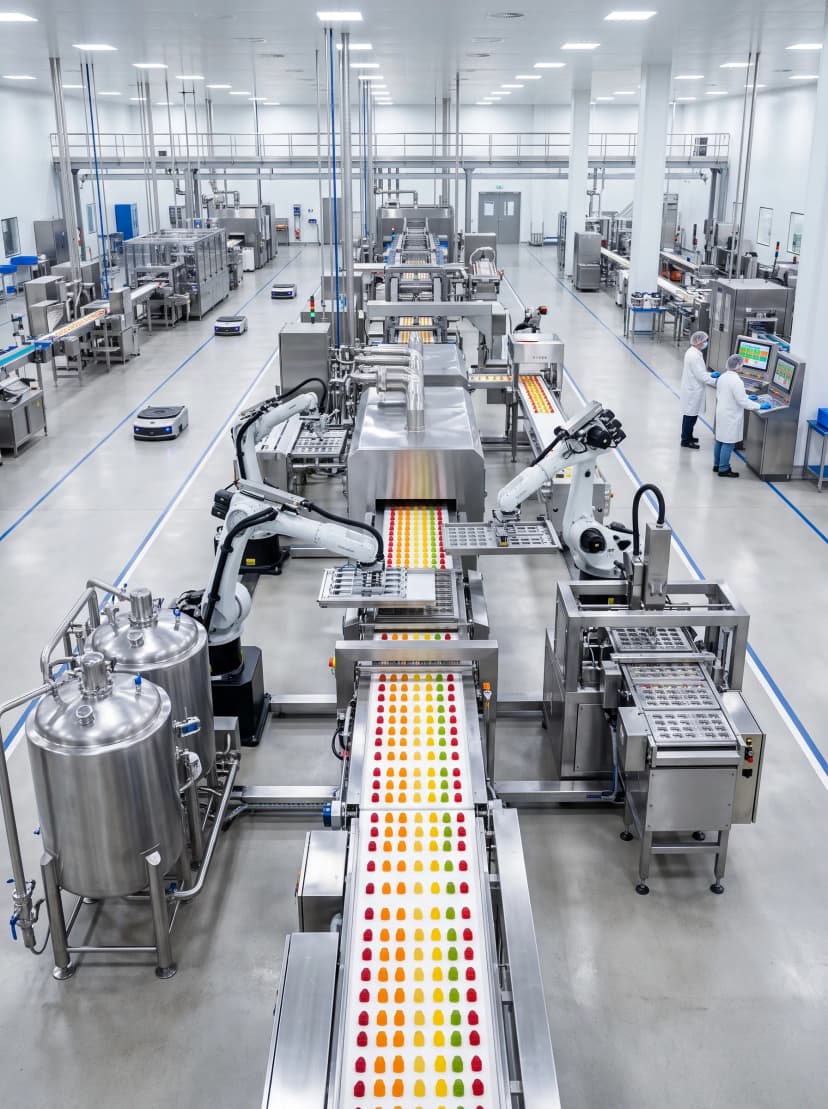
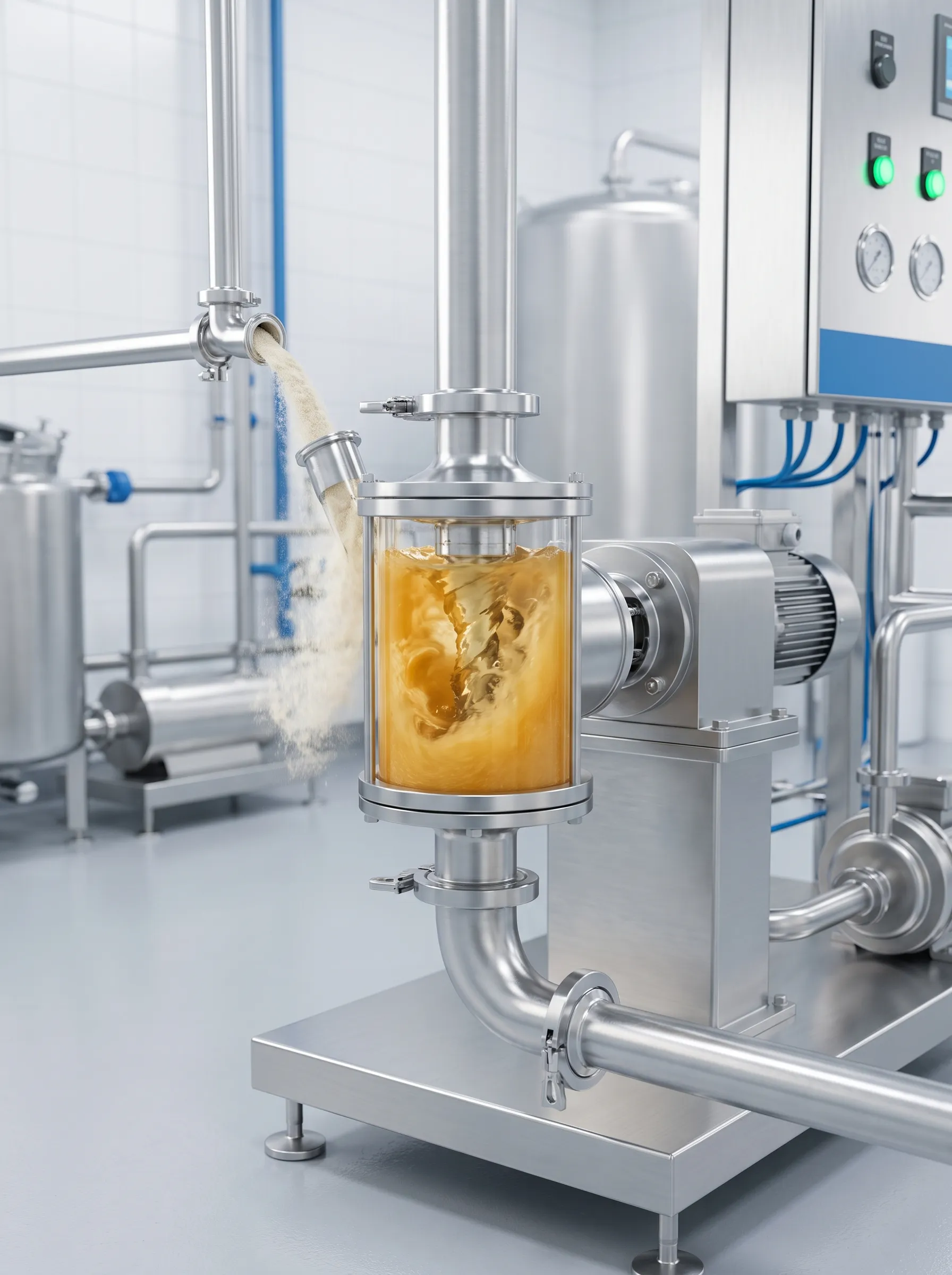
Commercial gummy manufacturing does not happen in small kitchen pots. A continuous cooking system utilizes massive stainless steel compounding tanks (often 500 to 1,000 gallons). If a CMO attempts to run a "tiny" batch in a massive tank, the heating elements will scorch the syrup, and the mixing blades won't effectively reach the slurry to homogenize the active ingredients. A CMO must run a minimum volume simply to make the machinery operate correctly.
2. The Cost of Changeovers and CIP
In an FDA-compliant facility, switching from Product A to Product B requires a rigorous Clean-In-Place (CIP) washdown. The lines must be flushed with hot water and sanitizer to prevent cross-contamination. This process can take 4 to 8 hours. During CIP, the facility is producing zero revenue. If a CMO runs tiny batches, they spend more time cleaning than manufacturing. High MOQs ensure the production run is long enough to absorb the massive overhead cost of the changeover downtime.
Decoding the MOQ Tiers
When evaluating partners, brands generally encounter three tiers of CMOs, defined by their MOQs and technology.
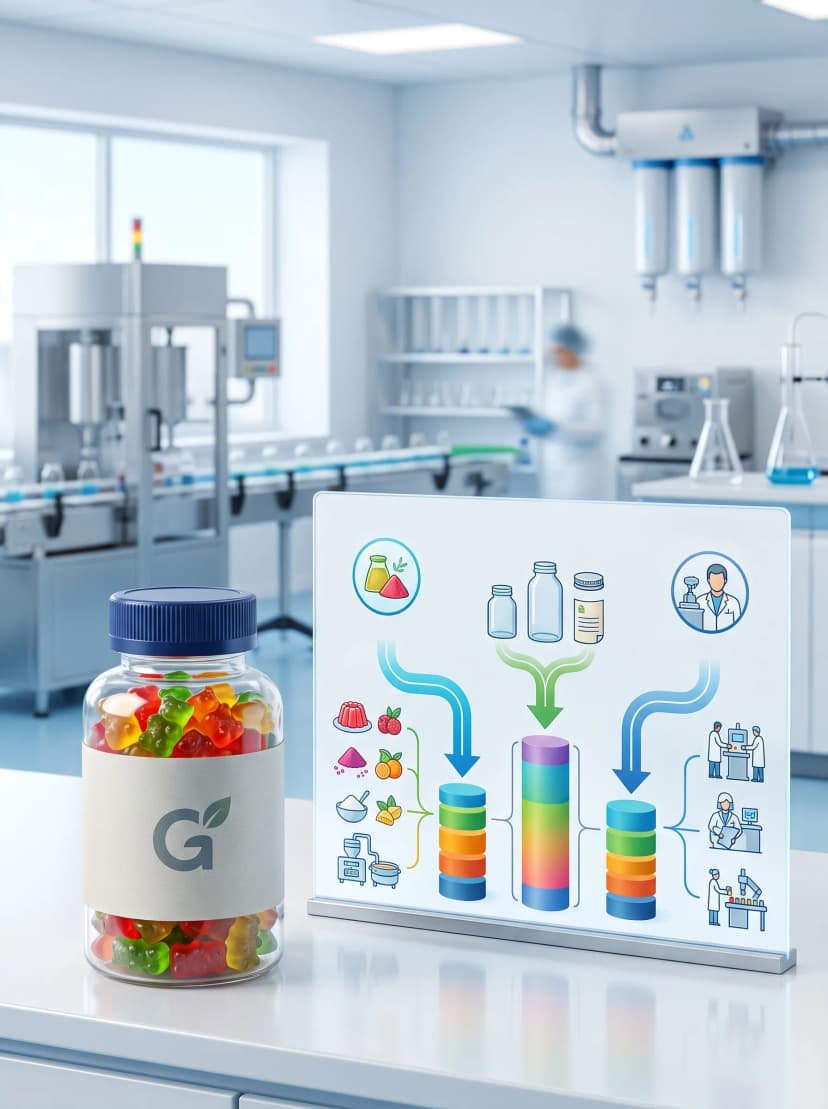
Tier 1: The "White Label" Low-MOQ Facilities (1,000 - 5,000 bottles)
- The Profile: These facilities typically offer pre-made, stock formulas (White Label). You cannot customize the active ingredients or the flavor.
- The Reality: To offer these low MOQs, the CMO produces a massive run of a generic gummy, dumps them into massive holding bins, and then simply pulls 1,000 bottles worth of product to put your label on it.
- The Drawback: Your product is identical to hundreds of competitors. You have zero formulation differentiation.
Tier 2: The Pilot/Custom Mid-Tier (10,000 - 50,000 bottles)
- The Profile: This is the sweet spot for launching a custom formulation (Private Label). You control the active ingredients, the pectin base, and the flavor profile.
- The Reality: The MOQ is driven by the physical limits of the compounding tanks. 50,000 bottles (roughly 3 million gummies) is often the absolute minimum required to safely run a custom batch through a continuous cooker without scorching the pectin or failing homogeneity tests.
Tier 3: The High-Speed Starchless Exclusives (100,000+ bottles)
- The Profile: Elite facilities utilizing advanced Starchless Mogul Technology optimized for massive global brands.
- The Reality: These lines are built for speed and precision. They can eject millions of defect-free gummies per shift. However, their CIP changeovers are complex. They require massive MOQs to remain profitable.
Strategic Partner Selection
Do not let a low MOQ tempt you into partnering with a facility that uses legacy, non-compliant machinery (like old starch moguls).
If you are building a premium brand, you must partner with a CMO that utilizes Starchless Technology and High-Methoxyl Pectin. If that CMO requires a 50,000-bottle MOQ, that is not an obstacle; it is a financial reality of engineering a flawless, compliant, custom product.
At Probiota Innovations, we work with ambitious brands to navigate the economics of scale, ensuring your capital is deployed efficiently into a product that will dominate the market.
Frequently Asked Questions (FAQ)
1. Is MOQ measured in bottles or individual gummies? CMOs calculate production runs in total gummy count (e.g., 3 million gummies) or total weight (e.g., 10,000 kg). The "bottle" MOQ is simply that total number divided by the number of gummies you want in each bottle (e.g., 60-count).
2. Can I split an MOQ across multiple flavors? Generally, no. A flavor change requires a full CIP washdown to prevent the "Strawberry" flavor from bleeding into the "Blueberry" run. Therefore, the MOQ typically applies per SKU / per flavor.
3. Does packaging affect the MOQ? Yes. Even if the CMO can run a small batch of gummies, the suppliers who print your custom labels or manufacture custom-colored PET bottles often have strict minimums (e.g., 25,000 units). Your CMO's MOQ will often mirror the MOQs of the packaging supply chain.
Recommended Manufacturing Solution
Explore our private label probiotic gummy manufacturing capabilities
Want to discuss your formulation?
Our experts help brands launch technically complex probiotic and functional gummies.