White Label Gummies Pricing Breakdown and What Brands Should Expect in 2026
White Label Gummies Pricing Breakdown and What Brands Should Expect in 2026
For entrepreneurs entering the dietary supplement space, the most common entry point is "White Labeling" (purchasing a pre-formulated, stock gummy and applying a custom label). It offers speed to market and lower barriers to entry.
However, as the gummy market matures heading into 2026, the pricing economics of white labeling are shifting dramatically. Brands must understand the true breakdown of these costs to ensure they maintain viable profit margins as they attempt to scale.
Here is the commercial breakdown of White Label Gummy pricing.
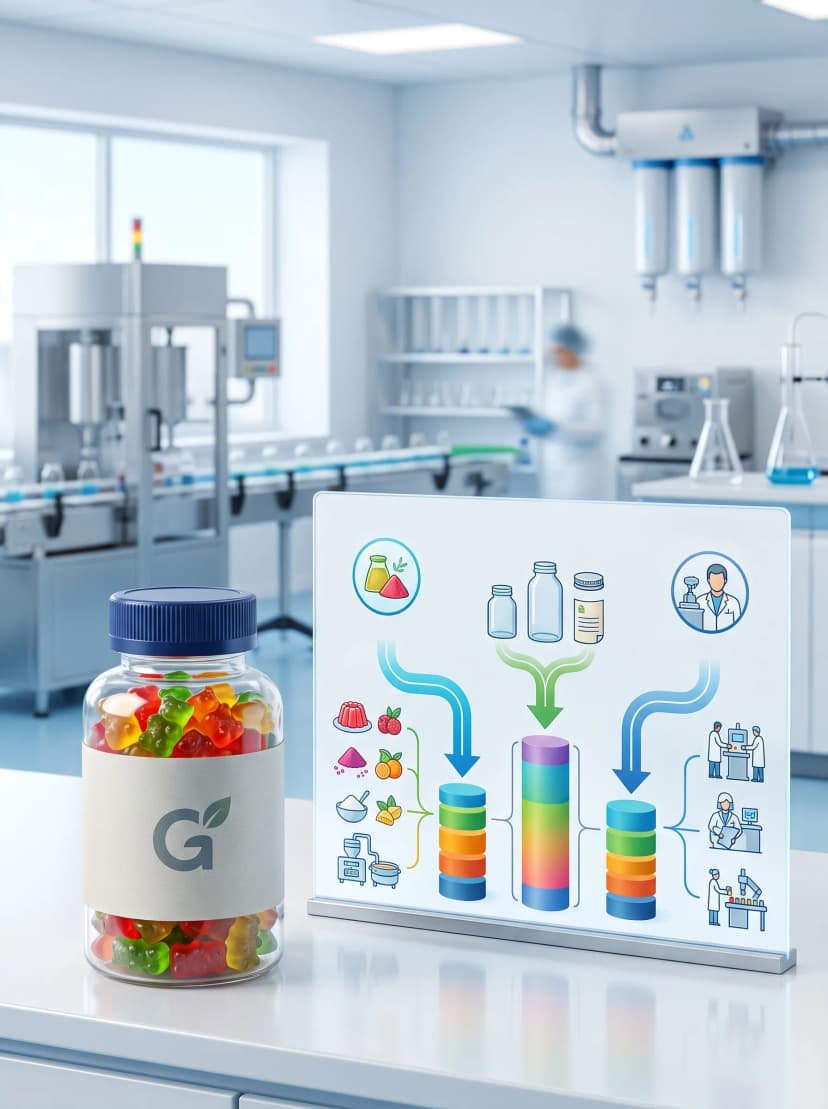
The Core Components of the Invoice
When a Contract Manufacturing Organization (CMO) quotes you a price per bottle (e.g., $3.50/bottle for 60 gummies), that figure is a composite of several distinct cost centers.
1. Raw Materials (30% - 40%)
This is the cost of the physical ingredients.
- The Base: Gelatin is cheaper; premium HM Pectin costs more.
- The Actives: A basic Vitamin C gummy has a very low raw material cost. A functional gummy loaded with branded postbiotics, KSM-66® Ashwagandha, or L-Theanine will drastically increase the raw material allocation.
2. Packaging and Labels (15% - 25%)
Packaging is often the most surprising cost for new brands.
- The Bottle: Standard clear PET bottles are cheap. Opaque amber PET, glass, or custom-colored HDPE bottles command a premium.
- The Lid: Standard screw caps are cheap. Child-resistant (CRC) caps are significantly more expensive.
- The Label: A standard paper label is cheap. A high-end metallic foil label, soft-touch matte finish, or dual-layer peel-back label (required for some export markets) adds significant cost.
3. Manufacturing Overhead & Labor (20% - 30%)
This covers the actual operation of the facility: the electricity to boil the syrup, the QA lab testing (FTIR, ICP-MS), and the labor to operate the lines.
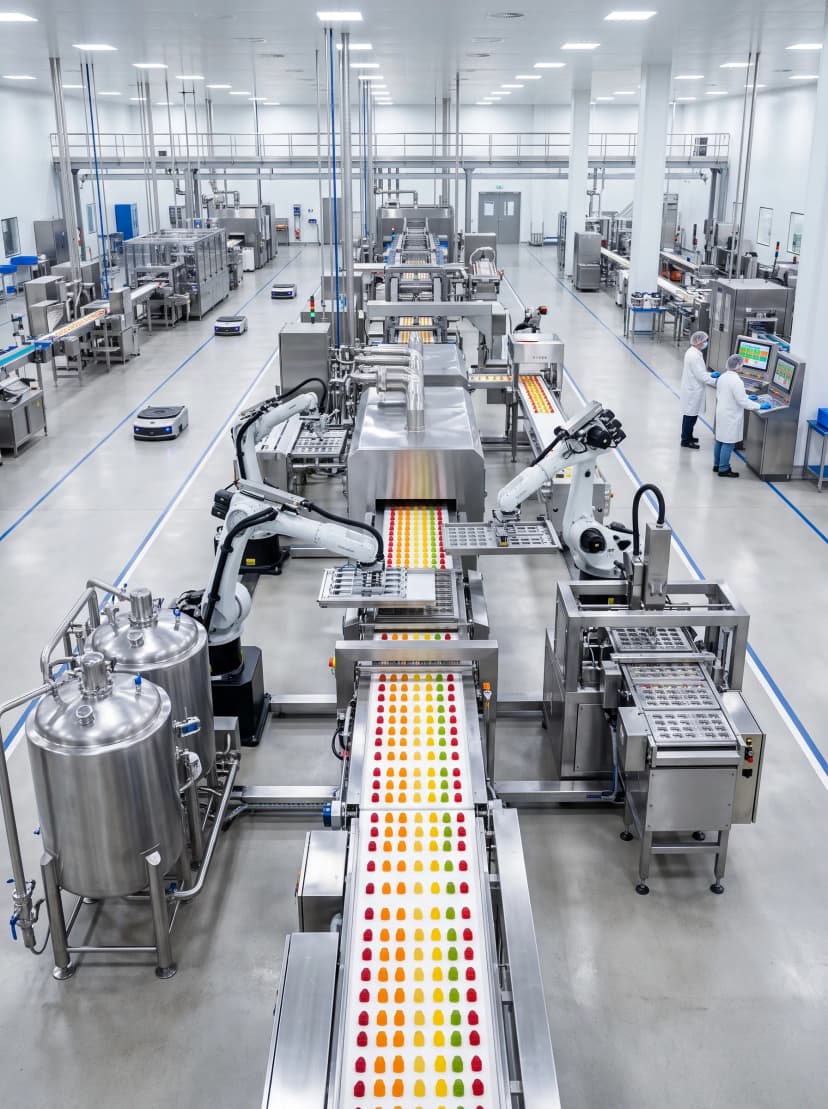
- Note on Starchless Tech: While advanced starchless lines require massive initial capital, their high-speed automation often reduces the per-unit labor cost compared to legacy, manual starch moguls.
4. CMO Margin (15% - 25%)
This is the profit the manufacturer makes to stay in business and reinvest in technology.
The Hidden Costs Brands Ignore
When forecasting profitability for 2026, brands must look beyond the initial invoice from the CMO. The most common commercial failures occur when brands ignore the "hidden" costs of white labeling.
- Freight Inbound: Who pays to ship the pallets from the CMO in California to your 3PL (Third Party Logistics) warehouse in Texas? Heavy pallets of gummies cost thousands of dollars to freight. If you don't calculate this, your margins will vanish.
- Marketing Homogeneity: If you buy a stock white label formula, 50 other brands on Amazon might be selling the exact same formula. You have zero product differentiation. Therefore, your Customer Acquisition Cost (CAC) will skyrocket because you must out-spend competitors on marketing to survive.
The Transition to Private Label (Custom)
As brands scale in 2026, white labeling becomes a liability. The lack of IP (Intellectual Property) ownership limits valuation.
The strategic move is to transition to Private Label (Custom Formulation). While Custom formulations require higher MOQs (e.g., 50,000 bottles), they allow you to engineer a unique, premium product (using advanced pectin and clinical actives) that commands a higher retail price, ultimately yielding vastly superior long-term economics.
At Probiota Innovations, we help brands graduate from generic white-label products to highly defensible, custom-engineered private label gummies manufactured on state-of-the-art starchless lines.
Frequently Asked Questions (FAQ)
1. Does the CMO pay for the labels in a white label agreement? Usually, the CMO will source and apply the labels, and the cost is baked into your "per bottle" quote. However, if you require a highly complex label, they may pass that specific printing cost directly to you.
2. Are organic white label gummies significantly more expensive? Yes. To claim "USDA Organic," the CMO must use organic pectin, organic sugar, and organic active ingredients. The raw material premiums for certified organic ingredients are substantial.
3. Should I negotiate the price per bottle or the MOQ? If you have limited capital, negotiate the MOQ (minimum order quantity). If you have strong cash flow and are focused on long-term gross margins, negotiate the price per bottle based on committing to higher volume tiers.
Recommended Manufacturing Solution
Discover our turnkey white label probiotic supplement solutions
Want to discuss your formulation?
Our experts help brands launch technically complex probiotic and functional gummies.