From Pilot Batch to Full Commercial Scale: Gummy Production Economics
From Pilot Batch to Full Commercial Scale: Gummy Production Economics
In the dietary supplement industry, scaling a brand from a successful proof-of-concept to a national retail rollout is the most financially vulnerable period for a business. The economics of manufacturing change violently as you increase volume.
A brand owner must understand how a Contract Manufacturing Organization (CMO) structures their pricing at different scales. If you miscalculate the capital required to transition from a Pilot Batch to Full Commercial Scale, you risk catastrophic cash flow failure.
Here is the commercial blueprint for navigating gummy production economics.
Stage 1: The Pilot Batch (The Proof of Concept)
When you develop a custom (Private Label) gummy—featuring novel active ingredients or a unique pectin base—you cannot immediately order 1 million bottles. You must run a Pilot Batch.
- Volume: Typically 50,000 to 100,000 individual gummies (roughly 1,000 to 2,000 bottles).
- The Economics: This is the most expensive gummy you will ever produce.
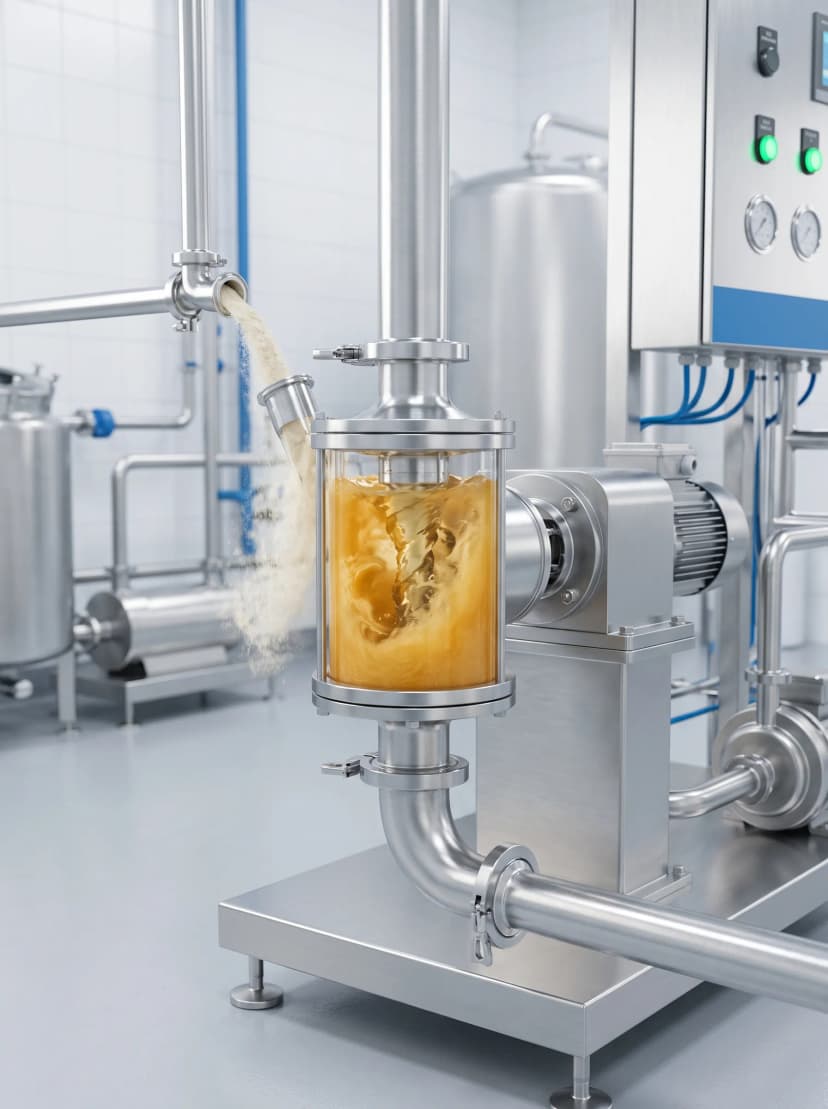
- The CMO must halt commercial production, perform a full Clean-In-Place (CIP) sanitization, dial in the continuous cookers for a brand new formula, and run a tiny amount of syrup.
- The overhead costs (labor, QA testing, machine downtime) are distributed across a very small number of bottles.
- The Goal: The pilot batch is not designed to generate massive retail profit. The goal is R&D validation: proving the active ingredients don't pre-gel the pectin, validating the flavor-masking, and generating real-time stability data to establish the 24-month expiration date.
Stage 2: The Initial Commercial Run (The Market Entry)
Once the pilot proves successful, you issue the first commercial Purchase Order (PO).
- Volume: Typically 500,000 to 1,500,000 gummies (roughly 10,000 to 25,000 bottles).
- The Economics: This is where the unit economics begin to normalize. The CMO can achieve a continuous, steady state on the manufacturing line.
- You are now ordering raw materials (like HM Pectin and organic tapioca syrup) by the pallet rather than the bucket, unlocking bulk ingredient discounts.
- The massive cost of the CIP changeover is now diluted across tens of thousands of bottles, significantly dropping the Cost of Goods Sold (COGS).
- The Goal: Achieve a 60% to 75% gross margin at retail to aggressively fund your Customer Acquisition Cost (CAC) on platforms like Meta or Amazon.
Stage 3: Full Commercial Scale (The Margin Optimizer)
When you secure national retail distribution (e.g., Target, CVS, or massive international export contracts), you enter full commercial scale.
- Volume: 5,000,000+ gummies per PO (100,000+ bottles).
- The Economics: At this scale, you unlock the absolute lowest possible COGS.
- The CMO might run your product continuously for multiple shifts or days without a changeover, achieving maximum operational efficiency.
- You are purchasing active ingredients (like branded postbiotics or botanicals) directly from the manufacturer at massive volume tiers.
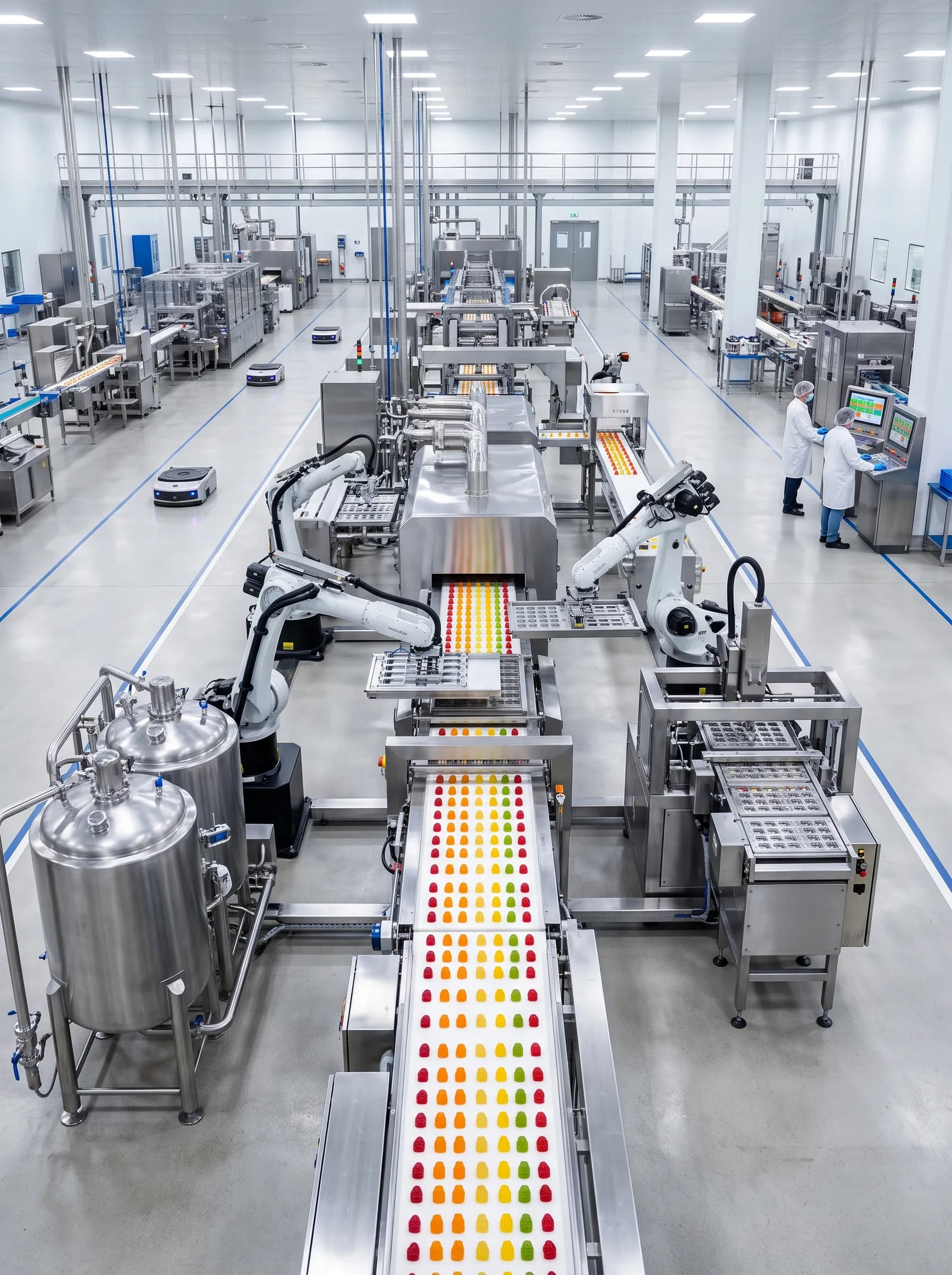
- The Starchless Advantage: At this volume, legacy starch moguls become a liability due to intense labor and starch-drying costs. A CMO utilizing highly automated Starchless Mogul Technology can eject millions of perfect, defect-free gummies with minimal labor, passing those efficiency savings back to the brand owner.
The Capital Trap
The biggest mistake brands make is assuming the pilot-batch price is the permanent price, or conversely, promising a retailer the "Full Commercial Scale" price before they actually have the capital to fund that massive PO.
At Probiota Innovations, we provide transparent, tiered pricing models. We engineer the pilot batch on the exact same starchless equipment used for commercial scale, ensuring a flawless, predictable transition as your brand explodes in growth.
Frequently Asked Questions (FAQ)
1. Do CMOs charge a separate R&D fee for developing a custom gummy? Usually, yes. Developing a stable pectin formulation with novel active ingredients takes weeks of benchtop chemistry and lab testing. This R&D fee is often charged upfront and is separate from the per-bottle manufacturing cost.
2. Can I use the pilot batch for retail sale? Yes, provided it passes all QA/QC testing (identity, heavy metals, microbials) and is legally compliant. Many brands use the pilot batch for influencer seeding or initial direct-to-consumer (DTC) beta testing.
3. What are payment terms like at commercial scale? Standard B2B terms often require a 50% deposit upon placing the PO (so the CMO can purchase the raw materials) and 50% upon completion before shipping. As trust builds, massive brands might negotiate Net 30 or Net 60 terms, but this requires substantial credit history.
Recommended Manufacturing Solution
Learn how we scale private label probiotic gummies for global brands
Want to discuss your formulation?
Our experts help brands launch technically complex probiotic and functional gummies.