The Market Potential for Prenatal Gummies with Folic Acid and DHA

The Market Potential for Prenatal Gummies with Folic Acid and DHA
The prenatal supplement market is a multi-billion dollar category defined by an incredibly captive, highly motivated consumer demographic. Expectant mothers are rigorous researchers; they obsess over ingredient labels, clinical dosages, and brand trust. They are willing to pay a significant premium for products that guarantee safety and efficacy for fetal development.
However, the prenatal category is plagued by a massive compliance problem: morning sickness.
Traditional prenatal vitamins are notoriously large, chalky tablets packed with raw iron and unmasked fish oil. For a woman experiencing first-trimester hyperemesis or severe nausea, swallowing these massive pills is often physically impossible, and the resulting "fishy burps" or metallic aftertaste can induce immediate vomiting.
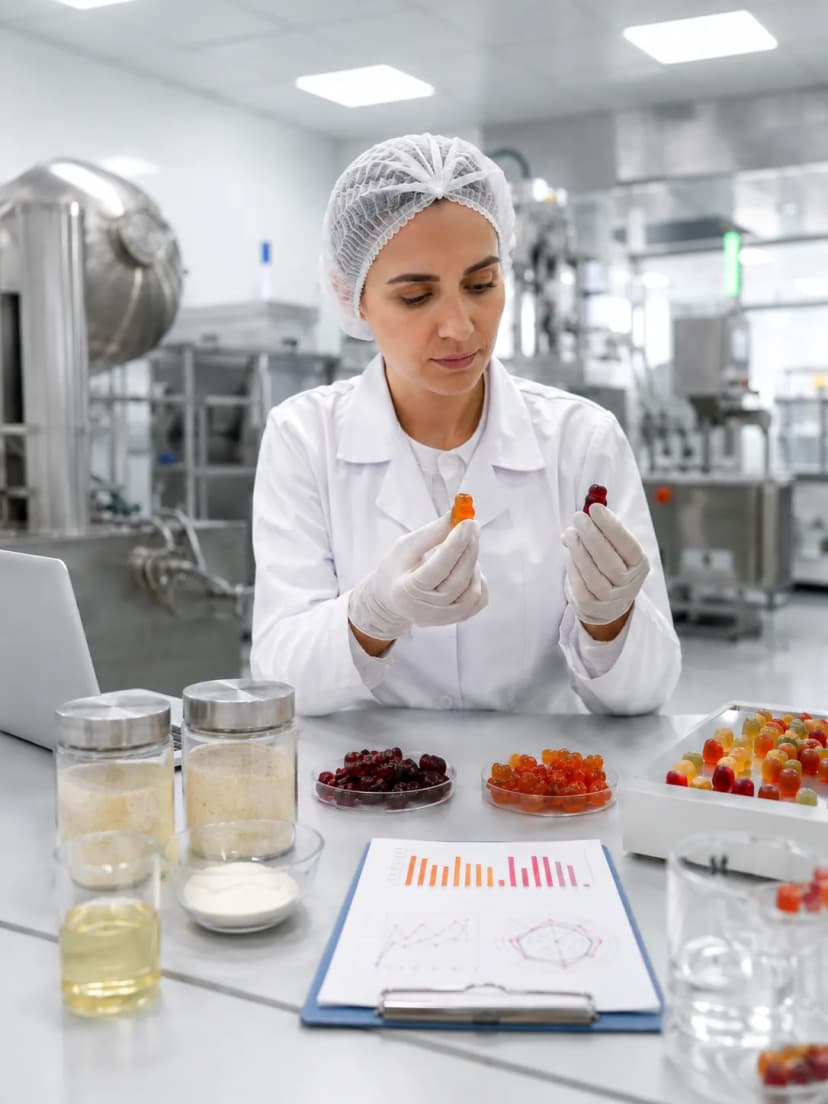
This physiological reality has created a massive commercial void. The market is desperate for a prenatal supplement that delivers clinical-grade nutrition but is actually palatable. The Prenatal Gummy - specifically one properly formulated with Folic Acid and DHA - is not just a trend; it is the definitive solution to the prenatal compliance crisis.
1. The Core Actives: Folic Acid vs. Methylfolate
The foundational requirement of any prenatal supplement is folate, which is clinically proven to prevent neural tube defects (like spina bifida) in the developing fetus.
Folic Acid (The Standard)
Folic Acid is the synthetic form of folate. It is highly stable, incredibly cheap, and easy to formulate into a gummy. For decades, it was the absolute standard. However, an estimated 30-40% of the population carries a genetic mutation (MTHFR) that impairs their body's ability to efficiently convert synthetic Folic Acid into its active, usable form.
L-Methylfolate (The Premium Standard)
Modern, premium prenatal brands are abandoning synthetic Folic Acid in favour of L-Methylfolate (5-MTHF). This is the biologically active form of folate. It bypasses the MTHFR mutation entirely, ensuring maximum absorption for every mother.
- The Manufacturing Impact: L-Methylfolate is significantly more expensive than Folic Acid, and it is slightly more sensitive to degradation. A premium contract manufacturer must carefully manage the gummy’s temperature profile and water activity (aw) to ensure the Methylfolate remains fully potent throughout the shelf life.
2. The DHA Challenge: Engineering Without the Fish
DHA (Docosahexaenoic Acid) is a crucial Omega-3 fatty acid required for fetal brain and eye development. It is the second non-negotiable pillar of a modern prenatal.
As discussed in previous technical briefs, dumping standard fish oil into a gummy matrix is a sensory disaster. For a pregnant woman with heightened olfactory sensitivity, even a hint of rancid fish oil will trigger severe nausea.
The Vegan Algal Solution
To win the prenatal gummy market, you must use Microencapsulated Algal DHA.
- Purity: Algal oil is cultivated in sterile, controlled fermentation tanks, guaranteeing it is free from the heavy metals (like mercury) and ocean microplastics that constantly threaten fish oil supplies. This purity is a massive marketing asset for expectant mothers.
- Sensory Engineering: The DHA must be microencapsulated (trapped within a microscopic shell) to survive the pectin cooking process. This prevents oxidation and entirely eliminates the "fishy burp," solving the primary compliance issue of traditional prenatals.
Learn about Vegan & Pectin Gummies
3. The Iron Dilemma: Why Many Prenatal Gummies Exclude It
If you look at the back label of the top-selling prenatal gummies on Amazon or in pharmacy retail, you will notice a glaring omission: most do not contain Iron.
Iron is essential for preventing maternal anemia, yet brands frequently exclude it from their gummy formulations. Why?
- The Taste: Iron is intensely metallic and incredibly difficult to mask, especially for a nauseous palate.
- Reactivity: Unencapsulated iron will aggressively attack and destroy the Vitamin C and oxidize the DHA within the gummy matrix, turning the product dark brown and rancid.
The Premium Solution: Chelated Iron
A brand that successfully formulates a great-tasting prenatal gummy with iron holds a massive competitive advantage. To achieve this, the manufacturer must use Ferrous Bisglycinate (chelated iron) or heavily microencapsulated iron salts, combined with dark berry flavour profiles (like Blackberry or Blackcurrant) to hide the inherent darkening effect of the mineral.
4. The Choline Opportunity
The most significant emerging trend in the prenatal category is Choline. Evolving clinical research has linked maternal choline intake to enhanced fetal brain development and placental function. However, the American Medical Association recently noted that standard prenatal vitamins provide inadequate levels of choline.
- The Manufacturing Constraint: Choline (often in the form of Choline Bitartrate) is physically bulky and intensely bitter.
- The Gummy Strategy: Because a single gummy cannot physically hold 400mg of choline alongside DHA and a full multivitamin stack, brands are creating specific "Prenatal Brain Support" companion gummies. This allows the brand to increase Average Order Value (AOV) by selling a "Prenatal System" rather than a single bottle.
View Commercial Strategy Services
FAQ
Can I make a 100% vegan prenatal gummy? Absolutely. By utilizing a Pectin base, Algal DHA, and plant-derived Vitamin D3 (usually extracted from lichen rather than sheep's wool lanolin), you can formulate a pristine, 100% vegan prenatal that commands a premium price in the market.
Why are prenatal gummies usually coated in sugar? Many manufacturers use sugar sanding to prevent the gummies from clumping and to mask the bitterness of the active vitamin stack. However, for health-conscious mothers, this is a negative. A premium manufacturer will use a high-shine Carnauba Wax polish to prevent clumping while maintaining a clean, sugar-free exterior.
Is pectin safe for pregnancy? Yes. Pectin is a natural carbohydrate extracted from citrus peels or apples. It is universally recognized as safe (GRAS) and is significantly gentler on the digestive tract than many synthetic fillers found in traditional prenatal tablets.
Formulate for the Most Demanding Consumer
Expectant mothers will not compromise on purity, and they cannot compromise on compliance. To capture this lucrative market, you must deliver a product that is scientifically uncompromising but aesthetically flawless.
At Probiota Innovations, we specialize in high-complexity prenatal matrices. We utilize exclusively vegan Pectin bases, stabilized L-Methylfolate, and highly microencapsulated Algal DHA to engineer prenatal gummies that completely eliminate nausea-inducing aftertastes while delivering absolute clinical efficacy.
Request a Project Brief Explore Functional Gummy Manufacturing
Recommended Manufacturing Solution
Want to discuss your formulation?
Our experts help brands launch technically complex probiotic and functional gummies.