Probiotic Premix CDMO: Spore Viability
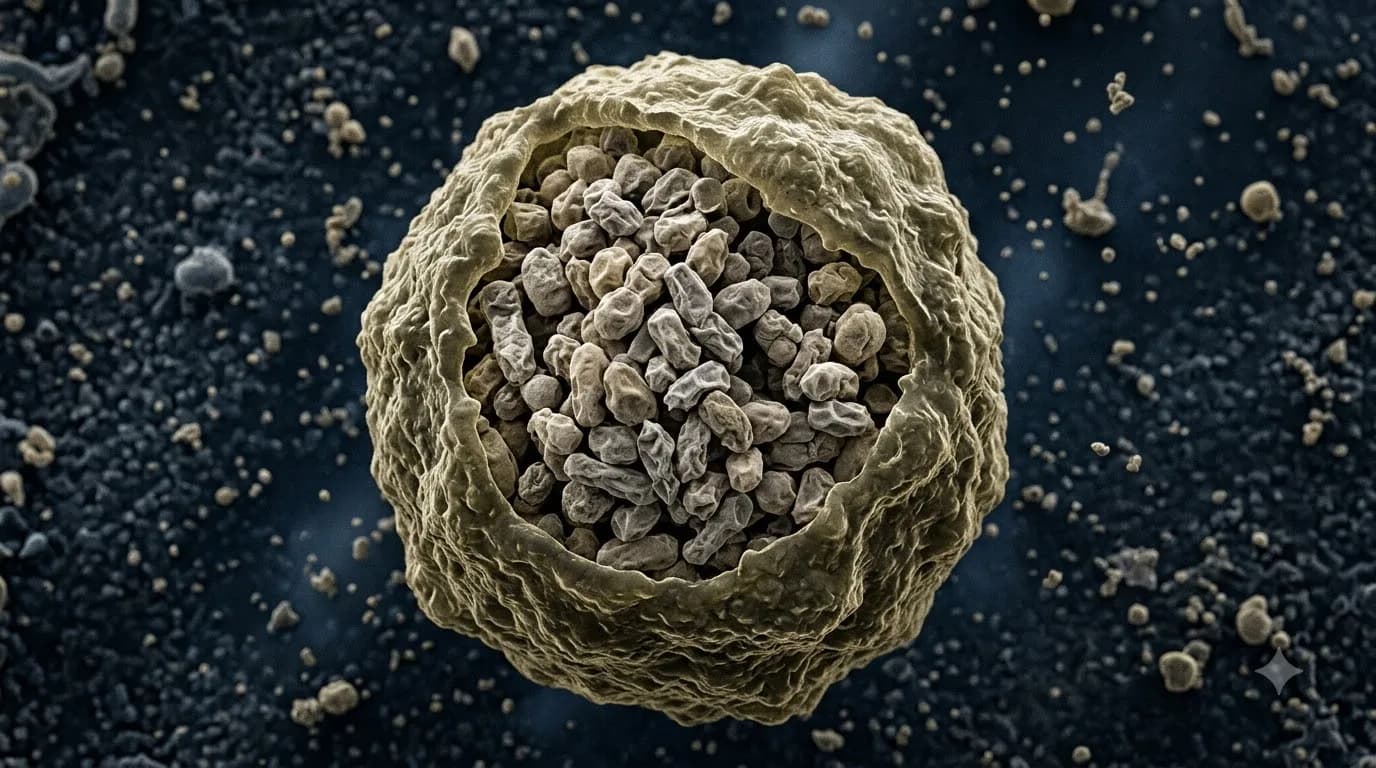
Custom Probiotic Premixes for CDMOs: Spore Viability & Microencapsulation
Contract Development and Manufacturing Organizations (CDMOs) and nutraceutical brand owners face a persistent engineering bottleneck when formulating live biotherapeutics and functional probiotic gummies: maintaining viable colony-forming units (CFU) across rigorous thermal processing, mechanical shear, and long-term ambient storage.
Featured Snippet: Probiotic Premix CDMO Solutions
Custom probiotic premixes for CDMOs leverage spore-forming strains such as Bacillus coagulans combined with microencapsulation matrices (maltodextrin, skim milk, or polysaccharide hydrogels). These systems deliver >90% spore survival through spray-drying or freeze-drying and retain viability during subsequent heat processing and ambient storage, enabling reliable high-CFU concentrates.
Spore Viability Requirements for CDMO Premixes
Traditional vegetative probiotic strains (Lactobacillus, Bifidobacterium) experience severe cellular lysis when exposed to industrial manufacturing conditions. In contrast, endospore-forming strains such as Bacillus coagulans form a protective multi-layered keratinous protein coat and dipicolinic acid-calcium core that naturally shields bacterial DNA against thermal and osmotic degradation.
SPORE PREMIX THERMAL & SHEAR SURVIVAL TIMELINE:
[High-Speed Ribbon/Paddle Blending] ──> [Thermal Depositing (75°C - 88°C)] ──> [Microencapsulated Barrier] ──> [Target Delivery: Intestinal Germination]
                                                                                                        │
                                                                                        > 90% Viable Spores Retained!
Thermal and Shear Stress During Blending and Drying
In commercial CDMO facilities, bulk powders undergo high mechanical shear during ribbon blending, fluid-bed granulation, or spray-drying. Standard cultures often suffer a 2 to 4-log reduction in viability during these stages. Bacillus coagulans spores engineered into custom premixes withstand:
- Thermal tolerance: Sustained temperatures of $75^\circ\text{C} - 85^\circ\text{C}$ during gummy depositing and syrup cooking.
- Mechanical resistance: High-shear ribbon blending without cell wall rupture.
- Moisture control: Resistance to ambient moisture fluctuations when water activity ($a_w$) is managed below $0.60$.
Microencapsulation Technologies & Wall Materials
Microencapsulating probiotic spores provides an additional physical barrier that protects active sites during downstream processing and controls gastric release kinetics.
Survival Rates (Spray-Dry vs. Freeze-Dry) and Release Profiles
Different encapsulation wall materials and drying techniques yield distinct survival profiles:
- Spray-Drying with Hydrocolloid Matrices: Utilizing maltodextrin, gum acacia, or sodium alginate carriers allows high-throughput drying while maintaining $>66% - 92%$ spore survival.
- Polysaccharide Hydrogels & Lipid Enrobing: Lipid-coated spore matrices prevent premature moisture uptake in high-humidity regional markets (e.g., GCC, Southeast Asia) and dissolve selectively under alkaline intestinal pH conditions.
- Controlled Release Profile: Protects spores during gastric transit ($pH < 2.0$), ensuring targeted vegetative germination inside the small intestine within 4–6 hours post-ingestion.
$$\text{Post-Processing Spore Viability } (%) = \left( \frac{\text{Log}{10} \text{ CFU}{\text{Final}}}{\text{Log}{10} \text{ CFU}{\text{Initial}}} \right) \times 100% \quad (\text{Target: } \ge 90.0%)$$
Custom Blend Design, Testing & Regulatory Alignment
Standardized CDMO premixes are formulated at concentrates ranging from $1 \times 10^9$ to $1 \times 10^{11} \text{ CFU/g}$, allowing formulators to dial in precise label claims with minimal overage (typically $10% - 15%$ vs. $200%+$ for unprotected vegetative strains).
| Parameter | Free Spores (Bacillus coagulans) | Microencapsulated Premix | Unprotected Vegetative Strains |
|---|---|---|---|
| Process Survival (75–85°C) | $75% - 85%$ | $> 90% - 95%$ | $< 10%$ (Severe Cell Lysis) |
| Storage Stability (12–24 Mo) | High (Ambient) | Ultra-High ($a_w \le 0.60$) | Low (Requires Refrigeration) |
| Gastrointestinal Release | Bile-Resistant | Targeted Intestinal Delivery | Acid Sensitive |
| Required Overage | $15% - 25%$ | $10% - 15%$ | $200% - 500%$ |
| CDMO Formulation Fit | Gummies, Powders, Capsules | Gummies, Functional Foods, Beverages | Cold-Fill Capsules Only |
Quality & Regulatory Validation
All Probiota Innovations premix formulations adhere strictly to:
- 21 CFR 111 & NSF/ANSI 455-2: cGMP-compliant manufacturing facility standards.
- Strain Identity Verification: 16S rRNA gene sequencing and PCR strain typing for batch release.
- Contaminant Testing: Heavy metal clearance (ICP-MS) and total absence of pathogenic coliforms, Salmonella, and S. aureus.
Frequently Asked Questions (FAQs)
Why microencapsulate Bacillus coagulans spores if they are already heat-stable?
While Bacillus coagulans spores are naturally resilient, microencapsulation provides vital moisture-barrier protection against hygroscopic excipients and shear degradation during continuous extrusion and high-brix gummy cooking, while ensuring uniform dispersion in oil or water slurries.
What is the typical CFU concentration range in custom CDMO premixes?
Probiota Innovations supplies standardized custom concentrates ranging from $10^9 \text{ CFU/g}$ (1 Billion CFU/g) up to $10^{11} \text{ CFU/g}$ (100 Billion CFU/g), customized to your delivery format and batch volume requirements.
Do Probiota Innovations custom probiotic premixes comply with US FDA 21 CFR 111?
Yes. All premixes are manufactured in certified cGMP facilities audited under NSF/ANSI 455-2 dietary supplement standards, complete with full Certificate of Analysis (CoA) documentation, strain genetic identification, and validated shelf-life stability data.
Partner with Probiota Innovations for Custom CDMO Premixes
Scale your functional food, beverage, and supplement lines with high-potency, heat-stable private label probiotic premixes.
- Explore Private Label Probiotic Gummies Platform
- Review Clean-Label Gummy Manufacturing Capabilities
- Request Custom Premix Formulation Dossiers & Inquire
Related Technical Resources:
- Bacillus coagulans Spore Thermal Stabilization in Pectin Gummies: Technology Transfer
- Heat-Stable Probiotic Strains vs Standard Cultures for Hot Climates
- Microencapsulation Technology in Probiotic Gummies: Ensuring Viability
Recommended Manufacturing Solution
Build your next product with our expert gummy formulation team
Want to discuss your formulation?
Our experts help brands launch technically complex probiotic and functional gummies.