BioFresh™ Biological Odor Bioremediation: Destroying Ammonia (NH3) & Organic Malodors with Nitrosomonas & Bacillus
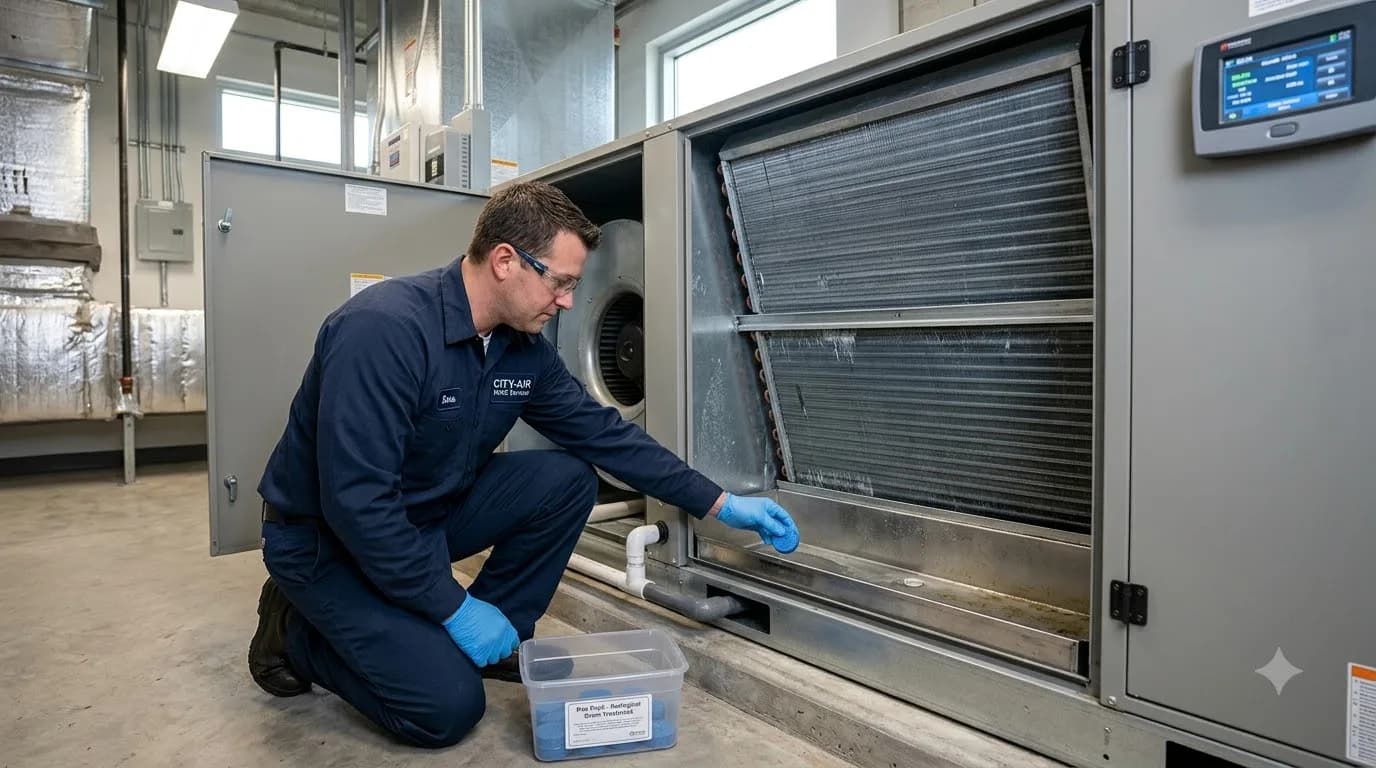
Key Takeaway / Executive Summary (Position 0): BioFresh™ is an advanced microbial and enzymatic bioremediation technology that permanently destroys ammonia ($\text{NH}_3$), hydrogen sulfide ($\text{H}_2\text{S}$), and volatile organic malodors at the molecular level. Powered by a specialized consortium of autotrophic nitrifying bacteria (Nitrosomonas europaea) and multi-enzyme secreting Bacillus strains, BioFresh™ converts noxious odors into odorless nitrates and water within 5 minutes, providing chemical-free sanitation for municipal wastewater, transit hubs, and commercial facilities.
Offensive malodors in high-traffic public washrooms, wastewater treatment plants, municipal septic systems, hospitality grease traps, and industrial composting facilities represent severe operational liabilities.
Traditional odor management relies almost entirely on chemical masking agents, aerosol sprays, and synthetic fragrance blocks. These legacy methods fail because they do nothing to eliminate the underlying volatile organic compounds (VOCs) or the bacterial biofilms generating them; they merely coat hazardous ammonia and sulfur gases with synthetic perfumes, creating nauseating olfactory combinations while releasing harmful volatile chemicals into the air.
Developed by Probiota Innovations, BioFresh™ represents a true paradigm shift in industrial environmental biotechnology. This whitepaper explains the enzymatic and microbial nitrification pathways, strain kinetics, application protocols, and commercial technology-transfer licensing models for the BioFresh™ bio-consortium.
1. The Chemistry of Malodor: Why Chemical Masking Fails
Restroom and wastewater malodors are generated by the rapid enzymatic breakdown of urea, proteins, and lipids by opportunistic, urease-positive bacteria:
┌─────────────────────────────────────────────────────────────────────────────────────────┐
│                    MAJOR MALODOR BIOMARKERS IN SANITATION & EFFLUENT                    │
├──────────────────────────────┬────────────────────────────┬─────────────────────────────┤
│ Chemical Compound            │ Molecular Formula / Origin │ Odor Profile & Olfactory Impact │
├──────────────────────────────┼────────────────────────────┼─────────────────────────────┤
│ **Ammonia**                  │ $\text{NH}_3$ (Urea breakdown)│ Sharp, pungent, suffocating │
│ **Hydrogen Sulfide**         │ $\text{H}_2\text{S}$ (Anaerobic sulfur)│ Rotten egg smell, highly toxic│
│ **Indole & Skatole**         │ Nitrogenous tryptophan decomp│ Intense fecal, nauseating   │
│ **Short-Chain Fatty Acids**  │ Isovaleric / Butyric acid  │ Rancid, sour sweat odor     │
│ **Volatile Mercaptans**      │ Methyl mercaptan ($\text{CH}_3\text{SH}$)│ Decaying organic matter │
└──────────────────────────────┴────────────────────────────┴─────────────────────────────┘
When chemical perfumes are sprayed onto these volatile molecules, the high vapor pressure of ammonia ($\text{NH}_3$) quickly overwhelms the fragrance, leading to odor breakthrough within 15 to 30 minutes.
2. Biological Mechanism of BioFresh™: The Dual Nitrification & Enzymatic Cascade
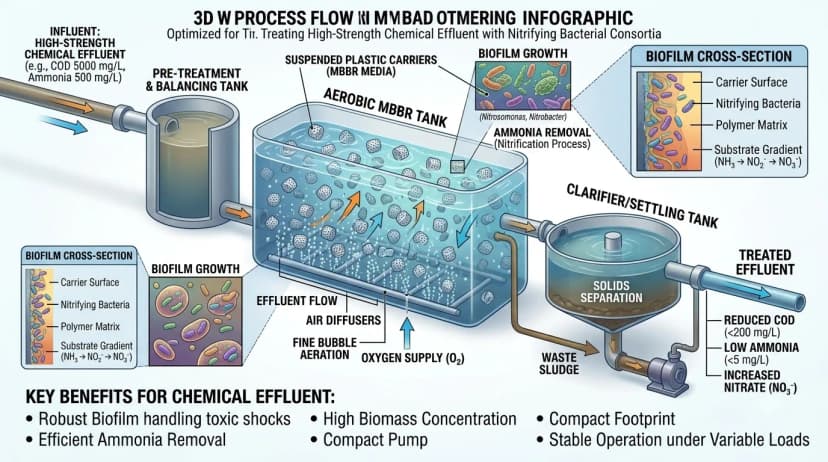
BioFresh™ combines an autotrophic nitrifying culture with a synergistic heterotrophic spore consortium to achieve rapid, irreversible malodor destruction:
graph TD
    A[Noxious Ammonia NH3 & Urea] -->|Nitrosomonas europaea AMO Enzyme| B[Hydroxylamine NH2OH]
    B -->|Hydroxylamine Oxidoreductase| C[Non-Volatile Nitrite NO2-]
    C -->|Nitrobacter / Bio-oxidation| D[Harmless, Odorless Nitrates NO3- & Water H2O]
    E[Proteins, Fats, Greases & Biofilm] -->|Bacillus subtilis & licheniformis Enzymes| F[Degraded into Soluble Amino Acids & CO2]
1. Two-Step Ammonia Bio-Oxidation:
- Step 1: Nitrosomonas europaea utilizes the membrane-bound enzyme Ammonia Monooxygenase (AMO) to oxidize volatile ammonia gas into hydroxylamine: $$\text{NH}_3 + \text{O}_2 + 2\text{H}^+ + 2e^- \xrightarrow{\text{AMO}} \text{NH}_2\text{OH} + \text{H}_2\text{O}$$
- Step 2: Hydroxylamine is immediately converted to harmless, non-volatile Nitrite ($\text{NO}_2^-$) and subsequently to Nitrate ($\text{NO}_3^-$), permanently eliminating the odor source.
2. Multi-Enzyme Biofilm Degradation:
Synergistic Bacillus subtilis and Bacillus licheniformis continuously secrete high concentrations of extracellular Proteases, Lipases, Amylases, and Cellulases, digesting the organic uric acid crystals and biofilm encrustations inside plumbing lines.
3. Performance Matrix: Chemical Masking vs. BioFresh™ Bioremediation
| Comparison Parameter | Chemical Aerosols & Urinal Blocks | BioFresh™ Probiotic Bioremediation |
|---|---|---|
| Destruction Mechanism | Olfactory masking (Temporary perfume) | True Bio-Oxidation (Molecular Destruction) |
| Speed of Action | Instant perfume (Fades in 20 min) | $< 5$ Minutes (Long-lasting 24–48 hours) |
| Ammonia ($\text{NH}_3$) Reduction | $0%$ (Gas remains in air) | $> 96.5%$ Reduction within 1 Hour |
| Biofilm & Uric Acid Control | No effect; scale builds up in pipes | Actively digests uric scale & grease traps |
| Chemical Toxicity & VOCs | Contains synthetic phthalates/paradichlorobenzene | 100% Non-Toxic, Eco-Friendly, Bio-Based |
| Plumbing Protection | Corrosive acid/alkali damage | Completely safe for pipes, seals, septic tanks |
4. Industrial Applications & Technology Transfer Licensing
BioFresh™ is engineered for diverse commercial, municipal, and institutional deployments:
- Municipal Restrooms & Transit Hubs: Eliminating persistent urine and ammonia malodors in airports, railway stations, and public utility facilities.
- Grease Traps & Commercial Plumbing: Digesting fats, oils, and grease (FOG) in hotel and restaurant drainage lines, preventing blockages.
- Wastewater Treatment & Sludge Dewatering: Rapid suppression of hydrogen sulfide and ammonia off-gassing in municipal equalization basins.
- Biotechnology Technology Transfer: Probiota Innovations offers turnkey IP licensing, master microbial strain banks (MSB), and fermentation SOPs for regional chemical manufacturers, CDMOs, and sanitation conglomerates.
Frequently Asked Questions (FAQ)
How does Nitrosomonas eliminate ammonia odors so quickly?
Nitrosomonas europaea expresses high levels of the active enzyme Ammonia Monooxygenase (AMO), which immediately captures airborne and aqueous ammonia ($\text{NH}_3$) molecules, converting them into odorless, non-volatile nitrogen compounds in a fast enzymatic reaction.
Is BioFresh™ safe for environmental and continuous facility use?
Yes. BioFresh™ is formulated with non-pathogenic, Biosafety Level 1 (BSL-1) natural microorganisms and food-grade multi-enzymes. It contains zero caustic chemicals, acids, or toxic volatile organic compounds (VOCs).
Is the BioFresh™ technology available for commercial licensing and technology transfer?
Yes. Probiota Innovations licenses the proprietary BioFresh™ microbial consortium, fermentation scale-up SOPs, and formulation master dossiers to commercial partners globally. Inquiries can be submitted via our technology transfer data room.
Interested in acquiring or out-licensing the BioFresh™ bioremediation technology? Explore our Biotechnology Transfer & Out-Licensing Solutions or request a technical data package.
Recommended Manufacturing Solution
Request data room access for our proprietary microbial technologies
Want to discuss your formulation?
Our experts help brands launch technically complex probiotic and functional gummies.