Third-Party Gummy Manufacturer vs. In-House Capex: Sourcing from NSF/ANSI 455-2 Certified Facilities
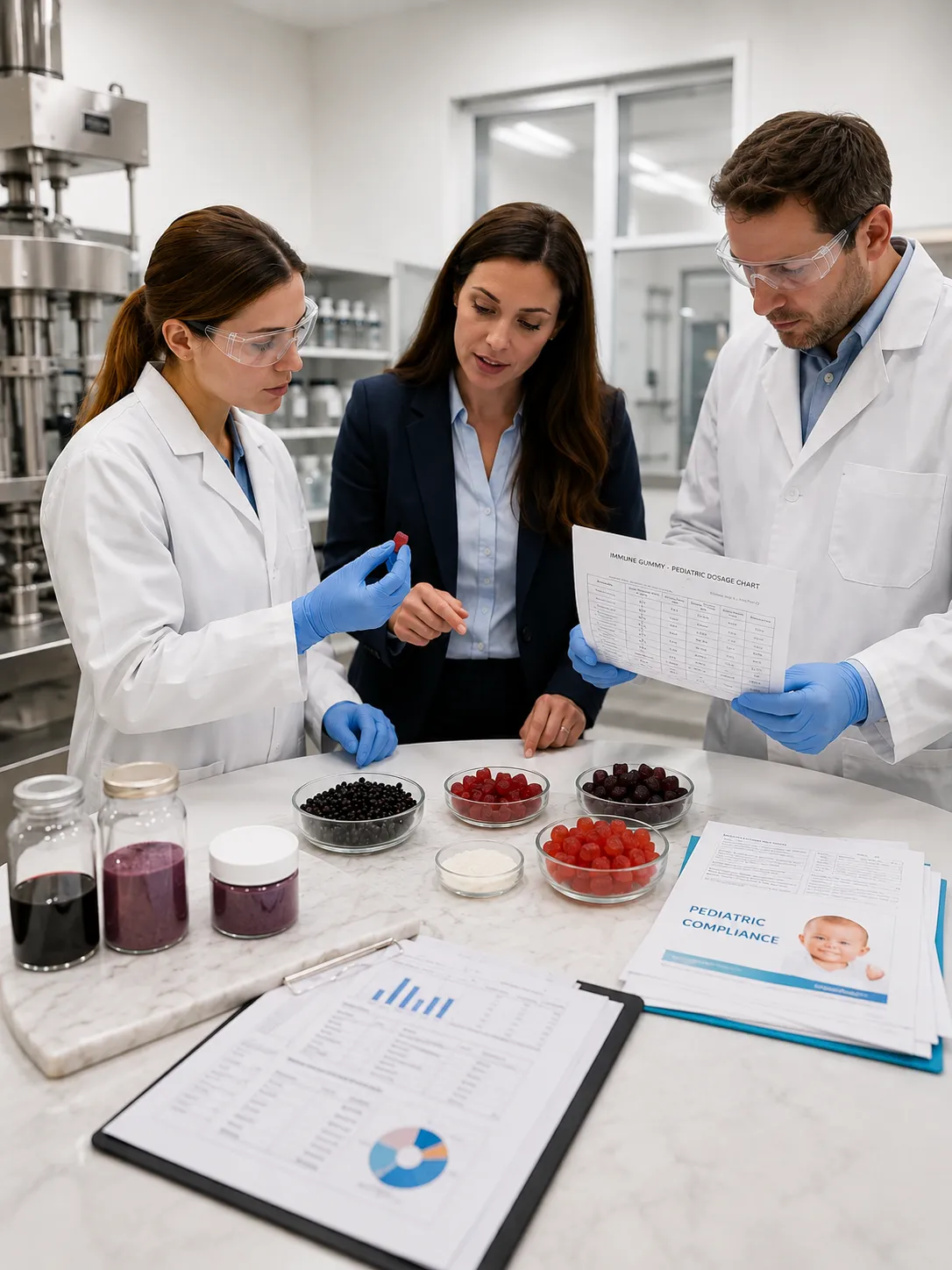
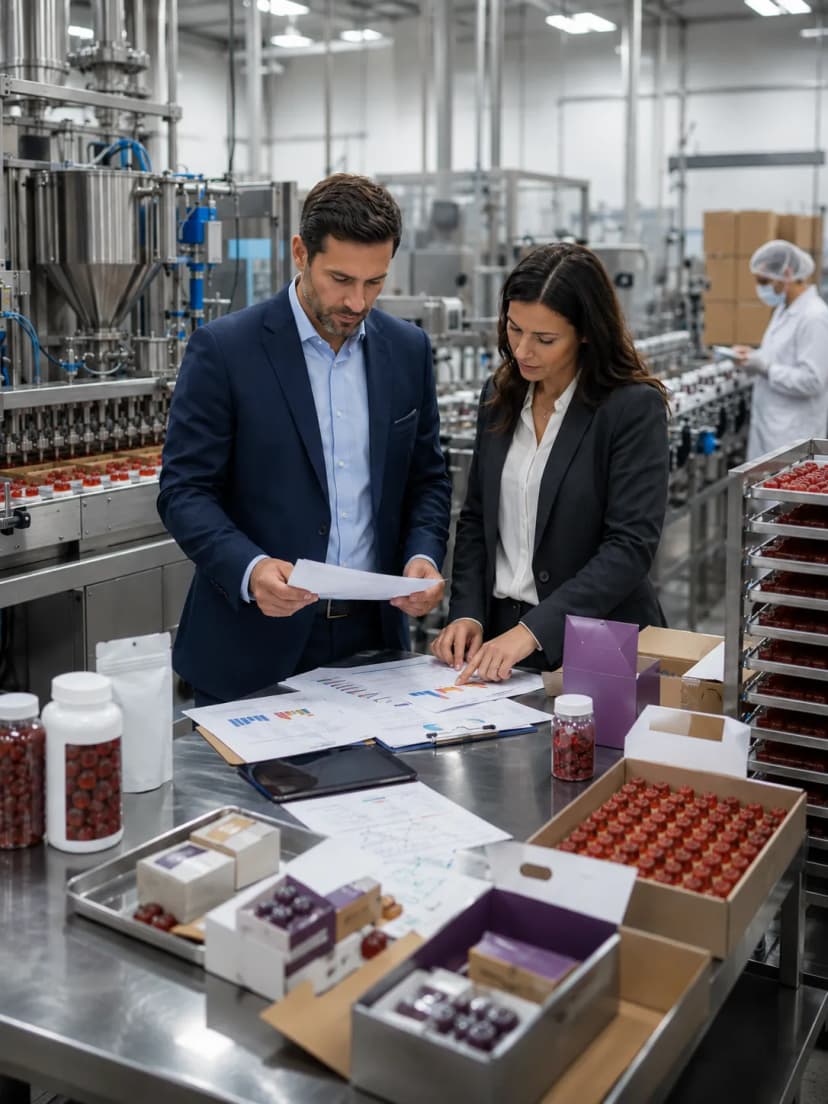
Key Takeaway / Executive Summary (Position 0): Partnering with a third-party gummies manufacturer holding NSF/ANSI 455-2 certification eliminates $3M–$7M in upfront machinery Capex, cleanroom HVAC installation, and validation timelines. Overseas FDA-registered CMOs deliver plant-based pectin (gelatin-free) gummies manufactured under 21 CFR 111-aligned GMP, slashing production costs by 40–60% while accelerating time-to-market by 9–12 months.
As functional gummies continue their rapid market expansion across multivitamins, sleep aids, nootropics, and probiotic categories, brand executives face a critical strategic fork in the road: Should we invest in building an internal gummy manufacturing line, or partner with a qualified third-party gummy contract manufacturer?
While in-house manufacturing promises total control over intellectual property and production scheduling, the hidden operational complexities of gummy candy confection chemistry, environmental air dehumidification, and stringent dietary supplement cGMP validation often convert in-house initiatives into multi-million-dollar capital sinkholes.
This operational guide analyzes the true capital expenditure (Capex), operational expenditure (Opex), and regulatory risk profiles of building in-house capacity versus outsourcing to a world-class, NSF/ANSI 455-2 certified third-party facility.
1. The True Capex & Opex Reality of In-House Gummy Production
Building a compliant dietary supplement gummy facility is radically more capital-intensive than commissioning a tablet or capsule line. Because gummy masses contain hydrocolloids and moisture, failure to maintain tight climatic tolerances leads to product weeping, microbial contamination, and cross-batch variation.
┌─────────────────────────────────────────────────────────────────────────────────────────┐
│                    IN-HOUSE GUMMY FACILITY INITIAL CAPEX BREAKDOWN                      │
├─────────────────────────────────────────────────────────────┬───────────────────────────┤
│ Facility Asset / Infrastructure Requirement                 │ Estimated Capex (USD)     │
├─────────────────────────────────────────────────────────────┼───────────────────────────┤
│ Continuous Pectin Dissolving, Cooking & Dosing Skids        │ $450,000 – $750,000       │
│ Automated Starchless Depositor & Cooling Tunnel Line        │ $850,000 – $1,800,000     │
│ ISO Class 8 / Class 100k Cleanrooms & Industrial HVAC/AHU  │ $600,000 – $1,200,000     │
│ In-Line Polishing, De-molding & Optical Inspection (AOI)    │ $250,000 – $400,000       │
│ High-Speed Bottling, Counting, Induction Sealing & Labeling │ $350,000 – $650,000       │
│ Analytical QC Lab (HPLC, ICP-MS, Water Activity Meters)     │ $400,000 – $700,000       │
│ Regulatory Validation, MBR Documentation & Audit Prep       │ $150,000 – $300,000       │
├─────────────────────────────────────────────────────────────┼───────────────────────────┤
│ TOTAL ESTIMATED INITIAL CAPEX                               │ $3,050,000 – $5,800,000   │
└─────────────────────────────────────────────────────────────┴───────────────────────────┘
Beyond the initial multi-million-dollar machinery outlay, ongoing operational expenditures include specialized candy food scientists, QA/QC documentation personnel, regular mold changeover tooling, continuous plant environmental monitoring, and recurring third-party regulatory audits.
2. Why NSF/ANSI 455-2 Certification is the Deciding Benchmark
When selecting a third-party gummies manufacturer, simple ISO 9001 or domestic food licenses are insufficient for global retail compliance.
NSF/ANSI 455-2 is the global dietary supplement standard that harmonizes US FDA 21 CFR Part 111 cGMP regulations, ISO criteria, and the stringent vendor audit mandates of major global retailers (including Amazon, Walmart, Target, CVS, and Walgreens).
Key Pillars Guaranteed by an NSF/ANSI 455-2 Partner:
- Raw Material Verification: Mandatory 100% identity testing on every botanical, vitamin, and mineral component prior to batch release.
- Master Batch Production Records (MBPR): Documented, unalterable processing parameters (cook temperatures, dwell times, Brix, pH).
- Cleaning & Cross-Contamination Validation: Swab testing and validated cleaning cycles between active allergen or botanical batches.
- Environmental Controls: Cleanroom temperature ($18–22^\circ\text{C}$) and relative humidity ($\text{RH} < 35%$) validation to ensure consistent gelling kinetics and water activity ($a_w < 0.60$).
3. Comparative Strategic Matrix: In-House vs. Certified Third-Party CMO
| Decision Factor | Building In-House Manufacturing | Partnering with NSF/ANSI 455-2 Third-Party CMO |
|---|---|---|
| Initial Capital Requirement | $3M – $6M+ (High Risk) | $0 (Pay per unit batch) |
| Time-to-First-Batch | 12 – 18 Months (Build, install, validate) | 4 – 8 Weeks (Formulation & trial run) |
| Production Flexibility | Fixed capacity; costly line changeovers | Elastic scaling from 30,000 to 10M+ units |
| Formulation Expertise | Must recruit specialized hydrocolloid chemists | Turnkey scientist-led R&D and shelf-life data |
| Global Certifications | Years of audits to achieve GMP/Halal/FDA | Instant access to FDA, NSF 455-2, Halal, Kosher |
| Finished Landed Cost | High fixed overhead per unit at low volume | 40–60% lower unit COGS via volume scaling |
4. Unlocking the Advantages of Gelatin-Free Pectin Systems
Modern third-party contract manufacturers specialize in advanced plant-based citrus pectin (E440) systems rather than obsolete porcine gelatin (E441).
- Broadest Market Access: Pectin gummies are intrinsically 100% plant-derived, satisfying Vegan, Vegetarian, Halal, and Kosher certifications from day one.
- Thermal Stability in Transit: Gelatin softens and melts at human body temperature ($32–35^\circ\text{C}$), leading to disastrous clumping in summer shipping. High-methoxyl and low-methoxyl pectin networks remain structurally sound past $45–50^\circ\text{C}$.
- Clean-Label Appeal: Consumers actively reject animal collagen byproducts in favor of clean fruit-derived fiber matrices.
Frequently Asked Questions (FAQ)
What does NSF/ANSI 455-2 certification mean for dietary supplement gummies?
NSF/ANSI 455-2 is the premier independent standard for dietary supplement cGMP compliance. It audits facility cleanliness, raw material identity verification, batch documentation, environmental controls, and laboratory testing protocols in full alignment with US FDA 21 CFR Part 111.
Can an Indian third-party manufacturer supply gelatin-free, Halal gummies?
Yes. Leading Indian contract manufacturers operate dedicated starchless depositing lines utilizing citrus and apple pectin (E440), certified under global Halal bodies recognized by UAE ESMA and Saudi SFDA authorities.
What is the typical lead time when working with a third-party gummy CMO?
For existing pre-validated formulas, production runs typically complete within 4 to 6 weeks. For custom proprietary formulations requiring pilot batch validation and accelerated stability testing, initial lead times range from 8 to 12 weeks.
Ready to scale your gummy supplement line without Capex risk? Discover our Export-Ready Nutraceutical Contract Manufacturing capabilities or connect with our engineering team.
Recommended Manufacturing Solution
Discover regulatory-compliant nutraceutical contract manufacturing
Want to discuss your formulation?
Our experts help brands launch technically complex probiotic and functional gummies.