Regulatory Best Practices for Scaling Functional Gummy Production
Regulatory Best Practices for Scaling Functional Gummy Production
Scaling a dietary supplement brand is a perilous undertaking. The transition from a 50,000-bottle pilot launch to a 500,000-bottle commercial run introduces exponential regulatory risk.
When you increase volume, the margins for error in mixing, depositing, and quality control vanish. If a formulation is not locked into a mathematically precise, highly automated system, scaling will result in batch failures, FDA compliance violations, and catastrophic recalls.
Here are the regulatory best practices Contract Manufacturing Organizations (CMOs) use to safely scale Functional Gummy Production.
1. Locking the Master Manufacturing Record (MMR)
Under FDA 21 CFR Part 111, every product must have a Master Manufacturing Record (MMR). Think of the MMR as the DNA of the product. It dictates exactly how the gummy is made, down to the second and the gram.
When scaling from a benchtop to commercial production, the MMR must transition from a flexible recipe to a rigid, unyielding engineering protocol.
- Best Practice: The CMO must conduct rigorous Process Validation. This involves running 3 consecutive commercial-scale batches to prove that the heavy industrial equipment (the continuous cookers and starchless depositors) can reproduce the exact physical and chemical specifications of the pilot batch reliably. Once validated, the MMR is locked. Any deviation requires formal, documented QA authorization.
2. Managing Homogeneity at Scale (High-Shear Mixing)
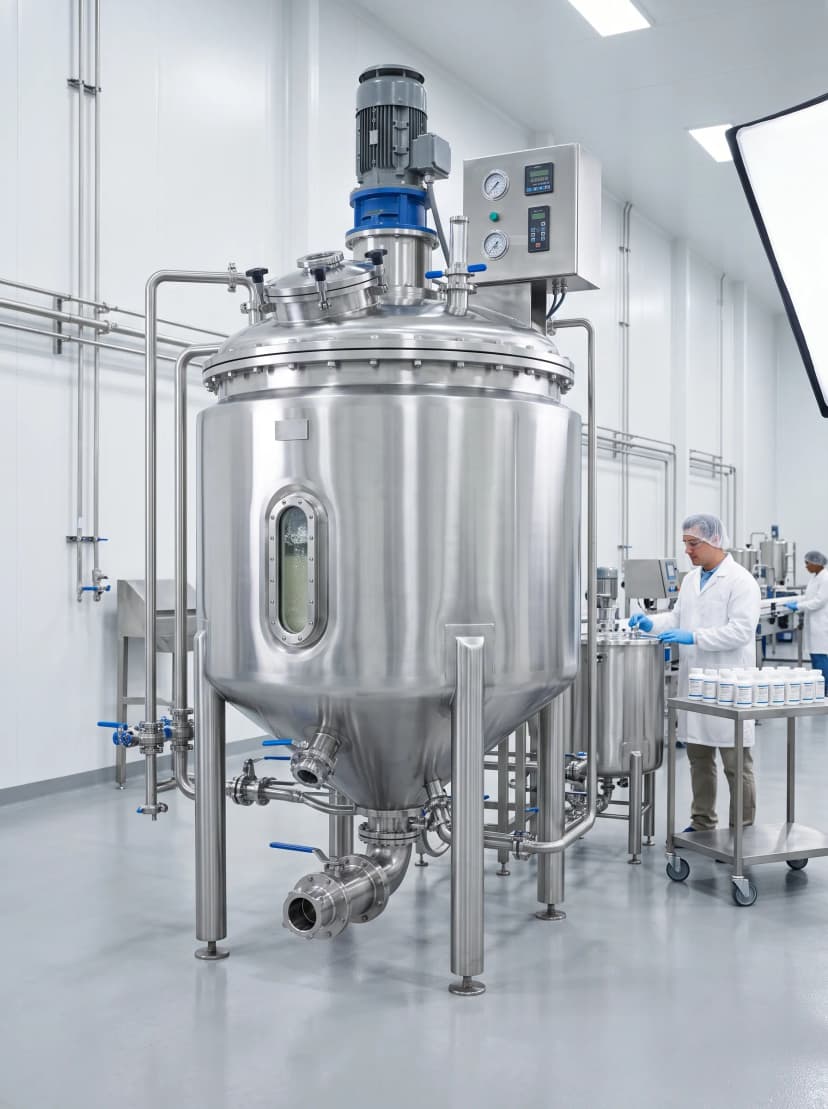
When you scale a functional gummy loaded with insoluble botanical powders (like Ashwagandha or Mushroom extracts), achieving a homogeneous mixture becomes the primary regulatory threat.
If the active ingredients settle in the massive holding tanks, the gummies at the beginning of the run will have no active ingredients, and the gummies at the end will have a massive, potentially toxic overdose. This violates the FDA's mandate for dosage uniformity.
- Best Practice: Scaling requires moving away from paddle mixers. Advanced CMOs utilize High-Shear Inline Mixing. This technology pulls the liquid slurry and the dry powders through a high-speed rotor/stator array, pulverizing the ingredients into a microscopic, unbreakable suspension. This guarantees that gummy #1 and gummy #500,000 contain the exact same dose.
3. The Starchless Automation Mandate
Scaling on a legacy starch mogul is a regulatory nightmare. As volume increases, the amount of recycled starch increases, geometrically increasing the risk of microbial contamination and cross-allergen exposure. Furthermore, manual inspection of millions of gummies coated in starch dust is impossible.
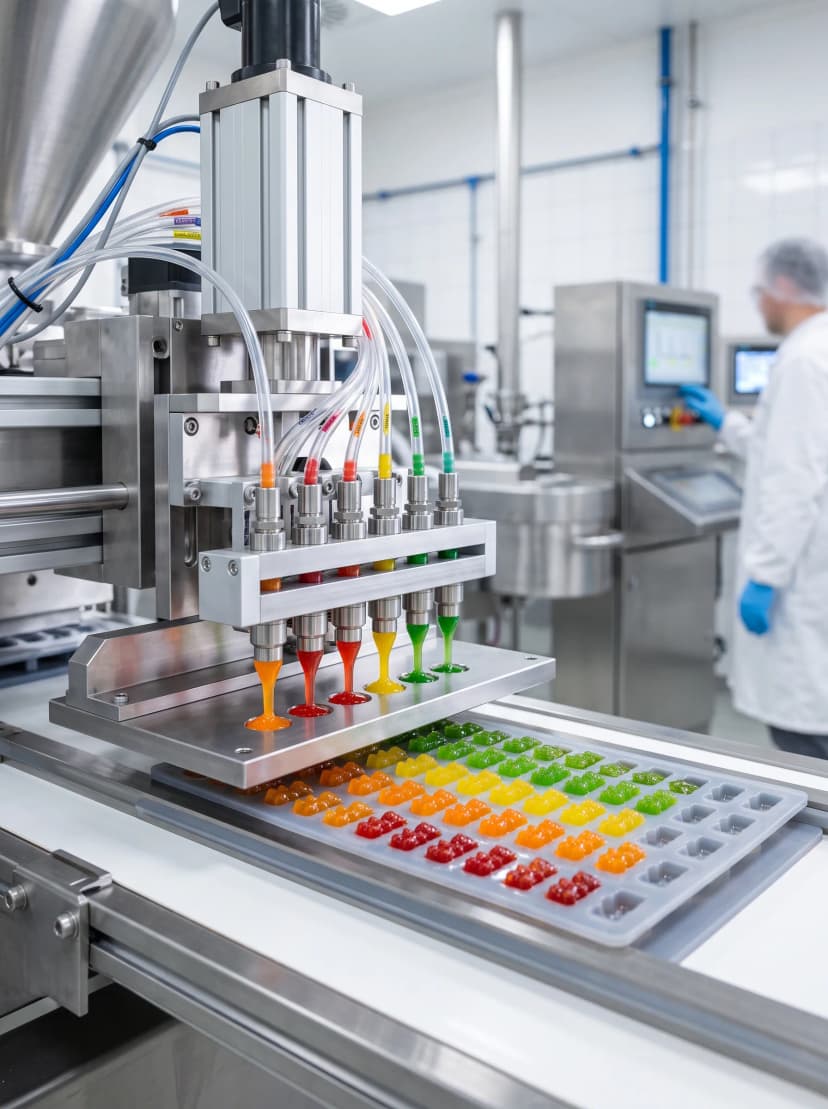
- Best Practice: High-volume commercial scaling mandates Starchless Mogul Technology.
- Automation: The slurry is injected directly into silicone molds.
- Hygiene: The line utilizes automated Clean-In-Place (CIP) sanitization, eliminating the human error involved in manual scrubbing.
- Automated Optical Inspection (AOI): Because the starchless gummies emerge glossy and clear (without powder), they can be passed under high-speed AI cameras that scan 100% of the production run, automatically blasting defective or malformed gummies off the line before they reach the bottle.
4. Real-Time Stability Monitoring
When you are producing hundreds of thousands of bottles, you cannot wait for the product to fail on the shelf to realize you have a moisture problem.
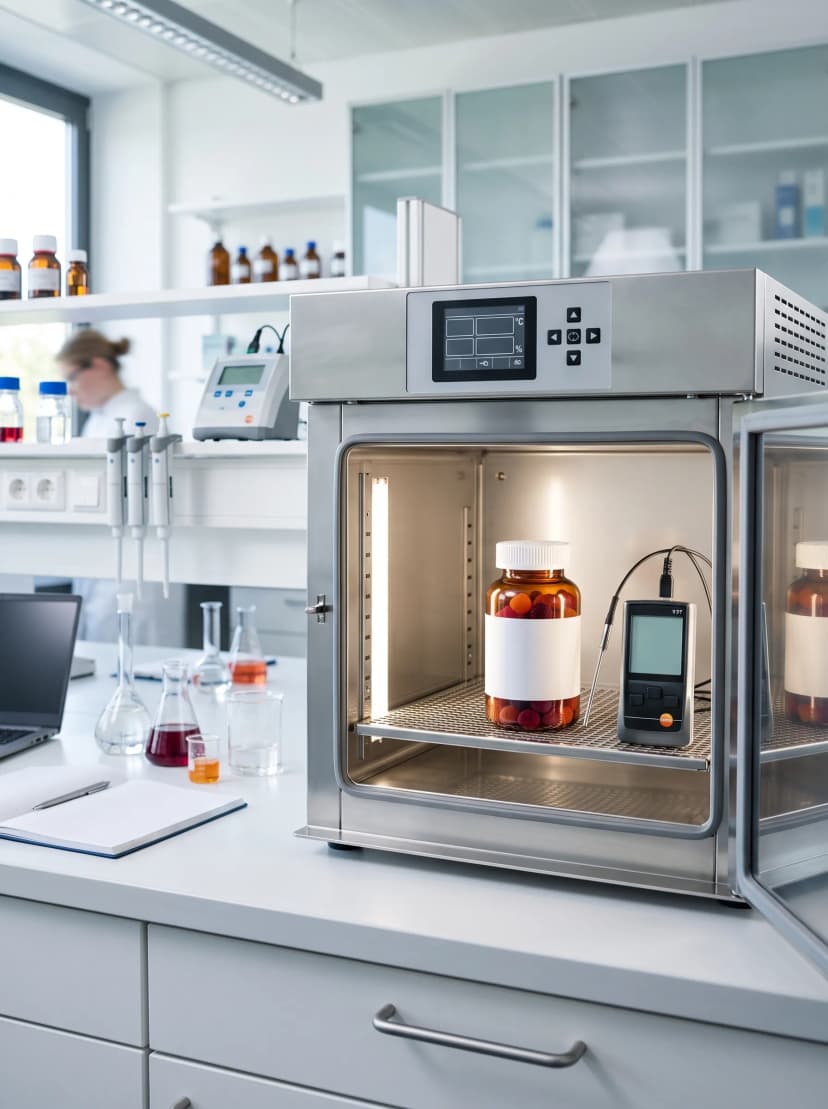
- Best Practice: The CMO must implement real-time monitoring of Water Activity (aw) and Brix. Advanced starchless lines utilize inline refractometers that measure the sugar solids of the boiling syrup in real-time. If the brix drops too low (indicating too much moisture), the system alerts the SCADA control room instantly, allowing operators to correct the boil before a million non-compliant gummies are deposited.
By partnering with a highly engineered, starchless CMO like Probiota Innovations, brands can scale their functional gummy lines infinitely, resting assured that their product quality and regulatory compliance only strengthen as volume increases.
Frequently Asked Questions (FAQ)
1. Does scaling up change the expiration date of the product? It shouldn't. If the Process Validation proves that the commercial equipment produces a gummy with the exact same Water Activity (aw) and pH as the pilot batch, the stability data from the pilot batch supports the same 18-to-24-month shelf life.
2. What happens if a commercial batch fails QA testing? Under GMP regulations, if a batch fails its specifications (e.g., the dosage is too low, or heavy metals are too high), it is placed in Quarantine. The QA department conducts an Out of Specification (OOS) investigation. Unless the investigation proves the lab made an error, the batch must be destroyed; it cannot be legally sold.
3. Do I need to notify the FDA when I scale up production? No. Dietary supplements do not require pre-market approval or scale-up notification to the FDA (unless you are introducing a New Dietary Ingredient). However, your CMO must ensure their facility registration is current and their GMP documentation is flawless in case of a random audit.
Recommended Manufacturing Solution
Scale internationally with our export-focused gummy production
Want to discuss your formulation?
Our experts help brands launch technically complex probiotic and functional gummies.