Achieving FDA, Prop 65, and International Compliance in Gummy Manufacturing

Achieving FDA, Prop 65, and International Compliance in Gummy Manufacturing
In the dietary supplement industry, a brilliant formulation is meaningless if it cannot pass a regulatory audit. For ambitious brands looking to dominate domestically while expanding globally, navigating compliance is the ultimate barrier to entry.
To build a legally unassailable gummy brand, you must achieve "Triple Compliance": aligning your product with FDA cGMPs, California Proposition 65, and International Export Standards. Here is how elite Contract Manufacturing Organizations (CMOs) achieve this for their partners.
1. FDA cGMP Compliance (The Baseline)
Current Good Manufacturing Practices (cGMPs), outlined in 21 CFR Part 111, are the federal law governing dietary supplements in the United States.
The FDA does not care how good your gummy tastes; they care about identity, purity, strength, and composition.
- Identity Testing: A compliant CMO will not trust a supplier's Certificate of Analysis (COA). They must perform incoming identity testing (using FTIR or HPLC) on every single barrel of raw material to ensure that the "Ashwagandha" is actually Ashwagandha, and not a cheaper adulterant.
- Master Manufacturing Records (MMR): Every step of the gummy cooking and depositing process must be rigidly documented. If an FDA inspector pulls a bottle off a retail shelf, the CMO must be able to trace that specific lot number back to the exact minute the pectin was boiled and the exact technician who added the vitamins.
2. California Proposition 65 (The Heavy Metal Trap)
California’s Prop 65 is often the most frustrating regulation for supplement brands. It sets incredibly strict "Safe Harbor" limits for heavy metals, most notably Lead.
The Prop 65 limit for Lead is 0.5 micrograms per day. For context, this is exponentially lower than the federal FDA limits or even the strict limits set by the EU.
The Botanical Danger: Botanical extracts (like maca, mushrooms, and herbal powders) naturally absorb heavy metals from the soil. If a brand formulates a gummy with a heavy payload of root botanicals, it is extremely easy to exceed the 0.5mcg daily limit, triggering the requirement to place a terrifying "Cancer and Reproductive Harm" warning label on the bottle.
The CMO Solution: To achieve Prop 65 compliance without the warning label, CMOs must ruthlessly vet their supply chain, sourcing botanicals only from regions with unpolluted soil. Furthermore, the base matrix matters. High-quality, purified HM Pectin and organic tapioca syrup generally have virtually undetectable heavy metal loads, providing a clean canvas that won't artificially inflate the total heavy metal count of the final gummy.
3. International Export Compliance
If your brand is targeting the UAE, Saudi Arabia, or Health Canada, FDA compliance is just the starting point.
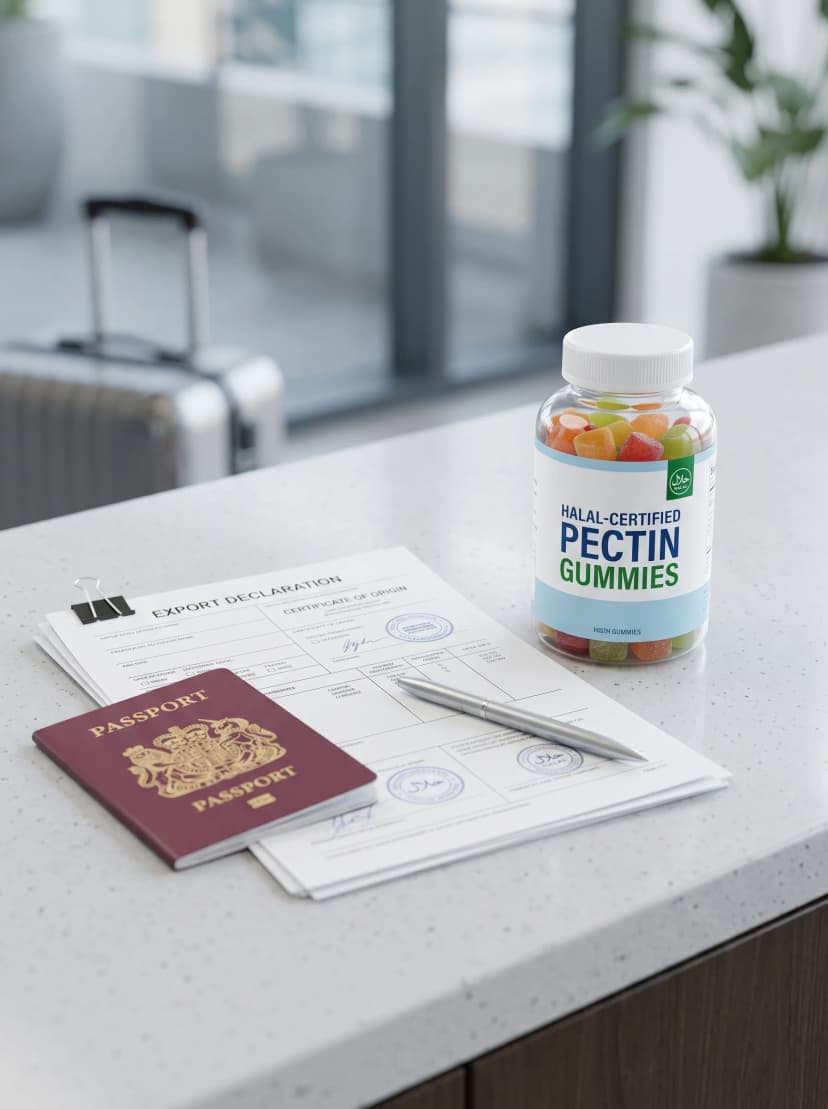
- Halal and Kosher: As discussed extensively, exporting to the Middle East requires strict religious dietary compliance. This mandates a 100% plant-based pectin base, alcohol-free flavorings, and a starchless manufacturing facility to prevent cross-contamination.
- Artificial Dye Bans: The EU and many Middle Eastern countries heavily restrict or ban synthetic FD&C dyes (like Red 40). A globally compliant gummy must utilize natural colorants (like beet root or spirulina).
- Vitamin Overages: Health Canada and the Australian TGA are extremely strict about label claims. While US brands often use massive overages for vitamins to ensure shelf life, foreign regulatory bodies will reject products if the testing shows the vitamin levels are too high above the stated label claim, citing toxicity risks. Precision dosing via starchless technology is required to thread this needle.
By partnering with a highly certified, globally aware CMO like Probiota Innovations, brands can launch a universal SKU—a premium pectin gummy that legally and seamlessly flows from California to Dubai without requiring expensive reformulation.
Frequently Asked Questions (FAQ)
1. Does the FDA inspect gummy manufacturing facilities? Yes. The FDA conducts routine, unannounced inspections of dietary supplement manufacturing facilities to ensure strict adherence to 21 CFR Part 111 cGMPs. A facility must maintain pristine records to pass these audits.
2. If I sell exclusively online, do I have to worry about Prop 65? Yes. If you sell online and ship a product to a consumer residing in California, you are subject to Prop 65 enforcement. "Bounty hunter" law firms aggressively purchase supplements online specifically to test them for heavy metals and file lawsuits.
3. Are natural flavors Prop 65 compliant? Usually, but not always. The extraction solvent used to create the natural flavor must be scrutinized. Your CMO should request a specific Prop 65 declaration from the flavor house before integrating it into your formula.
Recommended Manufacturing Solution
Scale internationally with our export-focused gummy production
Want to discuss your formulation?
Our experts help brands launch technically complex probiotic and functional gummies.