Building a Compliant Supply Chain for Private Label Dietary Supplements

Building a Compliant Supply Chain for Private Label Dietary Supplements
For a private label brand, your product is only as safe, effective, and legally compliant as the raw materials used to build it.
When the FDA audits a supplement brand, they do not just inspect the final gummy; they audit the entire chain of custody. If your Contract Manufacturing Organization (CMO) purchases cheap, unverified raw materials from international brokers without conducting rigorous "Vendor Qualification," your brand is operating illegally under 21 CFR Part 111.
Here is how elite CMOs build an impenetrable, legally compliant supply chain to protect their private label partners.
The Danger of the "Paper COA"
The most common compliance failure in the supplement industry is relying entirely on a supplier’s Certificate of Analysis (COA).
A supplier in overseas markets might send a barrel of "Premium Ashwagandha Extract" accompanied by a piece of paper claiming it contains zero heavy metals and high levels of active withanolides. A non-compliant, legacy CMO will take that paper at face value, dump the powder into the mixing tank, and ship the gummies to the brand.
This is known as "dry-labbing" (faking test results) and is a massive regulatory liability. If the FDA pulls that product from a retail shelf and tests it, discovering the Ashwagandha is actually cheap maltodextrin laced with lead, the brand owner faces the recall and the lawsuit, not the overseas supplier.
The 21 CFR Part 111 Vendor Qualification Process
To protect their partners, premium CMOs like Probiota Innovations execute a rigorous, multi-step Vendor Qualification program mandated by federal law.
1. Initial Supplier Auditing
Before a CMO buys a single kilogram of pectin, tapioca syrup, or botanical extract, they must audit the supplier. This often involves sending a QA team to physically inspect the supplier's facility, reviewing their ISO certifications, their HACCP (Hazard Analysis Critical Control Point) plans, and their historical FDA inspection records.
2. Identity Testing (The Non-Negotiable Step)
Federal law dictates that a manufacturer must conduct at least one specific test to verify the Identity of every single dietary ingredient before it is used in manufacturing.
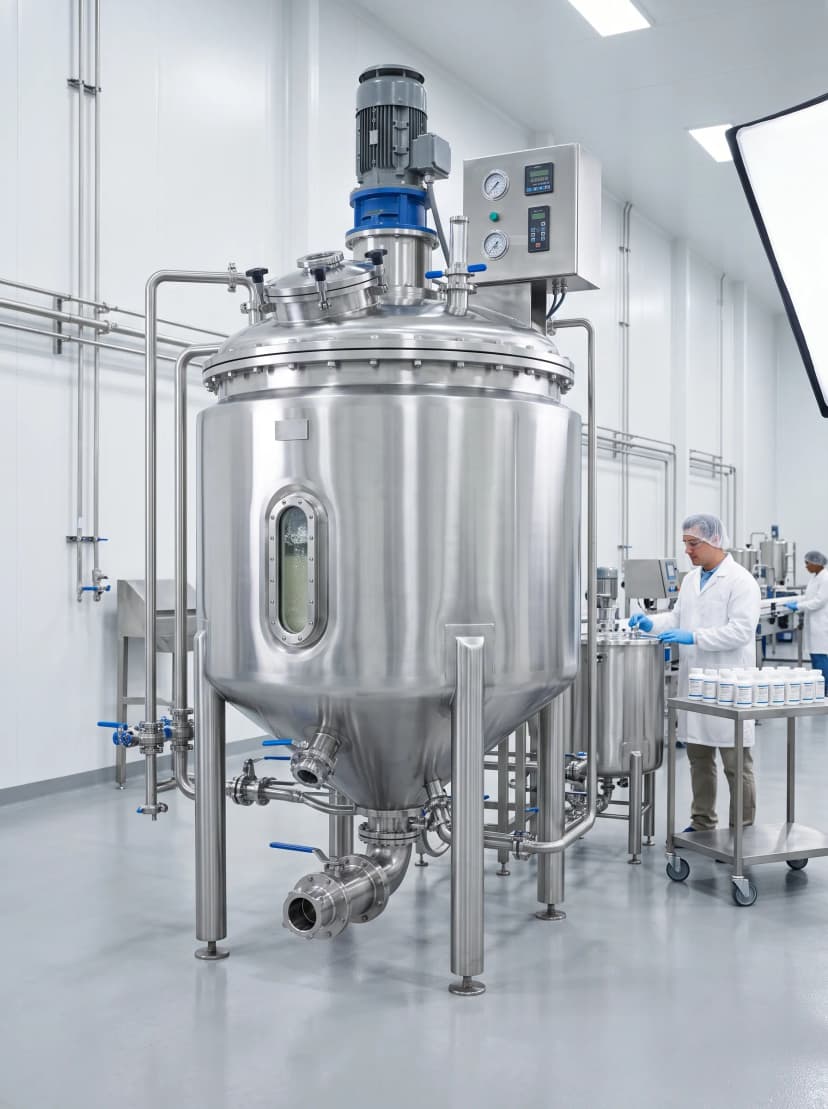
When a barrel arrives at a compliant CMO, it is immediately placed in quarantine. The QA team extracts a sample and runs it through highly sophisticated analytical machinery:
- FTIR (Fourier Transform Infrared Spectroscopy): Scans the ingredient with infrared light to create a molecular "fingerprint," matching it against a known, verified standard to ensure the powder is exactly what it claims to be.
- HPLC (High-Performance Liquid Chromatography): Used to separate and quantify the exact active compounds (e.g., proving the extract actually contains 5% withanolides).
Only after the in-house lab verifies the identity does the raw material move from quarantine to the production floor.
3. Contaminant Screening
Beyond identity, the CMO must verify purity. This involves sending samples to ISO-accredited third-party labs to test for:
- Heavy Metals: Lead, Arsenic, Cadmium, Mercury (crucial for Prop 65 compliance).
- Microbiology: E. coli, Salmonella, Staphylococcus, and total yeast/mold counts.
- Pesticides and Residual Solvents: Ensuring the botanical extraction process didn't leave behind toxic chemicals like hexane or ethanol.
The Advantage for Private Label Brands
Building and maintaining this level of analytical infrastructure costs millions of dollars. Private label brands cannot afford to do this themselves.
By partnering with a CMO that treats supply chain compliance as a core competency rather than a burdensome cost, brand owners outsource their regulatory risk. You can scale your marketing and distribution knowing that every gummy in every bottle is chemically verified, legally compliant, and perfectly safe for your consumer.
Frequently Asked Questions (FAQ)
1. Does the FDA require testing on the finished gummy, or just the raw materials? Both. The FDA requires identity testing on inbound raw materials, but it also requires testing on a subset of the finished product batches to ensure that the manufacturing process (mixing, cooking, depositing) resulted in a gummy that meets the final label claims for purity, strength, and composition.
2. What is an "Adulterated" supplement? Under FDA law, a supplement is "adulterated" if it presents a significant risk of illness, contains a poisonous substance (like high heavy metals), or if it was prepared, packed, or held under conditions that do not meet cGMPs (meaning it could have been contaminated, even if it wasn't).
3. If I buy a product from a CMO, who is responsible if the FDA finds an issue? Both parties. The FDA holds the brand owner (the company whose name is on the label) ultimately responsible for the safety of the product in interstate commerce. However, the FDA will also take enforcement action directly against the CMO for failing to follow cGMPs. This is why vetting your CMO is the most important decision you make.
Recommended Manufacturing Solution
Discover regulatory-compliant nutraceutical contract manufacturing
Want to discuss your formulation?
Our experts help brands launch technically complex probiotic and functional gummies.