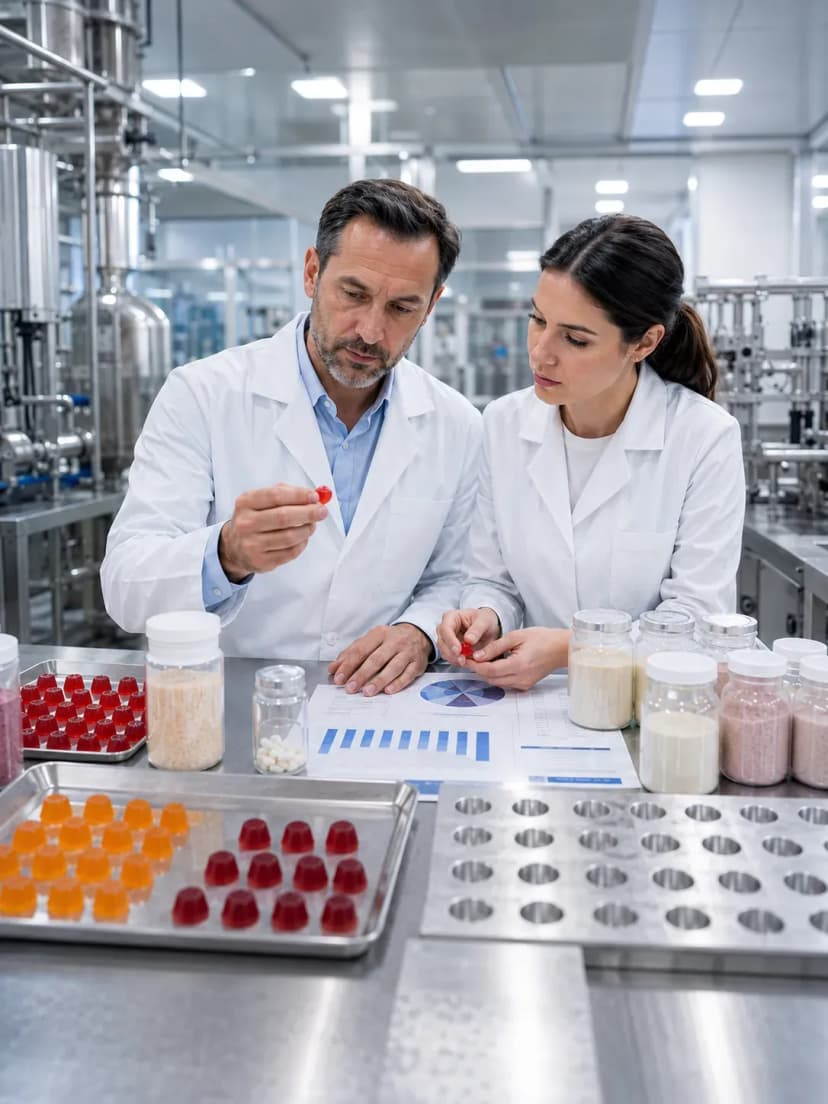
Formulating Collagen Gummies: Overcoming Texture Challenges with Hydrolyzed Peptides
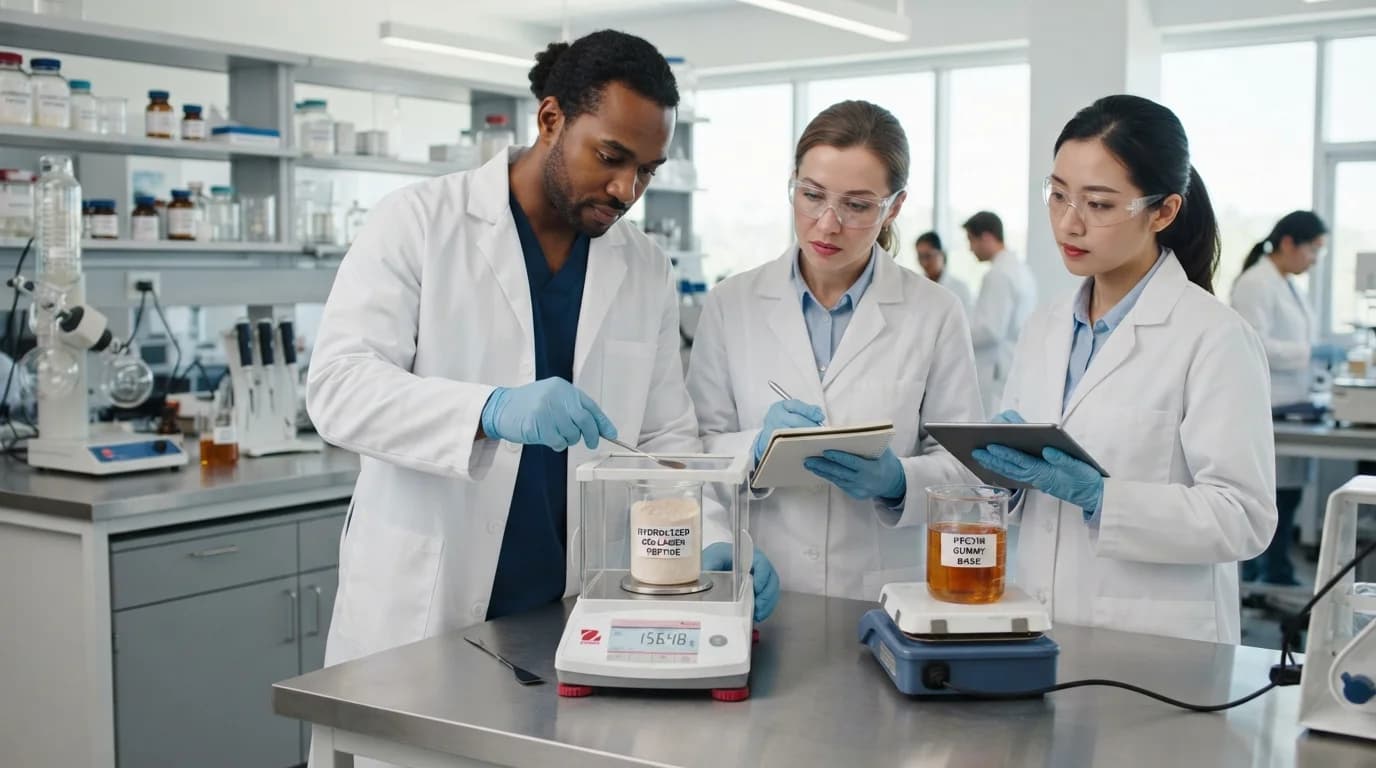
Formulating Collagen Gummies: Overcoming Texture Challenges with Hydrolyzed Peptides
The beauty-from-within category is one of the fastest-growing segments in the nutraceutical industry, and collagen is its undisputed king. Consumers aggressively seek collagen for skin elasticity, hair health, and joint support.
Naturally, brands want to deliver this powerhouse ingredient in the preferred consumer format: the gummy. However, formulating collagen gummies presents a unique and frustrating set of polymer chemistry challenges.
Collagen is a massive, complex protein. When introduced into a delicate gummy matrix, it disrupts the gel network, destroys clarity, and can turn a soft chew into a rubbery mess. This guide explores the science of overcoming gummy texture challenges by utilizing advanced hydrolyzed collagen peptides.
The Core Problem: The Size of the Protein
To understand the formulation challenge, we must look at the molecule.
Native collagen (derived from bovine hide, porcine bone, or marine scales) is a gigantic protein consisting of three long amino acid chains twisted into a rigid triple helix.
- The Viscosity Crisis: If a formulator attempts to dump native, unhydrolyzed collagen into a hot gummy slurry, the massive proteins absorb water rapidly, creating extreme viscosity. The slurry becomes too thick to pump through the depositing nozzles.
- The "Double Gel" Effect: In a pectin gummy, the pectin is supposed to be the sole gelling agent. However, native collagen is essentially raw gelatin. If added to a pectin matrix, the collagen will attempt to form its own thermo-reversible gel network alongside the pectin's thermo-irreversible network. These two competing networks clash, resulting in a gummy with a terrible, tough, rubbery texture that is incredibly difficult to chew.
- The Opacity Issue: Large, unhydrolyzed proteins do not dissolve cleanly. They remain suspended in the matrix, scattering light. This destroys collagen gummy clarity, turning a beautiful, translucent gummy into a cloudy, unappealing opaque drop.
The Solution: Hydrolyzed Collagen Peptides
To successfully formulate a high-dose collagen gummy, the raw material must be fundamentally altered before it ever reaches the gummy factory.
Premium Contract Manufacturing Organizations (CMOs) exclusively utilize hydrolyzed collagen peptides.
- The Hydrolysis Process: In a separate processing facility, the massive native collagen proteins are subjected to an enzymatic hydrolysis process. Specific enzymes act like molecular scissors, chopping the long triple helices into tiny, microscopic fragments (peptides).
- The Molecular Weight Advantage: While native collagen has a molecular weight of roughly 300,000 Daltons, hydrolyzed peptides have a weight of 2,000 to 5,000 Daltons.
The Formulation Benefits of Peptides
- Zero Gelling Power: Because the chains are chopped so small, they can no longer intertwine to form a gel. The peptides dissolve completely into the gummy slurry without competing with the pectin. The pectin remains fully in control of the texture, ensuring a clean, soft bite.
- Ultra-Low Viscosity: The tiny peptides do not drastically thicken the slurry. This allows the CMO to pump the liquid easily through continuous starchless mogul lines, even at very high dosages.
- Perfect Clarity: Highly refined, low-molecular-weight peptides dissolve perfectly clear in water, allowing the gummy to retain its premium, jewel-like translucency.
- Superior Bioavailability: From a clinical standpoint, the human body cannot absorb massive native collagen proteins; it must break them down in the stomach first. Hydrolyzed peptides are "pre-digested," meaning they are immediately absorbed through the intestinal wall into the bloodstream, drastically increasing efficacy.
The Challenge of High-Dose Collagen Gummies
Even with hydrolyzed peptides, the physical limits of the gummy matrix remain.
Brands often want to claim "1,000mg of Collagen" on the front of the bottle.
- The Payload Limit: A standard pectin gummy weighs approximately 3 grams (3,000mg). It is physically impossible to put 1,000mg of collagen into a single 3,000mg gummy—there wouldn't be enough room left for the sugar, water, and pectin required to hold it together.
- The Serving Size Strategy: To deliver high clinical doses, high dose collagen gummies generally rely on a serving size of 2 to 4 gummies per day. A premium CMO can successfully load approximately 250mg to 350mg of hydrolyzed peptides into a single 3-gram gummy without compromising the texture or the gel structure.
Engineering Beauty with Probiota Innovations
At Probiota Innovations, we do not compromise on texture or clarity.
Our formulation scientists exclusively utilize premium, ultra-low molecular weight hydrolyzed collagen peptides (bovine, marine, or vegan collagen-boosters). By expertly balancing the Brix, pH, and peptide load, we engineer collagen gummies that boast brilliant translucency, a perfect pectin "short bite," and absolute stability for global export.
Explore our Advanced Formulation and Custom Manufacturing Capabilities
Frequently Asked Questions (FAQ)
1. Can you make a vegan collagen gummy? True collagen is an animal protein; there is no such thing as a "vegan collagen" molecule in nature. However, CMOs can formulate "Vegan Collagen Builders." These gummies are packed with the specific plant-based amino acids (Glycine, Proline, Hydroxyproline) and co-factors (like Vitamin C and Silica) that the human body needs to naturally synthesize its own collagen.
2. Does marine collagen taste fishy in a gummy? It can, if poor-quality raw materials are used. Premium marine collagen peptides undergo extensive deodorization and filtering processes to remove the fishy odor and taste. When paired with strong, complementary flavors (like Citrus or Berry) and expertly formulated, a marine collagen gummy should have zero fishy aftertaste.
3. Why do some collagen gummies get hard over time? This is often due to moisture migration (syneresis) or the use of poorly hydrolyzed collagen that slowly attempts to form a weak gel network over time. Using high-quality peptides, maintaining a low Water Activity (aw), and using proper high-barrier packaging (like HDPE or thick PET with an induction seal) prevents this hardening.
4. Can I mix Biotin and Collagen in the same gummy? Absolutely. This is the industry standard for "Hair, Skin, and Nails" formulations. Biotin (Vitamin B7) is required in very small doses (micrograms), so it takes up almost no physical space in the gummy matrix and blends perfectly with the hydrolyzed collagen peptides.
Recommended Manufacturing Solution
Learn how we scale private label probiotic gummies for global brands
Want to discuss your formulation?
Our experts help brands launch technically complex probiotic and functional gummies.