Addressing Heat Sensitivity in Vitamin C Gummies: Minimizing Thermal Degradation
Addressing Heat Sensitivity in Vitamin C Gummies: Minimizing Thermal Degradation
Vitamin C (Ascorbic Acid) is the foundational ingredient of the dietary supplement industry. It is universally recognized by consumers for immune support and antioxidant benefits. Consequently, a Vitamin C gummy is a mandatory SKU for almost every nutraceutical brand.
However, from a manufacturing perspective, Ascorbic Acid is one of the most frustrating molecules to work with. It is highly unstable, rapidly degrading when exposed to light, oxygen, and most critically, heat.
Because gummy manufacturing requires boiling a liquid syrup, minimizing thermal degradation gummies experience is the paramount challenge. This guide details how elite manufacturers address Vitamin C gummies heat sensitivity and protect ascorbic acid stability during commercial production.
The Threat: Thermal Degradation
To create the gummy matrix (whether pectin or gelatin), the sugar/water slurry must be heated to dissolve the solids and drive off excess moisture (reaching ~80% Brix).
- The Boiling Point Problem: At standard atmospheric pressure, reaching 80% Brix requires temperatures exceeding 110°C (230°F).
- The Vitamin C Collapse: Ascorbic acid begins to degrade rapidly at temperatures above 70°C. If a manufacturer dumps raw Vitamin C powder into a 110°C open kettle and boils it for 30 minutes, an estimated 40% to 60% of the active vitamin will be thermally destroyed before the gummy even reaches the mold.
The Regulatory Nightmare (Assay Failure)
If the label claims "250mg of Vitamin C per serving," the FDA requires the product to contain 100% of that claim throughout its entire 24-month shelf life. If half the vitamin is destroyed in the kettle, the brand will fail their HPLC assay testing, resulting in immediate regulatory action, massive recalls, and brand damage.
Strategy 1: The Overage Calculation
The most basic strategy for protecting sensitive vitamins gummies is the "overage."
If the formulator knows the manufacturing process destroys 30% of the Vitamin C, and natural oxidation over the 24-month shelf life will destroy another 20%, they must input a massive overage.
- To achieve a 250mg label claim at expiration, the manufacturer might input 500mg of raw Ascorbic Acid into the kettle.
- The Flaw: Ascorbic Acid is, by definition, a highly tart acid. Adding a massive 500mg dose into a gummy will aggressively drop the pH, potentially causing a pectin gummy to pre-gel in the pipes, and rendering the final gummy unpalatably sour.
Strategy 2: Vacuum Cooking (Lowering the Boiling Point)
Elite Contract Manufacturing Organizations (CMOs) solve the heat problem with physics, not just overages.
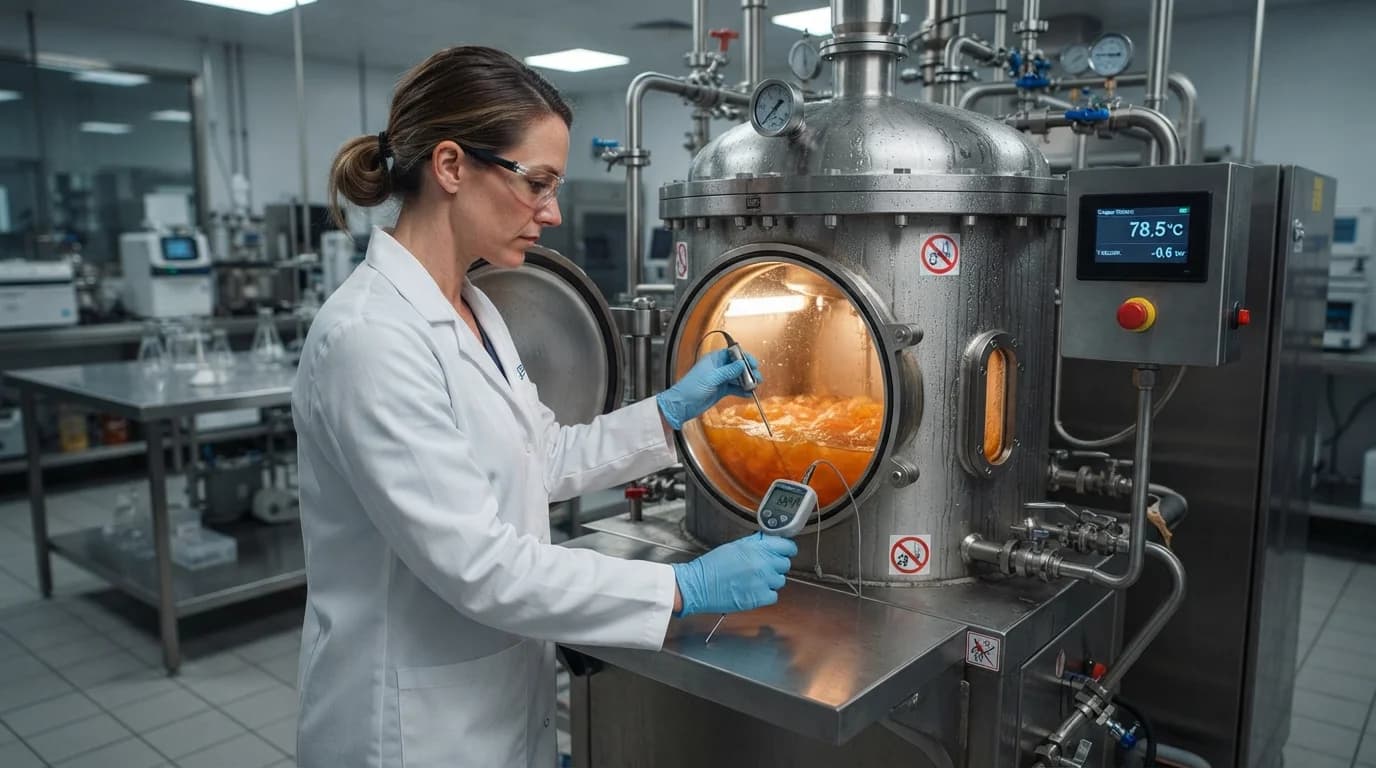
By utilizing advanced, continuous vacuum cookers, the CMO lowers the atmospheric pressure inside the boiling chamber.
- The Science: Under a strong vacuum, water boils at a much lower temperature.
- The Result: The CMO can rapidly drive off the moisture and achieve the required 80% Brix at temperatures of 85°C to 90°C, rather than 110°C. This significantly reduces the gummy manufacturing heat stress applied to the Ascorbic Acid, drastically reducing the thermal degradation rate.
Strategy 3: Post-Cook Addition (Late Staging)
Even at 85°C in a vacuum cooker, prolonged exposure will degrade the vitamin. The ultimate engineering solution is altering when the vitamin is introduced.
Instead of adding the Vitamin C to the main batch tank at the beginning of the process:
- The base gummy slurry (sugar, water, pectin) is cooked, vacuum-stripped to 80% Brix, and cooled slightly (e.g., down to 75°C).
- The slurry is pumped through the piping toward the depositor.
- Just before the depositing head, the Ascorbic Acid (often pre-mixed into a concentrated, room-temperature liquid paste) is injected directly into the flowing slurry via an inline dynamic mixer.
- The gummy is immediately deposited into the silicone mold and enters the rapid-cooling tunnel.
This "late-stage" addition limits the Vitamin C's exposure to high heat to a matter of minutes, rather than hours, preserving the vast majority of its potency and allowing the brand to drastically reduce the required overage.
Precision Manufacturing with Probiota Innovations
At Probiota Innovations, we do not rely on massive, tart-tasting overages to mask inefficient manufacturing.
Our facility is designed to protect delicate APIs (Active Pharmaceutical Ingredients). We utilize fully automated, continuous vacuum cooking lines to minimize thermal exposure. Furthermore, our advanced inline dosing systems allow us to inject heat-sensitive vitamins (like Vitamin C and Folate) at the very last microsecond of the process. This ensures your gummies deliver the exact clinical potency claimed on the label, with a flawless flavor profile.
Explore our Advanced Manufacturing and Inline Dosing Capabilities
Frequently Asked Questions (FAQ)
1. Does Sodium Ascorbate survive heat better than Ascorbic Acid? Yes. Sodium Ascorbate is a mineral salt of ascorbic acid. It is significantly more stable under heat and less acidic (which helps prevent pectin pre-gelation). However, because it contains sodium, using high doses can negatively impact the flavor profile (making it taste slightly salty) and adds sodium to the nutritional panel, which some brands wish to avoid.
2. Can you encapsulate Vitamin C for gummies? Yes. Microencapsulating the Vitamin C in a lipid (fat) coating provides exceptional protection against both heat and the acidic environment of the gummy. However, encapsulation significantly increases the raw material cost and the physical bulk of the powder, which limits how much you can fit into a single gummy.
3. Why do some Vitamin C gummies turn brown over time? This is a classic sign of oxidation and degradation. When Ascorbic Acid breaks down (oxidizes), it forms compounds that are brown in color (non-enzymatic browning). If a brand's gummies turn brown on the shelf, it indicates poor manufacturing (excessive heat) or poor packaging (allowing oxygen/moisture into the bottle).
4. How does light affect Vitamin C in gummies? Ascorbic Acid is photo-sensitive; UV light accelerates its degradation. This is why premium Vitamin C gummies are often packaged in opaque bottles (like white HDPE) or heavily tinted PET bottles (like dark amber) to protect the vitamins from the fluorescent lights on retail shelves.
Recommended Manufacturing Solution
Discover our turnkey white label probiotic supplement solutions
Want to discuss your formulation?
Our experts help brands launch technically complex probiotic and functional gummies.