Thermo-Irreversible vs Thermo-Reversible Gels: Why Pectin Wins for Export Gummies
Thermo-Irreversible vs Thermo-Reversible Gels: Why Pectin Wins for Export Gummies
When a nutraceutical brand transitions from local distribution to international export, the laws of physics suddenly become their greatest adversary. A gummy supplement must cross oceans, sit in customs yards, and ride in un-air-conditioned delivery trucks—often traversing extreme climatic zones.
To survive this journey, the fundamental architecture of the gummy must be flawless. This architectural decision boils down to a single thermodynamic choice: thermo irreversible gels versus thermo reversible gummies.
Understanding this polymer science is the key to understanding why pectin wins gummies dominance in the global export market, rendering legacy gelatin formulations obsolete.
The Science of Thermo-Reversibility (The Gelatin Problem)
Animal-derived gelatin has been the industry standard for a century. It provides a highly elastic, bouncy chew that consumers love. However, gelatin is a thermo-reversible gel.
What Does Thermo-Reversible Mean?
It means the gel state is entirely dependent on temperature, and the process works in both directions repeatedly.
- When you heat gelatin in water, the protein chains unravel, and it becomes a liquid.
- When it cools below its setting point, the chains twist back together (forming triple helices) and trap water, forming a solid gummy.
- The Fatal Flaw: If you apply heat again, the bonds easily break, and the solid gummy reverts back to a liquid pool.
The Export Liability
The melting point of a standard gelatin gummy is remarkably low—typically between 30°C and 35°C (86°F - 95°F). If a brand attempts to export gelatin gummies to the Middle East, Australia, or even the southern United States during summer, standard dry-van shipping containers easily exceed 45°C. The gummies will melt, fuse together into a singular unmarketable block, and the brand will lose the entire shipment. The only mitigation is using refrigerated (reefer) logistics, which destroys profit margins.
The Science of Thermo-Irreversibility (The Pectin Solution)
High-Methoxyl (HM) Pectin—a carbohydrate extracted from plant cell walls (citrus or apple)—operates on a fundamentally different chemical principle. It forms a thermo-irreversible gel.
What Does Thermo-Irreversible Mean?
Pectin gelation is not driven solely by temperature cooling. As discussed in our gelation guides, it requires a precise combination of high solids (Brix) and high acidity (low pH) to force the pectin molecules to bond.
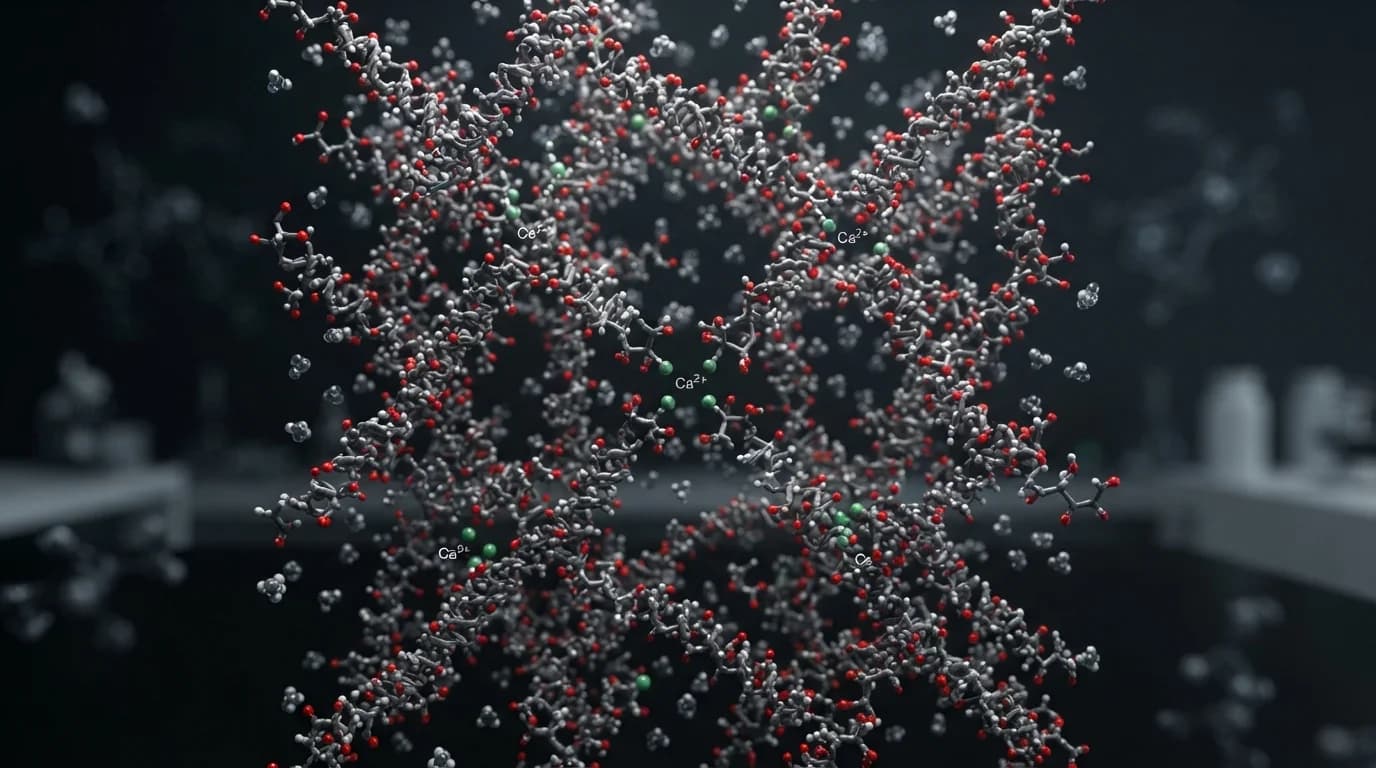
- The Chemical Lock: When the pH is dropped, the pectin chains form strong hydrogen bonds and hydrophobic interactions. Once these bonds form and the gel sets, it is chemically "locked."
- The Heat Resistance: Because the gel was formed by a chemical reaction (acidification) rather than just cooling, applying moderate heat does not break the bonds. A properly formulated pectin gummy will not melt back into a liquid until temperatures exceed 60°C to 70°C (140°F - 158°F).
The Export Advantage
This is the crux of pectin vs gelatin thermodynamics. By formulating with a thermo-irreversible pectin matrix, the gummy acquires immense export gummies heat stability. Brands can confidently ship full container loads (FCL) of pectin gummies across the equator in standard dry containers. The product will arrive in Dubai, Sydney, or Miami in perfect geometric shape, drastically lowering logistics costs and completely eliminating the risk of melting-related recalls.
Secondary Advantages of Pectin
Beyond heat stability, the thermo-irreversible nature of pectin provides secondary manufacturing advantages.
- Starchless Compatibility: Because pectin sets incredibly fast upon acidification (often within minutes), it is the ideal hydrocolloid for modern, high-speed starchless mogul lines (silicone molds). Gelatin, which requires 24 to 72 hours of slow cooling in a starch bed to set, is highly inefficient for modern continuous manufacturing.
- Clean Label and Dietary Compliance: Pectin is 100% plant-based, instantly solving Halal, Kosher, and Vegan compliance issues that plague animal-derived gelatin supply chains.
Engineer Your Export Strategy with Probiota Innovations
At Probiota Innovations, we recognized early that the future of global nutraceuticals demands thermodynamic resilience. We exclusively formulate utilizing advanced, high-methoxyl pectin matrices.
Our world-class Indian facility is equipped with automated, continuous-cooking starchless lines designed to perfectly execute the complex acid-injection required for thermo-irreversible gelation. We provide our international brand partners with the visually stunning, flawlessly stable gummies required to dominate any climate on Earth.
Explore our Advanced Pectin Manufacturing Capabilities
Frequently Asked Questions (FAQ)
1. Does thermo-irreversible mean the pectin gummy can never melt? No, it will eventually melt, but the threshold is much higher. A gelatin gummy melts at body temperature (~35°C). A pectin gummy won't melt until temperatures approach the boiling point of water (~70°C). Unless your shipping container catches fire, the pectin gummy will survive the logistics chain.
2. Are all plant-based gummies thermo-irreversible? Not necessarily. Agar-agar and certain formulations of carrageenan can exhibit thermo-reversible properties (though usually at higher temperatures than gelatin). High-Methoxyl (HM) Pectin is the gold standard for creating a strong, thermo-irreversible matrix suitable for gummies.
3. Why do pectin gummies have a different chew than gelatin? Because of the chemical structure. Gelatin proteins form long, flexible, coiled springs, which gives gelatin its bouncy, elastic chew. Pectin carbohydrates form a rigid, tight 3D box, which gives pectin a "short bite" or a cleaner chew that breaks easily and doesn't stick to your teeth.
4. Is it harder to manufacture a thermo-irreversible gummy? Yes, significantly harder. With gelatin, if the mix cools too early, you just reheat it. With pectin, because it is irreversible, if the acid is added a fraction of a second too early, the entire batch will instantly gel inside the piping or the kettle, ruining the batch and requiring a massive clean-up operation. It requires state-of-the-art, automated equipment.
Recommended Manufacturing Solution
Want to discuss your formulation?
Our experts help brands launch technically complex probiotic and functional gummies.