Water Activity Standards for FDA-Compliant Gummies: Shelf-Stability and Microbial Safety
Water Activity Standards for FDA-Compliant Gummies: Shelf-Stability and Microbial Safety
In the highly regulated world of dietary supplements, producing a gummy that tastes great is only half the battle. The true engineering challenge lies in ensuring that the gummy remains safe, potent, and microbially clean from the moment it leaves the cooling tunnel until the end of its 24-month shelf life.
For brands adhering to strict US FDA 21 CFR 111 cGMP regulations, mastering water activity standards gummies is the most critical formulation parameter. A failure to control water activity (aw) will inevitably lead to microbial spoilage, active ingredient degradation, and potential FDA recalls.
This guide explores the science of water activity microbial safety gummies and how elite manufacturers achieve flawless FDA compliant shelf stability gummies.
What is Water Activity (aw)?
Before discussing standards, it is essential to distinguish between Moisture Content and Water Activity.
- Moisture Content: The total volume of water in the gummy (usually around 15-20% for pectin gummies).
- Water Activity (aw): A thermodynamic metric representing the ratio of the vapor pressure of water in the gummy to the vapor pressure of pure water. It is measured on a scale from 0.0 to 1.0.
- Crucially, aw measures the free, unbound water that is available for microorganisms (bacteria, yeast, mold) to use for growth, or for chemical reactions (like oxidation or hydrolysis) to occur.
Aw Standards FDA Gummies: The Microbial Thresholds
The FDA places the burden of ensuring product safety entirely on the manufacturer and the brand owner. While the FDA does not dictate a singular, universal aw limit for all supplements, the science of microbiology dictates strict thresholds that form the basis of cGMP compliance.
To ensure gummy water activity requirements meet safety standards, formulators target specific zones to inhibit pathogenic growth.
The Danger Zones
- aw > 0.90: Highly susceptible to dangerous bacteria like Salmonella, E. coli, and Listeria.
- aw 0.85 - 0.90: Susceptible to Staphylococcus aureus and various yeasts.
- aw 0.70 - 0.85: Susceptible to most molds (fungi).
The Safety Target for Gummies
To achieve true, preservative-free stability, premium gummy manufacturers engineer their products to have a water activity below 0.65 (and ideally below 0.60 for highly sensitive functional gummies).
- At an aw below 0.65, all pathogenic bacteria are completely inhibited.
- At an aw below 0.60, almost all yeasts and molds cease proliferation.
- By achieving this low aw, the gummy becomes naturally self-preserving, eliminating the need for harsh chemical preservatives and guaranteeing microbial safety across a long shelf life.
Active Ingredient Stability and Probiotic Survival
Controlling aw is not just about stopping mold; it is about protecting the active ingredients.
Free water acts as a solvent. If a gummy has a high aw (e.g., 0.75), that free water will interact with sensitive vitamins (like Vitamin C or B12), causing them to rapidly degrade via hydrolysis. When the FDA audits the product at month 12, it will likely fail its active assay test, resulting in regulatory action for misbranding (not meeting label claims).
The Probiotic Challenge
When formulating with live probiotics, aw control is the difference between a successful product and a dead one. Probiotics are living organisms. High free water will prematurely activate the dormant probiotic bacteria inside the gummy matrix. Because there is no food source for them in that state, they will rapidly die off. To ensure probiotic survival for 24 months, the aw must be meticulously driven below 0.60.
Formulation Strategies to Lower Water Activity
Lowering aw without making the gummy rock-hard requires advanced polymer science.
- Brix Optimization: Formulators increase the Total Soluble Solids (Brix)—primarily sugars or sugar alcohols—to 78-82%. These solids physically bind the water molecules, reducing the free water available.
- Pectin Matrix Mastery: Selecting the correct high-methoxyl (HM) pectin and dialing in the exact pH ensures a tight gel network that locks moisture in place, preventing it from migrating.
- Humectant Utilization: Incorporating FDA-compliant, plant-based humectants (like vegetable glycerin or sorbitol) attracts and traps water molecules, lowering the aw while keeping the gummy texture soft and chewable.
The Probiota Innovations Standard
At Probiota Innovations, we don't guess at stability; we engineer it. Our state-of-the-art facility utilizes advanced water activity meters to map the aw of every batch from the mogul to final packaging. We provide robust, accelerated stability data proving that our low-aw, pectin-based gummies will remain microbially safe and fully potent throughout their shelf life, ensuring absolute FDA compliance for your brand.
Explore our Advanced Formulation Science Capabilities
Frequently Asked Questions (FAQ)
1. Is water activity the same as moisture content? No. Moisture content is the total amount of water in the gummy. Water activity (aw) measures only the free, unbound water that is available to support mold growth or degrade active ingredients. A gummy can have high moisture but low aw if that moisture is tightly bound to sugars.
2. What happens if a gummy's water activity is above 0.70? If the aw is above 0.70, the gummy is highly susceptible to yeast and mold proliferation. Unless heavily dosed with chemical preservatives, the product will likely spoil, ferment, or grow visible mold before the end of its shelf life, posing a significant recall risk.
3. Why do probiotic gummies require an even lower water activity? Probiotics are live bacteria. If the free water (aw) is too high, the bacteria will "wake up" from their dormant state inside the gummy. Without the proper environment to thrive, they will quickly die off, meaning the product will fail to meet the CFU (Colony Forming Unit) claim on the label.
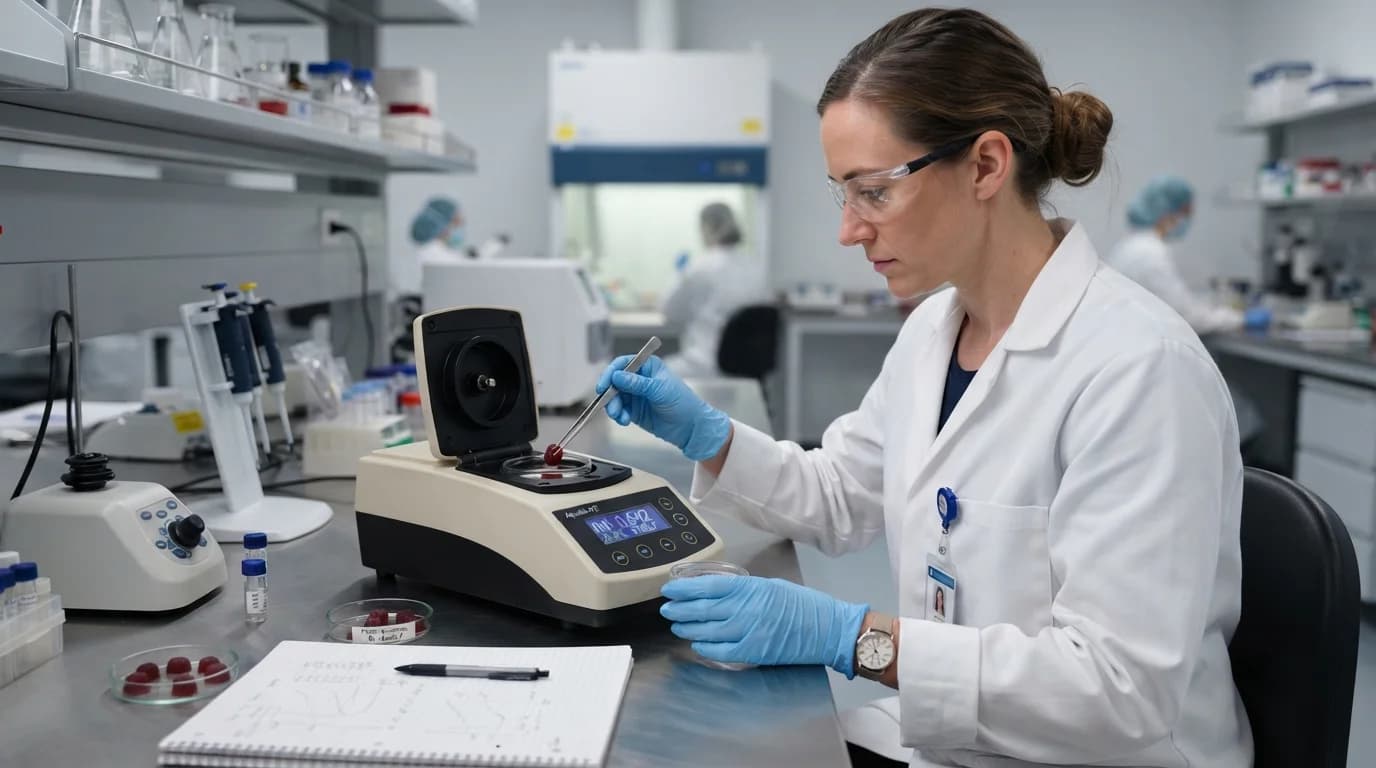
4. How does a manufacturer measure water activity? Premium cGMP facilities use specialized laboratory equipment called a Water Activity Meter (such as an AquaLab). A sample of the gummy is placed in a sealed chamber, and the machine measures the relative humidity of the air directly above the sample once it reaches equilibrium.
For an in-depth understanding of the core concepts, read our comprehensive guide on Target Water Activity in Gummy Manufacturing.
Looking for a manufacturing partner? Explore Our Core Manufacturing Capabilities.
Recommended Manufacturing Solution
Learn how our Indian manufacturing facility supports global export
Want to discuss your formulation?
Our experts help brands launch technically complex probiotic and functional gummies.