Kosher Gummy Manufacturing in India: Full OK Kosher and Star-K Certification Process Explained
Kosher Gummy Manufacturing in India: Full OK Kosher and Star-K Certification Process Explained
The global demand for kosher-certified nutraceuticals is expanding rapidly, driven not only by observant Jewish consumers but also by a broader demographic that associates the kosher symbol with stringent quality control, purity, and transparency. For supplement brands targeting the United States, Israel, and premium European markets, securing a reliable manufacturing partner is critical.
Increasingly, brands are turning to kosher gummy manufacturing India. Top-tier Indian contract manufacturing organizations (CMOs) offer an unparalleled combination of massive scale, advanced formulation science (particularly in plant-based pectin), and significant cost arbitrage.
However, achieving genuine, globally recognized kosher status—such as OK Kosher certification gummies or Star-K gummy manufacturing—is a highly complex, rigorous process. This guide unpacks the technical and operational requirements for Indian facilities seeking to dominate the kosher export market.
The Value of Globally Recognized Kosher Certifications
Not all kosher certifications hold the same weight. While there are hundreds of local kosher agencies globally, major retailers, distributors, and consumers in key markets explicitly look for the "Big Five" certification agencies.
For Indian manufacturers exporting globally, the most highly sought-after certifications are:
- OK Kosher (The OK): Headquartered in New York, it is one of the most respected and universally accepted kosher symbols in the world.
- Star-K: Based in Baltimore, Star-K is renowned for its stringent standards and is heavily trusted for highly processed foods and nutraceuticals.
Securing kosher certified contract manufacturing India through these agencies provides brands with absolute market access and unquestionable consumer trust.
The Kosher Certification Process: A Technical Breakdown
The journey to producing kosher-certified gummies involves a meticulous audit of the entire supply chain, down to the molecular level of the ingredients used.
1. Ingredient Vetting and Traceability
The foundational principle of kosher dietary law (Kashrut) involves the strict prohibition of certain animals (e.g., pigs, shellfish) and the absolute separation of meat and dairy.
For a gummy supplement, every single micro-ingredient must be vetted and approved by the supervising Rabbi (the Mashgiach).
- The Gelatin Problem: Traditional gummy manufacturing relies on animal gelatin. Kosher gelatin (derived from kosher-slaughtered bovine sources or specific fish) exists, but it is incredibly expensive, difficult to source consistently, and carries a high risk of cross-contamination.
- The Pectin Solution: This is why the kosher pectin gummies process is the industry standard. Pectin is a 100% plant-based carbohydrate extracted from citrus peels or apples. It is inherently pareve (neutral, neither meat nor dairy) and universally accepted.
- Flavorings and Colors: Natural flavors and food colors are highly scrutinized. The solvents used to extract them (like alcohol or glycerin) must not be derived from non-kosher wine (grape derivatives) or non-kosher animal fats. All sub-ingredients require their own valid kosher certificates.
- Polishing Agents: The carnauba wax and MCT oil used to polish the gummies must be certified pareve, ensuring no animal-based stearic acid was used in their synthesis.
2. Facility Auditing and Equipment Kashering
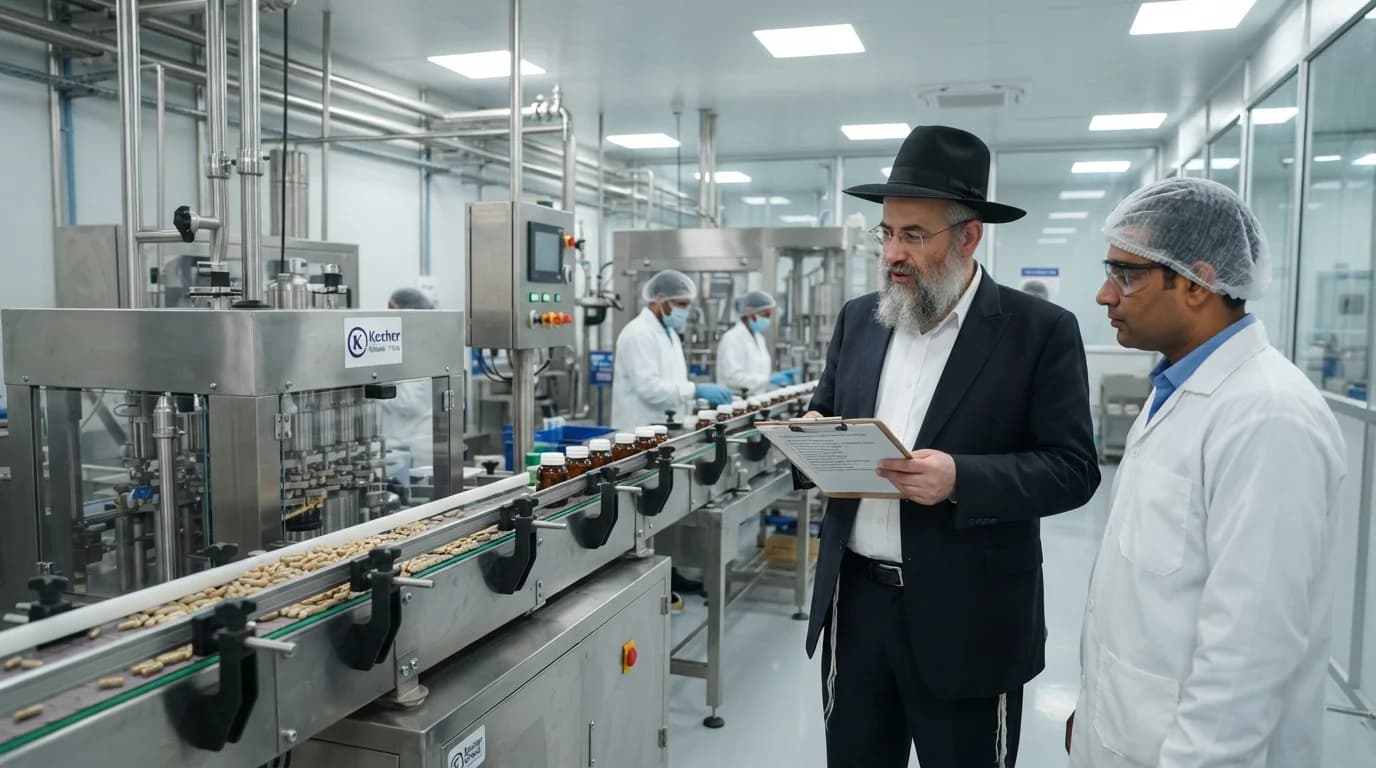
An Indian facility must undergo a rigorous physical audit by a Rabbinic Field Representative (RFR) from OK Kosher or Star-K.
- Dedicated Lines vs. Shared Lines: Ideally, a facility runs entirely kosher and pareve. If the facility processes both kosher and non-kosher items, strict temporal and physical segregation is mandatory.
- Kashering (Purification): If equipment previously processed non-kosher materials, or dairy materials (if the facility intends to produce pareve gummies), the equipment must undergo a rigorous, documented cleaning and boiling process known as kashering under the direct supervision of the Mashgiach.
- Starchless Mogul Advantage: Traditional gummy production uses starch beds, which are reused constantly and pose a massive risk for cross-contamination. Advanced Indian facilities utilize starchless mogul technology (silicone molds). Because silicone molds can be subjected to high-heat, pharmaceutical-grade CIP (Clean-in-Place) sanitation, they are vastly superior for maintaining strict kosher integrity.
3. Ongoing Supervision and the Mashgiach
Kosher certification is not a one-time event; it requires ongoing compliance. Depending on the complexity of the facility and the ingredients used, the certification agency will mandate periodic, unannounced inspections by a local RFR. The facility must maintain flawless documentation (Schedule A for approved ingredients, Schedule B for approved products) to present during these audits.
The Strategic Advantage of Indian CMOs
For global supplement brands, utilizing a top-tier Indian facility for kosher gummy production offers massive strategic leverage.
- Formulation Expertise: Leading Indian CMOs have deep expertise in formulating high-brix, low water activity (aw) pectin gummies. This ensures the products are not only kosher but also thermodynamically stable, preventing melting during global shipping.
- Cost Efficiency: India provides a significant cost arbitrage in manufacturing and labor compared to domestic US or European CMOs, dramatically improving a brand's profit margins without sacrificing quality or compliance.
- Comprehensive Compliance: The best Indian facilities do not just hold kosher certification; they operate under stringent FSSAI, US FDA GMP, and FSSC 22000 standards, providing a turnkey, export-ready solution.
Conclusion: Your Kosher Export Partner
Achieving OK Kosher or Star-K certification is a testament to a manufacturer's absolute control over their supply chain and production processes. For brands targeting the global kosher market, partnering with an Indian facility that has mastered the plant-based, pectin gummy process is the most efficient and profitable path to market.
At Probiota Innovations, our state-of-the-art facility is engineered for the highest echelons of global compliance. We specialize in producing premium, pectin-based functional gummies that meet the rigorous demands of international regulatory and religious bodies.
Discover our Export-Ready Nutraceutical Manufacturing Solutions
Frequently Asked Questions (FAQ)
1. Why is pectin preferred over gelatin for kosher gummy manufacturing? Pectin is a 100% plant-based carbohydrate, making it inherently pareve (neutral). Gelatin is derived from animals. Sourcing verifiable kosher gelatin is extremely difficult, expensive, and carries a high risk of cross-contamination. Pectin bypasses these issues entirely while offering superior heat stability.
2. Can a facility produce both kosher and non-kosher products? Yes, but it is highly complex. It requires strict physical and temporal segregation of production lines, separate storage for raw materials, and a rigorous, Rabbi-supervised cleaning process (kashering) between runs. Facilities that use starchless mogul (silicone mold) technology have a significant advantage in preventing cross-contamination.
3. What is the difference between OK Kosher and Star-K? Both are highly respected, globally recognized "Big Five" kosher certification agencies. OK Kosher is headquartered in New York and is one of the most widely recognized symbols worldwide. Star-K, based in Baltimore, is known for its rigorous standards, particularly in highly processed foods and technical manufacturing.
4. Does kosher certification ensure the gummy is vegan? Generally, yes, if the gummy is certified as Kosher Pareve (meaning it contains no meat or dairy) and utilizes plant-based pectin. However, brands must also verify that no other animal-derived excipients (like certain vitamin D3 sourced from lanolin) are used if they wish to claim a strict vegan label alongside the kosher certification.
Recommended Manufacturing Solution
Learn how our Indian manufacturing facility supports global export
Want to discuss your formulation?
Our experts help brands launch technically complex probiotic and functional gummies.