Halal Probiotic Gummies Without Animal Derivatives: Pectin-Based Production Best Practices for Middle East
Halal Probiotic Gummies Without Animal Derivatives: Pectin-Based Production Best Practices for Middle East
The Middle Eastern nutraceutical market is experiencing a profound shift. Consumers are increasingly seeking functional supplements that support gut health, immunity, and overall wellness. At the forefront of this demand are probiotic gummies. However, for brand owners and procurement managers looking to dominate the GCC region, navigating the intersection of religious compliance and advanced formulation science is a formidable challenge.
Producing halal probiotic pectin gummies is not merely a marketing strategy; it is a rigorous technical requirement dictated by authorities like the SFDA (Saudi Food and Drug Authority) and ESMA (Emirates Authority for Standardization and Metrology). The transition away from animal derivatives toward animal free halal probiotic gummies utilizing pectin is the most critical strategic move a brand can make.
In this comprehensive guide, we will explore the best practices for pectin based halal probiotics, the thermodynamic advantages of these formulations, and how to optimize Middle East halal gummy production.
The Rejection of Animal Derivatives in Halal Supplements
Historically, gummy manufacturing has relied heavily on gelatin, a protein derived from the prolonged boiling of animal skin, cartilage, and bones (typically bovine or porcine). While bovine gelatin can technically be halal if the animal is slaughtered according to Zabiha principles, verifying this across a complex, global supply chain is fraught with risk.
The Risks of Gelatin in the Middle East
- Cross-Contamination: Even if a facility uses halal bovine gelatin, the risk of cross-contamination with non-halal (or haram) porcine gelatin on shared equipment is a constant threat during audits.
- Import Detentions: Customs authorities in the UAE and Saudi Arabia frequently detain gelatin-based products for advanced DNA testing to ensure the absence of porcine DNA. This causes massive delays in the supply chain and reduces the shelf life of the product before it even reaches the retail shelf.
- Consumer Skepticism: Middle Eastern consumers are increasingly scrutinizing ingredient labels. Even with a halal certification mark, many consumers prefer to avoid animal-derived gelling agents entirely out of an abundance of caution.
By pivoting to vegetarian halal probiotic manufacturing, brands eliminate these risks entirely. Pectin, a complex carbohydrate extracted from citrus peels and apples, is 100% botanical. It bypasses the grueling scrutiny associated with animal slaughter verification, ensuring a frictionless export process.
Pectin-Based Production: A Technical Deep Dive
While pectin solves the halal compliance issue, it introduces significant formulation challenges, particularly when integrating live probiotic strains.
Understanding Pectin Gelation
Unlike gelatin, which sets as it cools in a relatively forgiving process (thermo-reversible), pectin gelation is thermo-irreversible and highly dependent on strict parameters:
- pH Levels: Pectin requires an acidic environment to set properly, typically between a pH of 3.2 and 3.6.
- Brix (Total Soluble Solids): High-methoxyl (HM) pectin requires a high sugar concentration (typically above 65 Brix) to form a rigid gel network.
- Temperature: Pectin sets very rapidly. The gummy slurry must be deposited into the molds at high temperatures (around 95°C) to prevent pre-gelation in the hoppers.
Integrating Probiotics into the Pectin Matrix
Probiotics are living microorganisms. Exposing them to the high temperatures and low pH required for pectin gelation is inherently destructive. To successfully produce halal probiotic pectin gummies, manufacturers must employ advanced techniques:
- Microencapsulation: The most effective strategy is utilizing microencapsulated probiotic strains. The bacteria (such as Bacillus coagulans or Bacillus subtilis) are coated in a microscopic, halal-certified lipid layer. This armor protects the probiotic from the thermal shock of the depositing process and the acidic pH of the pectin slurry.
- Spore-Forming Strains: Utilizing spore-forming probiotics is essential. These strains naturally form a tough, protective endospore that allows them to survive extreme heat, pressure, and the gastric acid of the human stomach, germinating only when they reach the favorable environment of the lower intestine.
- Post-Depositing Inoculation: In some advanced manufacturing setups, probiotics are introduced at the very last moment before depositing, minimizing their exposure to the peak temperatures of the cooking phase.
Thermodynamic Stability in Climatic Zone IVb
The Middle East is classified as Climatic Zone IVb, characterized by extreme heat and high humidity. This environment is the ultimate stress test for any gummy supplement.
The Melting Point Advantage
Gelatin gummies have a low melting point (around 30°C to 35°C), which is closely aligned with human body temperature. While this provides a pleasant mouthfeel, it means that during transit in non-refrigerated shipping containers or while sitting on warehouse shelves in Dubai or Riyadh, gelatin gummies will inevitably melt, fuse together, and degrade.
Pectin, due to its thermo-irreversible nature, boasts a significantly higher melting point. Once a pectin gummy has set, it requires temperatures exceeding 60°C to 70°C to melt. This incredible heat resistance means that pectin based halal probiotics can survive the harsh Middle Eastern supply chain without the need for expensive cold-chain logistics.
Moisture Control and Water Activity (aw)
In highly humid environments, gummies are prone to absorbing moisture from the air, leading to stickiness and microbial growth.
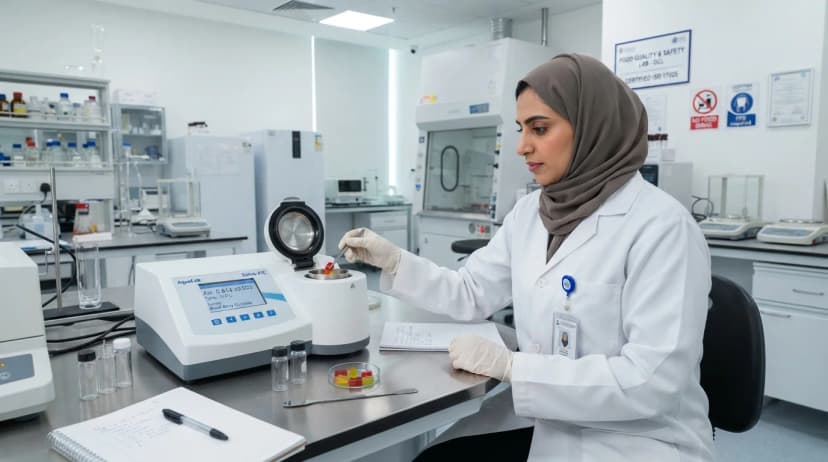
- Water Activity (aw): This metric measures the unbound, free water in the gummy. For optimal Middle East halal gummy production, the water activity must be strictly controlled and kept below 0.60.
- This low aw not only prevents mold and yeast proliferation but is also crucial for the survival of the probiotics. High free water content will prematurely activate the probiotics in the gummy, causing them to die off before the product is consumed.
Best Practices for Middle East Halal Gummy Production
To successfully launch a halal probiotic gummy in the GCC, brands should seek out contract manufacturers that adhere to the following best practices:
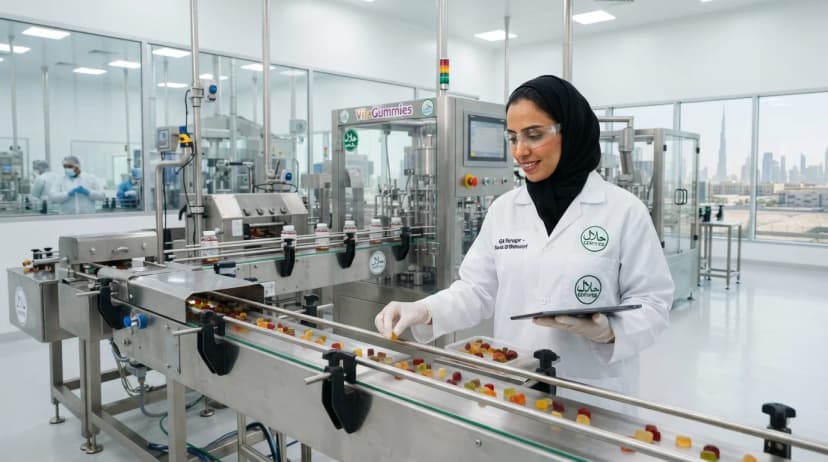
- Starchless Mogul Technology: Traditional gummy manufacturing uses starch molds, which are highly susceptible to microbial contamination and cross-contamination. Starchless mogul technology uses reusable silicone or Teflon molds. This completely eliminates the risk of starch-borne pathogens and allows for rigorous, validated cleaning protocols between batches—a critical requirement for strict halal compliance.
- Validated Cleaning Protocols (CIP): Even when producing animal free halal probiotic gummies, the facility must prove that no cross-contamination occurs between different product runs. Automated Clean-in-Place (CIP) systems ensure that mixing tanks and depositing lines are thoroughly sanitized.
- Halal-Certified Polishing Agents: The final step in gummy production involves coating the gummies in a thin layer of oil and wax to prevent them from sticking together. Manufacturers must ensure that the MCT oil and carnauba wax used are fully halal-certified and free from any animal-derived stearates.
- Accelerated Stability Testing: Before launching in the Middle East, ensure the manufacturer conducts accelerated stability testing (typically at 40°C and 75% Relative Humidity for 6 months). This data is often required by regulatory bodies like ESMA and the SFDA to approve the product's stated shelf life.
Conclusion: Partnering for Success
The transition to pectin based halal probiotics is non-negotiable for brands serious about dominating the Middle Eastern nutraceutical market. It eliminates the regulatory nightmares of animal derivatives, provides superior heat stability, and aligns perfectly with consumer preferences for clean, plant-based supplements.
However, executing this formulation requires a manufacturing partner with deep expertise in polymer science, microbiology, and strict halal compliance.
At Probiota Innovations, we specialize in engineering complex, multi-active functional gummies tailored specifically for export to the GCC. Our state-of-the-art facility in India holds the highest certifications (FSSAI, GMP, and comprehensive Halal equivalence) to ensure your product clears customs rapidly and performs flawlessly on the shelf.
Explore our Export-Ready Nutraceutical Manufacturing Solutions
Frequently Asked Questions (FAQ)
1. Why is pectin preferred over gelatin for halal gummies in the Middle East? Pectin is 100% plant-based, completely eliminating the risk of haram cross-contamination associated with animal-derived gelatin. Furthermore, pectin has a much higher melting point, allowing the gummies to survive the extreme heat of the Middle East without melting or fusing together.
2. Can probiotics survive the high temperatures required to cook pectin? Yes, but it requires advanced formulation. We utilize spore-forming probiotic strains (like Bacillus coagulans) and microencapsulation technologies that protect the bacteria from the thermal shock and acidic pH required during the pectin gelation process.
3. What is water activity (aw), and why does it matter for probiotic gummies? Water activity measures the free, unbound water in a product. In probiotic gummies, a low aw (below 0.60) is critical. High water activity will cause the probiotics to prematurely activate and die within the gummy, drastically reducing the shelf life and efficacy of the product.
4. Do you use starchless mogul technology for halal manufacturing? Yes. Starchless mogul technology utilizes silicone molds rather than traditional starch beds. This eliminates the risk of microbial contamination from recycled starch and allows for rigorous, pharmaceutical-grade cleaning between batches, ensuring absolute halal integrity.
For an in-depth understanding of the core concepts, read our comprehensive guides on Is Pectin Halal? and Halal Certification for Pectin Gummies.
Looking for a manufacturing partner? Learn More About Our Halal Gummy Manufacturing Capabilities.
Recommended Manufacturing Solution
Want to discuss your formulation?
Our experts help brands launch technically complex probiotic and functional gummies.