Continuous vs. Fed-Batch Fermentation SOP Transfer: Maximizing Biomass Yields in Yeast Biotechnology
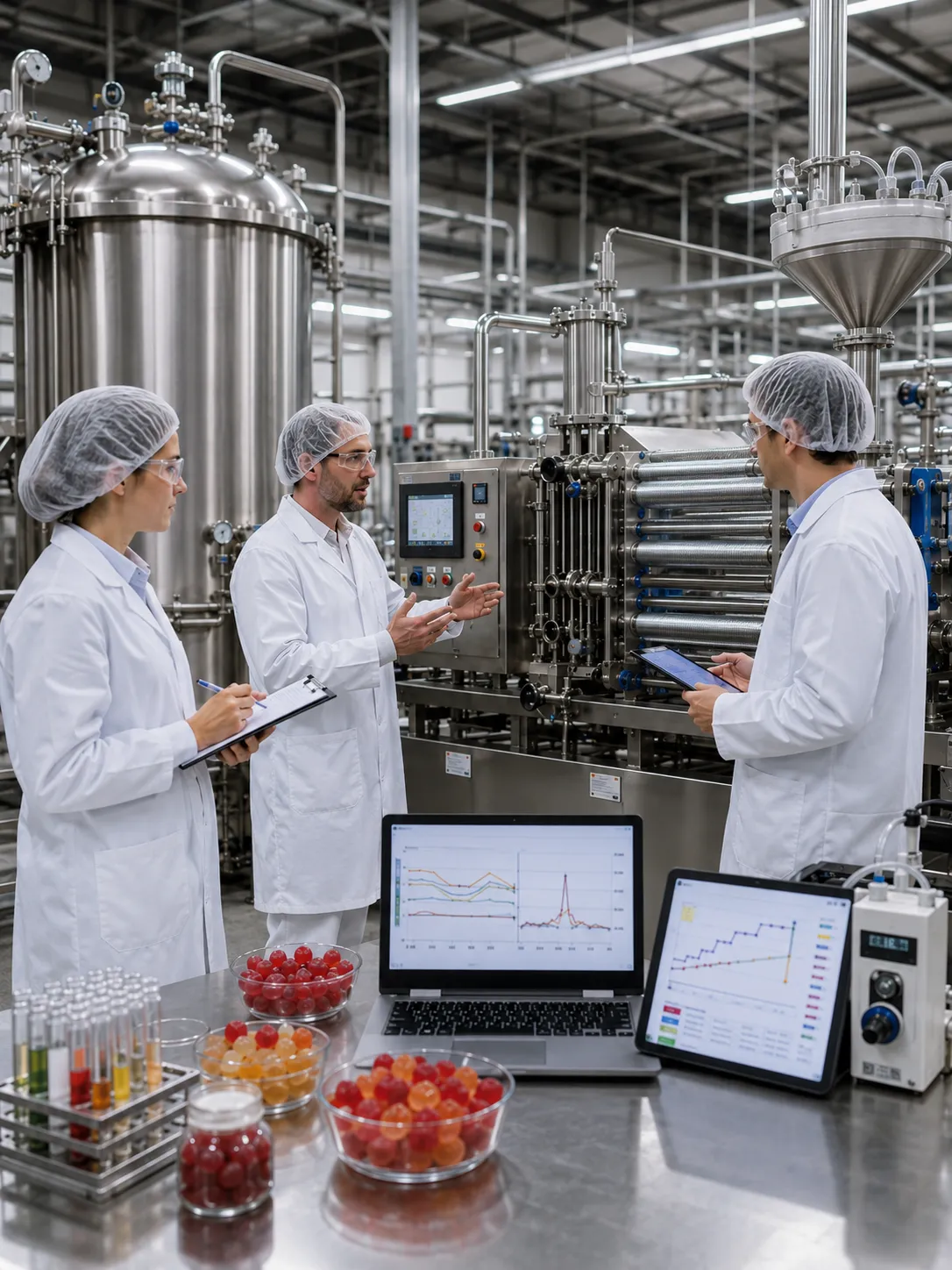
Continuous vs. Fed-Batch Fermentation SOP Transfer: Maximizing Biomass Yields in Yeast Biotechnology
In the commercial biomanufacturing of Zinc-Enriched Yeast and 3,320 PPM Selenium-Enriched Yeast (Saccharomyces cerevisiae), selecting the optimal fermentation operational mode—Fed-Batch vs. Continuous Culture—is the single biggest determinant of biomass volumetric productivity ($\text{g DCW/L} \cdot \text{h}$) and raw material substrate conversion efficiency ($Y_{x/s}$).
Because S. cerevisiae is subject to the Crabtree Effect (overflow metabolism where high glucose concentrations induce ethanol production even under aerobic conditions), batch fermentations yield low cell mass and wasted sugar.
This bioprocess engineering article compares fed-batch and continuous modes and outlines the SOP transfer documentation provided by Probiota Innovations.
1. The Crabtree Effect & Substrate Inhibition Kinetics
OVERFLOW METABOLISM (CRABTREE EFFECT):
Excess Glucose (> 0.1 g/L) ──> Aerobic [Fermentation](/technology-transfer) ──> Ethanol Accumulation (Low Biomass Yield: Yx/s < 0.25)

OPTIMIZED FED-BATCH (EXPONENTIAL FEED):
Controlled Glucose (< 0.05 g/L) ──> Aerobic Respiration ──> High Cell Density (High Biomass Yield: Yx/s > 0.48)
To prevent ethanol accumulation and maximize biomass yield ($Y_{x/s} \approx 0.50 \text{ g yeast / g glucose}$), substrate concentration ($S$) must be maintained below the critical threshold ($S_{crit} \approx 0.05 \text{ g/L}$) throughout the growth phase.
2. Comparing Operational Modes for CDMO Scale-Up
| Operational Parameter | Fed-Batch Fermentation Mode | Continuous Culture Mode (Chemostat) |
|---|---|---|
| Substrate Feeding Strategy | Exponential / Respiratory Quotient ($RQ$) feedback | Continuous media feed & harvest stream ($D = \mu$) |
| Peak Biomass Density | High ($80 - 120 \text{ g DCW/L}$) | Moderate ($30 - 50 \text{ g DCW/L}$) |
| Contamination Risk | Low (Discrete batch cycles, easy CIP/SIP) | High (Long residence times increase wild yeast risk) |
| Organic Mineral Incorporation | Optimal for toxic precursors (Selenite) | Difficult to control intracellular speciation |
| Turnaround Downtime | Turnaround cleaning required between batches | Continuous harvest reduces vessel turnaround |
3. The Fed-Batch Technology Transfer SOP Package
For high-potency mineral yeasts (Zinc Yeast and 3,320 PPM Selenium Yeast), Probiota Innovations provides a complete Fed-Batch Operating SOP Package:
- Exponential Feed Equations: Substrate dosing algorithms linked to real-time Respiratory Quotient ($RQ \approx 1.0$) and dissolved oxygen ($dO_2 \ge 30%$).
- Inorganic Mineral Dosing Schedule: Micro-metered precursor addition schedules preventing intracellular toxicity during high-density growth.
- Specific Growth Rate ($\mu$) Control: Maintaining $\mu = 0.12 - 0.18 \text{ h}^{-1}$ to optimize biomass yield and organic peptide incorporation.
- Full IP Sale or Out-Licensing: Flexible commercial deal structures.
Partner with Probiota Innovations for Bioprocess Transfer
Acquire pre-validated bioprocess engineering packages backed by complete scale-up dossiers.
- View Dedicated Zinc Yeast Page
- View Dedicated 3,320 PPM Selenium Yeast Page
- Explore Technology Transfer Portal
- Submit a Bioprocess Technical Inquiry
Related Technology Transfer Resources:
- Fermentation Scale-Up: Bench-to-Industrial Bioreactor Tech Transfer
- Downstream Processing (DSP) SOP Transfer: Centrifugation & Spray-Drying
- Organic Zinc-Enriched Yeast Fermentation Tech Transfer
Recommended Manufacturing Solution
Want to discuss your formulation?
Our experts help brands launch technically complex probiotic and functional gummies.