Why Pectin-Based Formulations Are the Future of Halal Supplement Exports
Why Pectin-Based Formulations Are the Future of Halal Supplement Exports
The international nutraceutical landscape is undergoing a massive shift. As brands look to expand into high-growth markets like the Middle East, North Africa (MENA), and Southeast Asia (specifically Indonesia and Malaysia), strict Halal compliance is the ultimate gatekeeper.
For gummy supplements, the industry is rapidly abandoning traditional animal gelatin in favor of plant-based pectin. Here is a technical and commercial breakdown of why pectin-based formulations are the undisputed future of Halal supplement exports.
The Commercial Risk of Gelatin in Export
For decades, gelatin was the default gelling agent in gummy manufacturing due to its cheap cost and elastic texture. However, when exporting to Halal-regulated markets, gelatin introduces severe supply chain vulnerabilities.
- The Origin Problem: To be Halal, bovine (beef) gelatin must come from cattle slaughtered according to strict Islamic guidelines (Zabiha).
- Documentation Nightmares: Exporting bovine gelatin gummies requires flawless, unbroken chain-of-custody documentation from the slaughterhouse to the gelatin processing plant, to the gummy manufacturer.
- Customs Seizures: If regulatory bodies like the SFDA (Saudi Arabia) or JAKIM (Malaysia) find any discrepancy in the gelatin traceability, the entire shipment can be seized, destroyed, or banned.
The Pectin Solution: Built for Global Scale
Pectin is a structural heteropolysaccharide contained in the primary cell walls of terrestrial plants (most commercially sourced from citrus peels or apples). By utilizing a plant-based matrix, brands immediately neutralize the highest-risk element of Halal compliance.
1. Inherent Compliance
Because pectin is botanically derived, it is inherently Halal. The certification process shifts from proving the ethical slaughter of animals to simply verifying that the manufacturing facility and minor excipients (like colors and flavors) are free from alcohol and cross-contamination. This drastically accelerates the speed-to-market for new export SKUs.
2. Thermodynamic Stability (The Heat Advantage)
Halal markets in the Middle East and Southeast Asia are characterized by extreme heat and high humidity.
- Gelatin is thermo-reversible. It melts at roughly 35°C (95°F). Shipping gelatin gummies across the globe requires expensive refrigerated containers (reefers) and climate-controlled warehousing.
- Pectin forms a thermo-irreversible gel. Once a pectin gummy sets in the mold, it will not melt again, even at temperatures exceeding 60°C (140°F). This means brands can ship via standard sea freight and avoid the catastrophic loss of inventory melting into a single lump.
3. The "Clean Label" Convergence
The modern consumer in Dubai or Kuala Lumpur wants the same clean-label attributes as a consumer in Los Angeles or London. Pectin aligns perfectly with global macro-trends: it is vegan, vegetarian, non-GMO, and perceived as more natural than animal byproducts. A Halal pectin gummy allows a brand to market a premium, clean-label product globally.
The Manufacturing Reality
Formulating with pectin is significantly more complex than gelatin. It requires precise control over pH (usually via citric acid and sodium citrate buffers), exact brix levels, and advanced continuous cooking systems to prevent pre-gelation in the pipes.
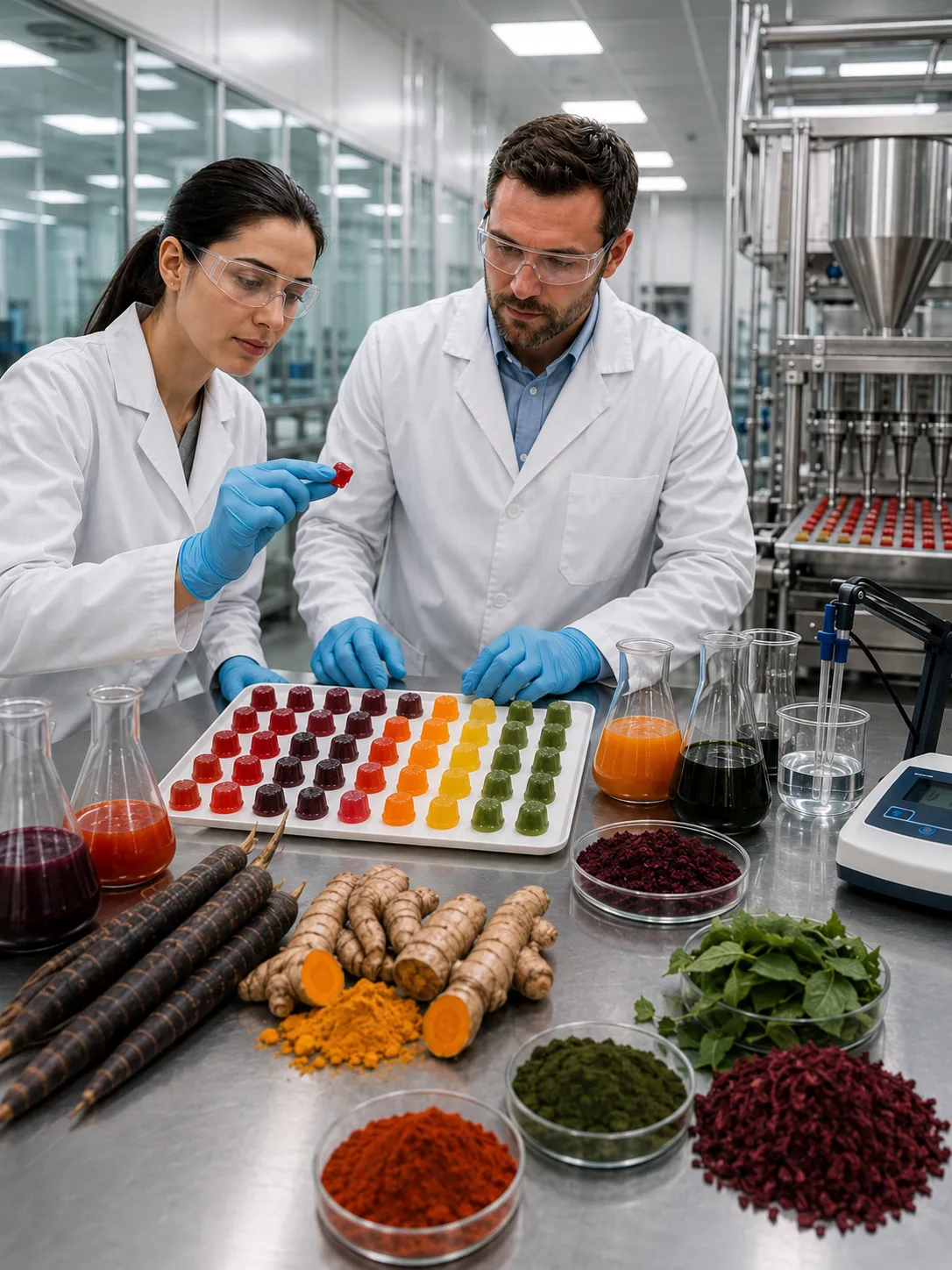
Brands cannot rely on legacy manufacturers. Export success requires partnering with advanced CMOs who utilize starchless mogul technology and have mastered the rheology of pectin. At Probiota Innovations, our facility is engineered specifically for high-volume, defect-free pectin production, fully certified for global Halal export.
Frequently Asked Questions (FAQ)
1. Is pectin more expensive than gelatin? Historically, raw pectin is more expensive than standard bovine gelatin. However, when you factor in the massive savings on refrigerated freight, zero temperature-related return rates, and faster regulatory clearance, the Total Landed Cost of pectin gummies is often lower for export brands.
2. Does pectin taste different? Pectin provides excellent flavor release—often better than gelatin—because it melts faster in the mouth. It yields a "short bite" (similar to a gumdrop) rather than the chewy, elastic bite of a gummy bear.
3. Can I put probiotics in a Halal pectin gummy? Yes. Pectin's lower moisture content and stable matrix make it an excellent vehicle for postbiotics and microencapsulated probiotics, allowing for highly functional Halal formulations.
Want to discuss your formulation?
Our experts help brands launch technically complex probiotic and functional gummies.