Induction Sealing for Gummy Bottles: Preserving Shelf Life and Preventing Tampering
Induction Sealing for Gummy Bottles: Preserving Shelf Life and Preventing Tampering
In the pharmaceutical and nutraceutical packaging hierarchy, the plastic bottle and the cap are merely the structural shell. The true guardian of the product—the component that dictates shelf life, ensures safety, and guarantees regulatory compliance—is the microscopic layer of foil resting on the lip of the bottle.
This is the induction seal. For moisture-sensitive products like functional gummies, a flawless hermetic (airtight) seal is not a luxury; it is a rigid necessity.
This guide explores the physics of induction sealing gummy bottles and why it is the ultimate defense for gummy shelf life preservation and preventing tampering supplements.
The Physics of Induction Sealing
Induction sealing is a non-contact heating process that welds a foil laminate to the lip of a plastic bottle.
- The Liner: The cap is supplied with a multi-layered liner inserted inside it. This liner typically consists of a paperboard backing, a layer of wax, a layer of aluminum foil, and a bottom layer of heat-sealable polymer.
- The Cap Application: The cap is physically screwed tightly onto the filled bottle on the packaging line.
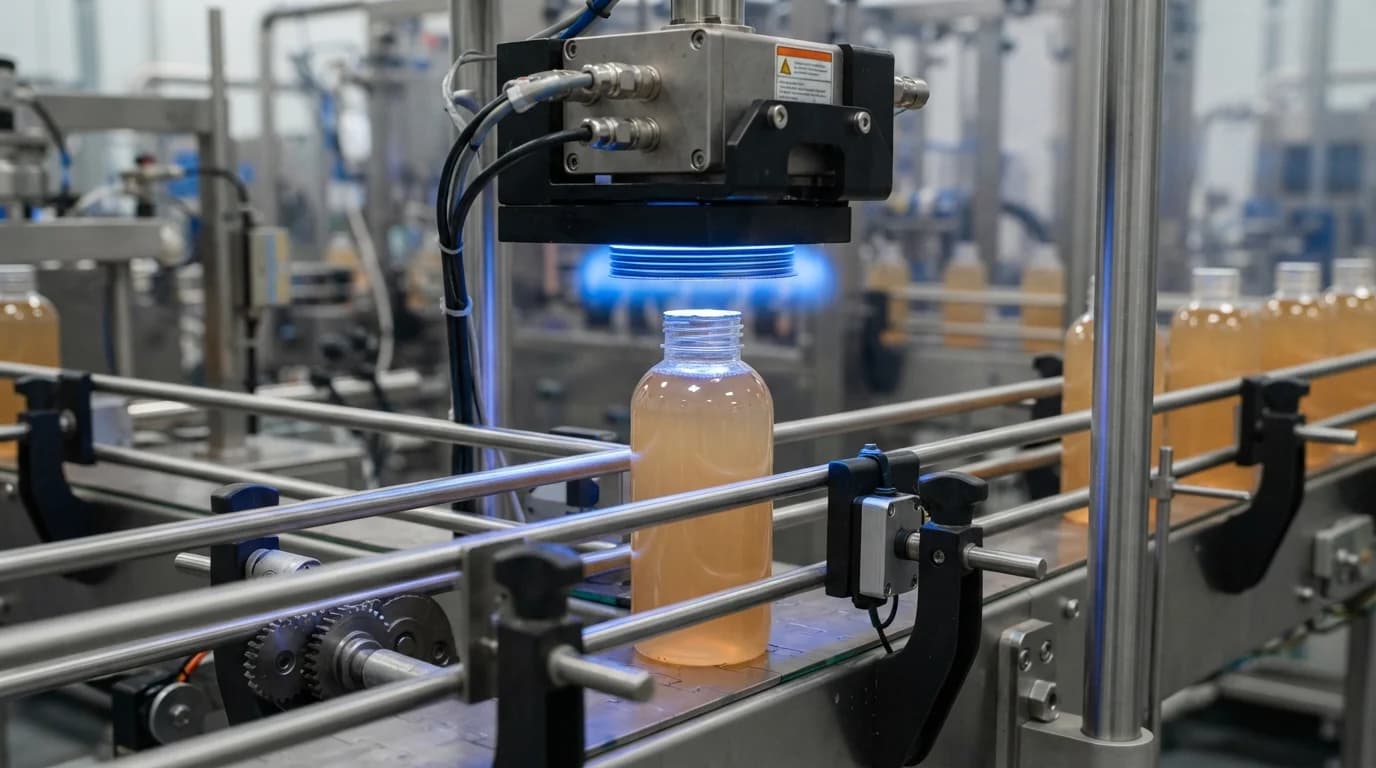
- The Induction Field: The bottle passes under an induction sealing head (a massive electromagnetic coil). The coil generates an oscillating electromagnetic field.
- The Weld: This magnetic field passes harmlessly through the plastic cap but excites the molecules in the aluminum foil, causing the foil to heat up rapidly (via eddy currents). The heat melts the wax (releasing the foil from the paperboard backing) and melts the bottom polymer layer, welding the foil permanently to the plastic lip of the bottle.
1. Preserving Shelf Life: The Moisture Barrier
As established in previous guides, gummies are highly sensitive to moisture. A premium gummy formulation relies on a low Water Activity (aw) and an internal desiccant to prevent mold and syneresis (melting).
- The Threat of Oxygen and Moisture: Plastic bottles (even thick PET) are semi-permeable. However, the gap between the cap threads and the bottle neck is a massive entry point for ambient humidity and oxygen.
- The Hermetic Seal Gummy Packaging: A properly welded induction seal creates an absolute barrier. It completely locks out ambient humidity and oxygen. The desiccant inside the bottle only has to manage the small amount of moisture trapped inside during the filling process, allowing the gummies to survive their full 24-month shelf life without degrading or molding.
2. Preventing Tampering and Ensuring Safety
Following the Tylenol tampering tragedies of the 1980s, the FDA mandated tamper-evident packaging for over-the-counter drugs, a standard that the dietary supplement industry rapidly adopted.
- Visual Evidence: An induction seal is a primary tamper-evident feature. If a consumer opens a bottle of gummies and the foil seal is missing, punctured, or partially peeled, they immediately know the product has been compromised and should not be consumed.
- Brand Trust: In the premium supplement space, consumers equate a strong, difficult-to-peel induction seal with pharmaceutical-level quality and brand integrity.
3. Preventing Leakage During Global Logistics
When gummies are exported globally, they are subjected to intense changes in atmospheric pressure (e.g., during air freight or when crossing mountain ranges in trucks).
- Without an induction seal, changes in air pressure can force air in and out of the bottle, carrying moisture with it.
- More critically, if the gummies contain volatile oils (like certain botanical extracts or omega-3s), these can off-gas and leak out of the threads, ruining the label and the product. The welded foil seal completely contains these pressures and volatiles.
The Nightmare of Induction Seal Failure Gummies
If a Contract Manufacturing Organization (CMO) fails to calibrate their induction sealer correctly, the consequences are catastrophic.
- Under-heating: If the electromagnetic field is too weak or the bottle moves too fast, the polymer won't fully melt. The seal will look intact but will have micro-leaks. Moisture will slowly enter, and the entire batch will grow mold on retail shelves six months later.
- Over-heating: If the field is too strong, the heat will scorch the foil, melt the lip of the bottle, and create a weak, brittle seal that cracks during transport.
Absolute Verification with Probiota Innovations
At Probiota Innovations, we do not leave sealing to chance. Our high-speed packaging lines are equipped with state-of-the-art induction sealers.
Crucially, we employ automated, inline inspection technology. After the bottle passes the induction coil, thermal imaging cameras inspect the heat signature of every single cap. If a bottle is missing a foil liner, or if the heat signature indicates an imperfect weld, the machine automatically rejects the bottle off the line. This guarantees that 100% of the products leaving our facility possess a flawless hermetic seal, protecting your brand and your consumers.
Discover our Advanced Packaging and Quality Control Capabilities
Frequently Asked Questions (FAQ)
1. Is a shrink band (neck band) the same as an induction seal? No. A plastic shrink band around the outside of the cap is a tamper-evident feature, but it is NOT a hermetic seal. Air and moisture can easily pass under a shrink band and through the cap threads. For gummies, an induction seal (inside the cap) is mandatory for moisture control.
2. Why do some induction seals have a "Lift 'n' Peel" tab? Traditional induction seals can be frustrating for consumers to puncture and peel off, often requiring a knife. "Lift 'n' Peel" liners feature an integrated polyester tab that allows the consumer to easily pull the seal off in one clean piece, vastly improving the user experience while maintaining the hermetic barrier.
3. Does induction sealing work on glass bottles? It is much more difficult. Induction sealing relies on melting a polymer to weld to a plastic bottle. To seal glass, the foil liner must be coated in a specialized, expensive adhesive designed to bond to glass, and the failure rates are historically much higher. This is a primary reason why almost all gummies are packaged in plastic (PET or HDPE).
4. Can an induction sealer melt the gummies inside the bottle? No. The induction field only targets metallic objects (the aluminum foil). The magnetic field passes harmlessly through the plastic cap and the organic gummies below without generating any heat in them. The heat is highly localized at the lip of the bottle for only a fraction of a second.
Recommended Manufacturing Solution
Build your next product with our expert gummy formulation team
Want to discuss your formulation?
Our experts help brands launch technically complex probiotic and functional gummies.