Meeting Australian Therapeutic Goods Requirements with Indian GMP and FSSC 22000 Facilities

Meeting Australian Therapeutic Goods Requirements with Indian GMP and FSSC 22000 Facilities
For Australian nutraceutical brands, domestic manufacturing often presents significant hurdles: high labor costs, limited capacity for specialized formats like pectin gummies, and a lack of vertical integration with botanical raw materials. Consequently, brands are increasingly looking offshore.
However, the Australian Therapeutic Goods Administration (TGA) maintains some of the most rigorous pharmaceutical-grade standards in the world for imported complementary medicines.
This guide explores the strategic pathway for exporting nutraceuticals to Australia by bridging the gap between strict TGA requirements Indian facilities, focusing on the pivotal role of global quality frameworks like FSSC 22000 gummy manufacturing.
The TGA's Expectation of Foreign Manufacturers
If an Australian brand wishes to list a functional gummy on the ARTG (Australian Register of Therapeutic Goods) as a "Listed Medicine" (AUST L), they must prove that the foreign manufacturer operates at a standard equivalent to the Australian Code of Good Manufacturing Practice (which is based on international PIC/S guidelines).
The challenge with Indian GMP Australia import pathways is that the TGA does not automatically recognize the standard local GMP certificates issued by the Food Safety and Standards Authority of India (FSSAI). The TGA requires significantly higher proof of pharmaceutical-level quality control.
The Power of FSSC 22000 in Global Trade
To overcome this regulatory friction, elite Indian Contract Manufacturing Organizations (CMOs) do not rely on local certifications. They invest in globally recognized, GFSI (Global Food Safety Initiative) benchmarked certifications. The most prominent of these is FSSC 22000 (Food Safety System Certification).
What is FSSC 22000?
FSSC 22000 is a comprehensive, ISO-based certification scheme. It combines the stringent requirements of ISO 22000 (Food Safety Management Systems) with highly prescriptive PRPs (Prerequisite Programs) and additional FSSC-specific requirements.
Why FSSC 22000 Matters for TGA Compliance
While FSSC 22000 is technically a food safety standard, its rigorous demands for Hazard Analysis and Critical Control Points (HACCP), supplier qualification, allergen management, and continuous improvement (CAPA) heavily overlap with the TGA's GMP expectations.
When an Indian facility holds an FSSC 22000 certification (alongside other robust standards like NSF/ANSI 455-2 or WHO-GMP), it demonstrates to the Australian brand (the Sponsor) that the facility operates an incredibly sophisticated Quality Management System (QMS).
Bridging the Gap: TGA Clearance Pathways
Even with FSSC 22000, the Australian brand must still formally obtain TGA GMP clearance for the Indian facility. Elite Indian CMOs facilitate this through impeccable documentation and audit readiness.
1. The CV (Compliance Verification) Pathway
The TGA maintains Mutual Recognition Agreements (MRAs) and working arrangements with various global regulatory bodies. If the Indian facility has been successfully audited by an agency recognized by the TGA (such as Health Canada, or certain European competent authorities), the Australian brand can apply for GMP clearance via a desk-based assessment.
- The CMO's Role: The Indian facility must provide the Australian brand with their unredacted audit reports, close-out letters for any non-conformances, and their Site Master File (SMF). An FSSC 22000 certified facility will have this documentation meticulously organized and ready for submission.
2. Direct TGA Inspection
If the CV pathway is unavailable, the TGA must physically inspect the Indian facility.
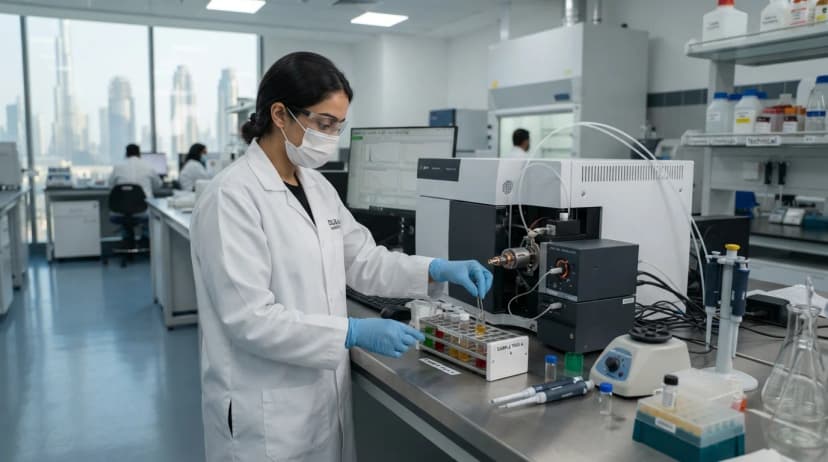
- Audit Readiness: This is where an FSSC 22000 and NSF-certified facility excels. Because they are subjected to rigorous, unannounced third-party audits annually, their culture of compliance is permanent. Their Electronic Batch Records (EBR), raw material identity testing logs (FTIR/HPLC), and calibration records are perpetually audit-ready, ensuring a high probability of passing the direct TGA inspection.
Formulating for the Australian Market
Beyond facility clearance, the Indian CMO must possess the technical expertise to formulate gummies that meet TGA composition standards.
- Permissible Ingredients: The CMO must formulate exclusively using ingredients listed on the TGA's Permissible Ingredients Determination.
- Heat Stability: The gummies must be engineered using high-methoxyl pectin (not gelatin) to ensure they survive the harsh Australian climate (ICH Zone IVa) without melting.
- Analytical Testing: The facility must provide batch-specific Certificates of Analysis (CoAs) generated by ISO 17025 accredited laboratories, proving the gummy meets precise limits for active assay, heavy metals, and microbial purity.
Partnering for Australian Success
For an Australian brand, partnering with a standard, food-grade overseas manufacturer is a recipe for regulatory disaster and border detention.
At Probiota Innovations, we bridge the gap between Indian manufacturing efficiency and Australian regulatory stringency. Our world-class facility holds prestigious global certifications, including FSSC 22000 and NSF. We provide Australian Sponsors with the flawless documentation, advanced pectin formulation, and rigorous stability data required to secure TGA compliance and dominate the market.
Explore our Global Export Capabilities and Certifications
Frequently Asked Questions (FAQ)
1. Is FSSC 22000 the same as TGA GMP? No. FSSC 22000 is a globally recognized food safety certification. TGA GMP is a specific pharmaceutical standard enforced by the Australian government. However, a facility that holds FSSC 22000 operates at a highly advanced level of quality control, making the process of passing a TGA audit or obtaining GMP clearance significantly easier.
2. Can an Indian facility manufacture a "Registered" medicine for Australia? Yes, but it is extremely complex. "Registered" medicines (AUST R) make high-level therapeutic claims and require a massive dossier of clinical efficacy data. Most gummy supplements are imported as "Listed" medicines (AUST L), which are lower risk, use pre-approved ingredients, and only make general health claims.
3. What is a Site Master File (SMF)? An SMF is a comprehensive document prepared by the manufacturer detailing specific information about the quality management policies and activities of the site. It includes facility blueprints, HVAC schematics, organizational charts, and equipment lists. The TGA requires this document when assessing a foreign facility for GMP clearance.
4. Why is raw material identity testing critical for the TGA? The TGA expects manufacturers to independently verify that a raw material is exactly what the supplier claims it is, protecting consumers from economic adulteration. An advanced Indian facility will use equipment like FTIR (Fourier-Transform Infrared Spectroscopy) to chemically "fingerprint" incoming botanical extracts before they are used in a gummy batch.
Recommended Manufacturing Solution
Discover regulatory-compliant nutraceutical contract manufacturing
Want to discuss your formulation?
Our experts help brands launch technically complex probiotic and functional gummies.