Third-Party Testing Requirements for US Market Gummies: Heavy Metals, Pesticides, and Allergen Control
Third-Party Testing Requirements for US Market Gummies: Heavy Metals, Pesticides, and Allergen Control
In the highly scrutinized US dietary supplement market, consumer trust is fragile. While FDA 21 CFR 111 cGMP regulations require manufacturers to conduct internal Quality Control (QC) testing, the industry gold standard—and increasingly, the expectation of major retailers like Amazon, Target, and CVS—is independent, third-party analytical verification.
For US brands importing products, or contract manufacturers producing them, establishing a robust protocol for third party testing gummies USA is the ultimate shield against regulatory action and class-action lawsuits.
This guide details the three most critical testing vectors required for US compliance: Heavy Metals, Pesticides, and Allergen Control.
1. Heavy Metals Testing for US Gummies
As discussed in the context of California's Prop 65, heavy metals (Lead, Cadmium, Arsenic, and Mercury) are naturally occurring elements that are frequently absorbed by the botanical ingredients used in functional gummies.
The Regulatory Landscape
- FDA vs. Prop 65: The FDA has established Interim Reference Levels (IRLs) for heavy metals, but these are generally less stringent than California's Prop 65 Maximum Allowable Dose Levels (MADLs). For a gummy to be sold nationally without restriction or warning labels, the testing protocol must target the stricter Prop 65 limits (e.g., < 0.5 mcg of Lead per daily serving).
- USP Standards: Many brands test against the limits established by the United States Pharmacopeia (USP) General Chapter <2232> (Elemental Contaminants in Dietary Supplements).
The Testing Protocol
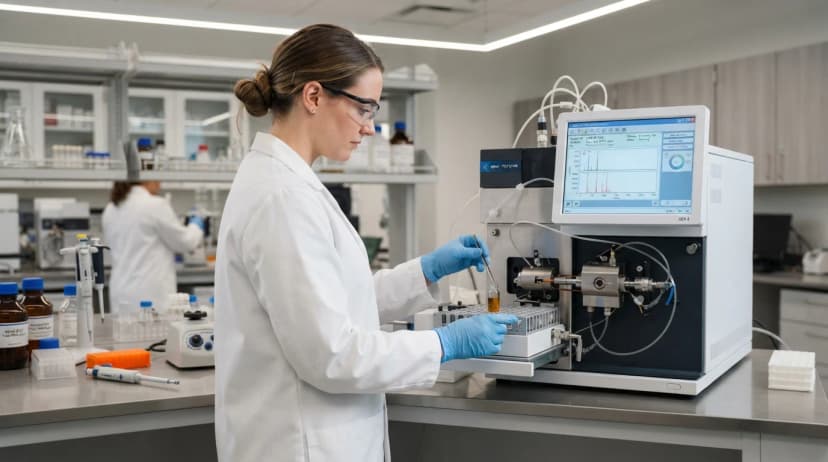
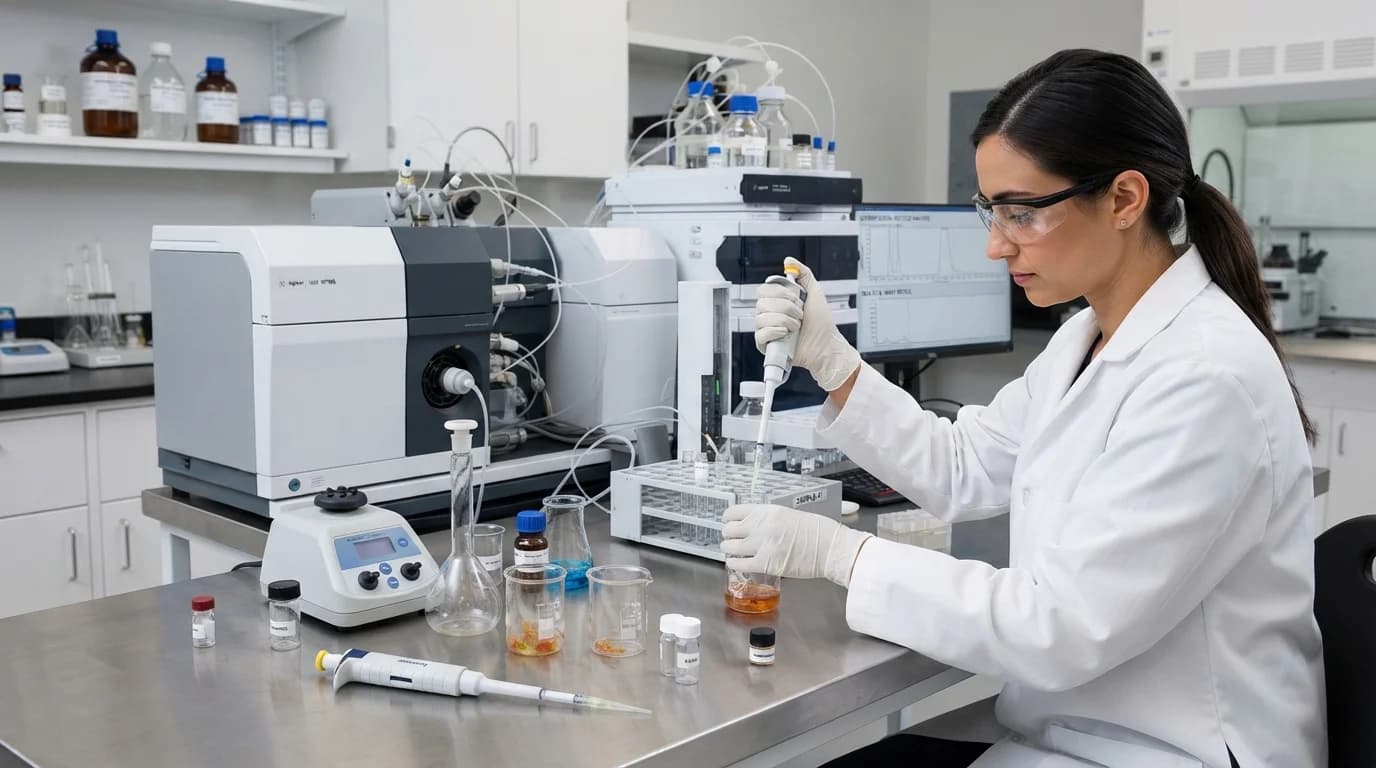
Heavy metals testing US gummies is most accurately performed using Inductively Coupled Plasma Mass Spectrometry (ICP-MS).
- A third-party ISO 17025-accredited laboratory must homogenize the gummy, digest it in strong acids using a microwave digestion system, and then analyze the sample via ICP-MS. This allows for detection down to parts-per-billion (ppb) or parts-per-trillion (ppt).
2. Pesticide Testing in Gummy Supplements
With the explosion of botanical and herbal gummies (e.g., Elderberry, Ashwagandha, Mushroom extracts), the risk of pesticide contamination has skyrocketed. Agricultural ingredients grown globally are often treated with chemicals that are banned or heavily restricted in the United States.
The Regulatory Landscape
The Environmental Protection Agency (EPA) sets strict tolerances for pesticide residues in food and crops, which the FDA enforces. Furthermore, if a gummy is marketed as "Certified Organic," it must test absolutely free of synthetic pesticides according to the USDA National Organic Program (NOP) standards.
The Testing Protocol
Pesticide testing gummy supplements is incredibly complex because there are hundreds of potential chemical residues to screen for.
- Third-party labs utilize a combination of Liquid Chromatography-Tandem Mass Spectrometry (LC-MS/MS) and Gas Chromatography-Tandem Mass Spectrometry (GC-MS/MS).
- Brands must request a "multi-residue pesticide screen" (often testing for 400+ specific compounds, including notorious chemicals like Glyphosate and Ethylene Oxide) to ensure the botanical extracts used in the gummy matrix are truly clean and compliant with US EPA limits.
3. Allergen Control and Verification
Undeclared allergens are the leading cause of food and supplement recalls initiated by the FDA. The Food Allergen Labeling and Consumer Protection Act (FALCPA) mandates that the label must clearly identify the food source names of all major food allergens (Milk, Eggs, Fish, Crustacean shellfish, Tree nuts, Peanuts, Wheat, Soybeans, and Sesame).
The Manufacturing Risk
Even if a gummy formula does not intentionally contain an allergen, cross-contamination at the manufacturing facility is a massive risk, particularly in legacy facilities that use starch moguls (where allergen-laced starch can be recycled into a new batch).
The Testing Protocol
Allergen control US market gummies requires both stringent facility GMPs and finished-product testing.
- ELISA Testing: Third-party labs use Enzyme-Linked Immunosorbent Assay (ELISA) testing to detect specific allergenic proteins (e.g., gluten or soy protein) down to the parts-per-million (ppm) level.
- Gluten-Free Claims: If a brand claims a gummy is "Gluten-Free," the FDA requires that any unavoidable presence of gluten in the food must be less than 20 ppm. Third-party ELISA testing is mandatory to substantiate this claim and protect the brand from litigation.
Integrating Third-Party Testing into the Supply Chain
For US brands sourcing from elite foreign CMOs, the testing workflow should be seamless.
- In-House CMO Testing: A premium facility (like Probiota Innovations) conducts rigorous in-house ICP-MS and microbiological testing before the product ever leaves the factory, issuing a comprehensive Certificate of Analysis (CoA).
- US-Based Third-Party Verification: Upon arrival in the United States, the brand should routinely send representative samples from the shipment to a domestic, ISO 17025-accredited laboratory (such as Eurofins, SGS, or Alkemist Labs) to independently verify the manufacturer's CoA regarding heavy metals, pesticides, active ingredient potency, and allergens.
This dual-layered verification provides absolute USP testing requirements gummies compliance and bulletproof liability protection for the US brand.
Explore our Quality Assurance and Compliance Standards
Frequently Asked Questions (FAQ)
1. Is third-party testing legally required by the FDA? The FDA requires the manufacturer to conduct appropriate testing to verify identity, purity, strength, and composition (21 CFR 111). The FDA does not explicitly demand this be done by a third party. However, major retailers (like Amazon's strict dietary supplement policies) increasingly mandate third-party, ISO 17025-accredited Certificates of Analysis as a prerequisite for selling on their platforms.
2. How much does third-party testing cost per batch? Costs vary wildly depending on the scope. A basic microbiological screen might cost $100. A full panel including active ingredient assay (HPLC), heavy metals (ICP-MS), and a comprehensive multi-residue pesticide screen can cost between $800 and $1,500+ per batch. Brands must factor this QA cost into their margin calculations.
3. What happens if a third-party test contradicts the manufacturer's CoA? This triggers an Out of Specification (OOS) investigation. The brand must quarantine the product and work with both the manufacturer and the lab to determine the root cause (e.g., a testing methodology error, sample degradation during transit, or a genuine manufacturing failure).
4. Why is starchless mogul technology safer for allergen control? Traditional starch moguls reuse cornstarch to mold gummies. If a batch containing soy lecithin is run, the starch bed becomes contaminated with soy. A subsequent batch deposited into that same starch will pick up the soy allergen. Starchless technology uses silicone molds that are washed and sterilized between every single batch, physically preventing allergen cross-contamination.
Recommended Manufacturing Solution
Discover regulatory-compliant nutraceutical contract manufacturing
Want to discuss your formulation?
Our experts help brands launch technically complex probiotic and functional gummies.